In forensic investigations, identifying an unknown individual is one of the most important steps in solving a case. While fingerprints and DNA are among the most commonly used identification methods, there are situations where these techniques are not possible. Severe burns, advanced decomposition, mass disasters, or skeletal remains may leave investigators with very little biological evidence. In such cases, forensic odontology becomes an invaluable forensic discipline.
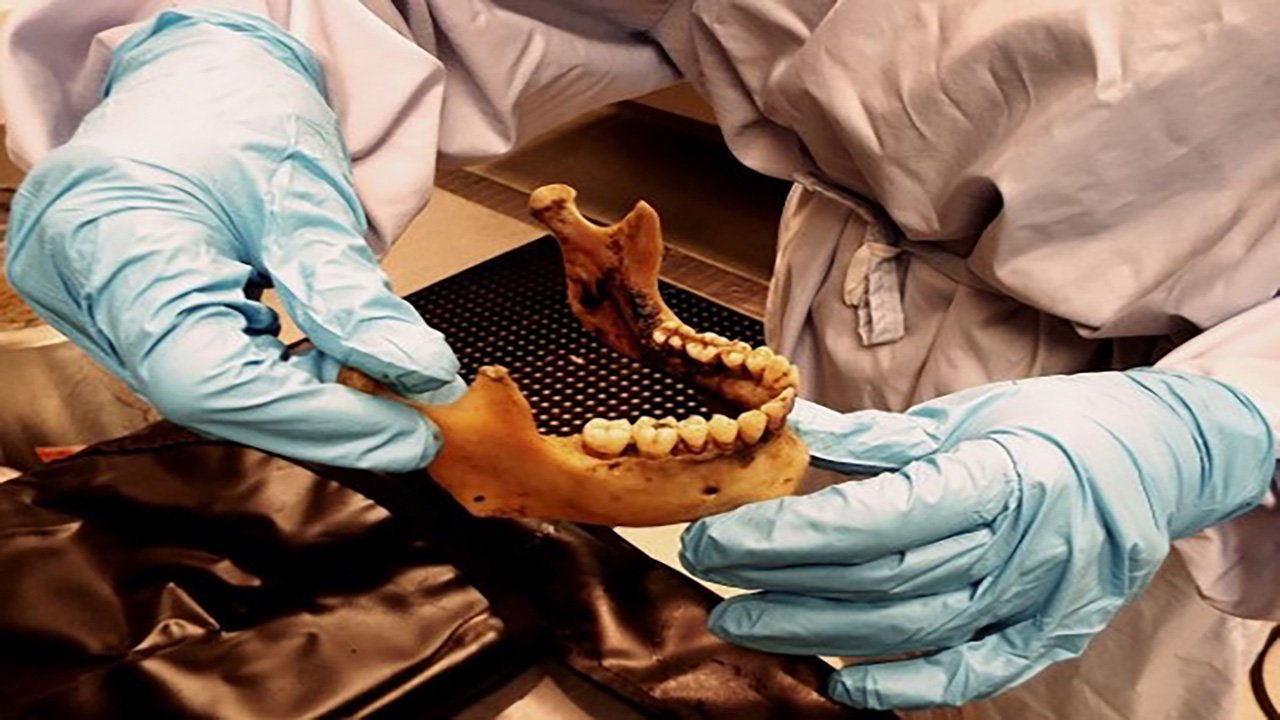
Forensic odontology is the application of dental science to legal investigations. It involves examining teeth, jaws, bite marks, dental restorations, and oral tissues to establish identity, estimate age, or provide evidence in criminal and civil cases. Since teeth are among the hardest structures in the human body, they often survive conditions that destroy other tissues, making them a reliable source of forensic evidence.
What is forensic odontology?
Forensic odontology, also known as forensic dentistry, is the branch of forensic science that applies dental knowledge to legal matters. A forensic odontologist works alongside forensic pathologists, crime scene investigators, anthropologists, and law enforcement agencies to analyze dental evidence.
The discipline primarily focuses on:
- Human identification
- Age estimation
- Bite mark examination
- Disaster victim identification (DVI)
- Analysis of dental injuries
- Identification of abuse cases involving bite injuries
These examinations are performed following scientific protocols to ensure the evidence is reliable and legally admissible.
Why Are Teeth So Valuable in Forensic Investigations?
Teeth possess unique characteristics that make them highly valuable for identification.
Unlike soft tissues, teeth are highly resistant to:
- Fire and extreme heat
- Physical trauma
- Water immersion
- Environmental degradation
- Advanced decomposition
Even after years of burial, dental structures may remain intact. Dental fillings, crowns, bridges, implants, orthodontic appliances, and root canal treatments also provide distinctive features that can be matched with antemortem dental records.
Because every individual’s dental history is unique, the combination of natural tooth characteristics and dental treatments creates a highly individualized pattern.
Human Identification Using Dental Records
One of the most significant applications of forensic odontology is identifying deceased individuals.
The identification process generally involves comparing:
Antemortem dental records (records created during life)
Postmortem dental examination findings
The forensic odontologist compares several features, including:
- Missing teeth
- Tooth alignment
- Dental fillings
- Crowns and bridges
- Root canal treatments
- Tooth morphology
- Dental implants
- Prosthetic appliances
When these findings correspond with dental records, investigators can establish identity with a high degree of confidence.
This method has successfully identified victims in aircraft crashes, fires, floods, earthquakes, terrorist attacks, and other mass casualty incidents.
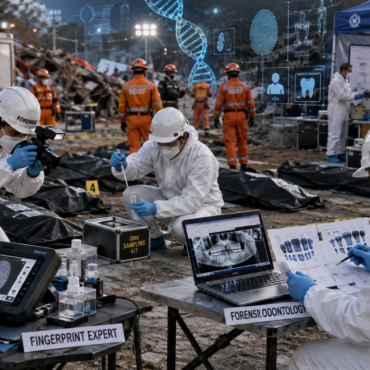
Disaster Victim Identification (DVI)
Mass disasters often result in severely damaged or fragmented human remains, making visual identification impossible.
Forensic odontologists play a critical role in Disaster Victim Identification (DVI) by documenting dental findings and comparing them with available dental records.
Dental identification is often preferred because:
- Dental records are widely available.
- Teeth resist extreme environmental conditions.
- Dental comparisons can be completed relatively quickly.
- Identification remains possible even when fingerprints cannot be obtained.
International disaster response teams routinely include forensic odontologists as part of their identification units.
Age Estimation Through Teeth
Another important role of forensic odontology is estimating the age of unknown individuals.
Dental development follows predictable stages during childhood and adolescence. By examining tooth eruption and mineralization patterns, experts can estimate the age of children and teenagers with considerable accuracy.
In adults, age estimation relies on changes such as:
- Tooth wear
- Root transparency
- Secondary dentin formation
- Cementum deposition
- Periodontal changes
- Age estimation assists investigators in:
- Identifying unknown skeletal remains
- Determining the age of undocumented individuals
- Immigration and refugee cases
- Criminal investigations involving minors
- Archaeological studies
Although adult age estimation provides an approximate range rather than an exact age, it remains an important forensic tool.
Bite Mark Analysis
Bite mark analysis involves examining injuries or objects that display dental impressions.
Potential evidence may include:
- Human skin
- Food items
- Chewing gum
- Chocolate
- Fruits
- Clothing
- Other soft materials
- The examination may involve:
- High-resolution photography
- Measurement of bite dimensions
- Pattern comparison
- Three-dimensional imaging
- Digital overlays
- Dental cast comparison
While bite mark analysis has historically been used in criminal investigations, modern forensic science recognizes its limitations. Current best practices require careful interpretation, validation with other evidence, and adherence to scientific standards before drawing conclusions.
Dental Evidence in Criminal Investigations
Dental evidence can contribute to a variety of criminal investigations, including:
- Homicide cases
- Sexual assault investigations
- Child abuse investigations
- Assault cases involving bite injuries
- Missing person investigations
- Human trafficking cases
- Identification of decomposed bodies
Forensic odontologists document injuries, preserve evidence, and provide expert opinions based on scientific examination.
Their findings are often combined with DNA profiling, fingerprint examination, anthropology, and pathology to strengthen the overall investigation.
Technologies Used in Modern Forensic Odontology
Advancements in technology have significantly improved the accuracy and efficiency of forensic dental examinations.
Modern laboratories utilize:
- Digital dental radiography
- Cone Beam Computed Tomography (CBCT)
- Three-dimensional imaging
- Digital photography
- Computer-assisted comparison software
- Intraoral scanners
- Image enhancement techniques
Digital record management also enables faster comparison between antemortem and postmortem records, particularly during mass disaster investigations.
Challenges in Forensic Odontology
Although forensic odontology is highly effective, it also faces several challenges.
These include:
- Incomplete dental records
- Poor-quality radiographs
- Limited access to previous dental treatment history
- Fragmented remains
- Variations in international dental documentation
- Interpretation challenges in bite mark evidence
Maintaining standardized dental records and adopting modern digital documentation practices can significantly improve identification accuracy.
The Future of Forensic Odontology
Emerging technologies such as artificial intelligence, machine learning, and automated image comparison are transforming forensic odontology.
Researchers are developing AI-based systems capable of:
- Automated dental record matching
- Tooth segmentation
- Age prediction
- Dental pattern recognition
- Improved disaster victim identification workflows
Three-dimensional facial reconstruction using dental and skeletal data is another promising area of research that may assist in identifying unknown individuals.
As digital dentistry continues to evolve, forensic odontology will become even more accurate, efficient, and scientifically robust.
Conclusion
Forensic odontology has become an indispensable component of modern forensic science. By examining teeth, dental restorations, radiographs, and oral structures, forensic experts can identify unknown individuals, estimate age, support criminal investigations, and assist in disaster victim identification when other methods may not be feasible.
Because teeth are among the most durable structures in the human body, they preserve valuable information long after other biological evidence has disappeared. Combined with advances in digital imaging, AI-assisted analysis, and standardized dental documentation, forensic odontology continues to enhance the accuracy and reliability of forensic investigations worldwide.
As forensic science advances, the role of forensic odontologists will remain essential in providing objective, scientifically supported evidence that assists investigators, courts, and families seeking answers.


Post comments (0)