Forensic anthropology is a specialized branch of forensic science that applies the principles of physical anthropology and human skeletal biology to legal investigations. When a body is decomposed, burned, fragmented, or reduced to skeletal remains, traditional methods of identification such as facial recognition may no longer be possible. In such cases, forensic anthropology can help investigators recover valuable information about the deceased and contribute significantly to the identification process.
What Is Forensic Anthropology?
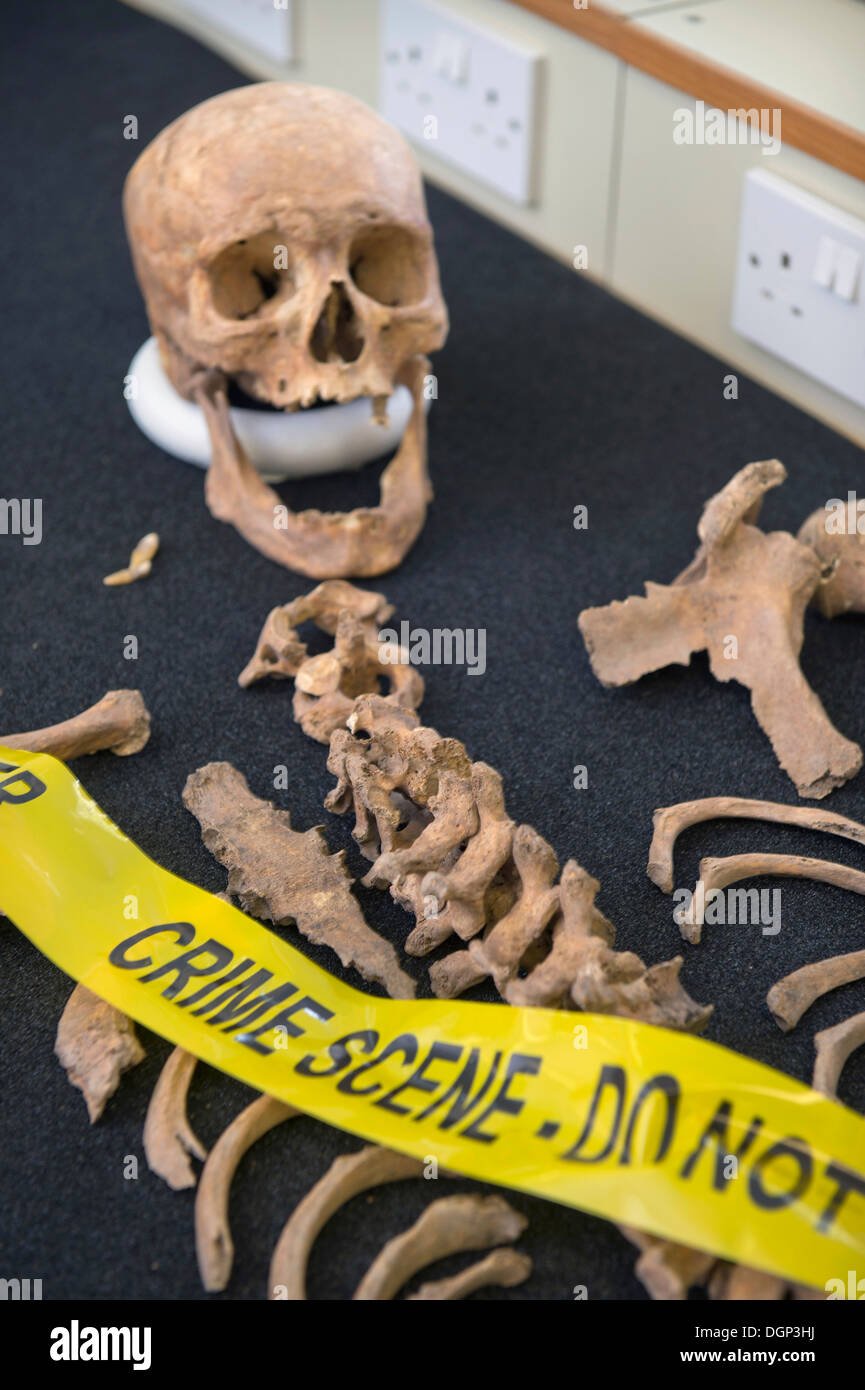
Forensic anthropology focuses primarily on the examination and interpretation of human skeletal remains for medico-legal purposes. A forensic anthropologist may be called upon when investigators recover bones from a crime scene, mass disaster, clandestine burial, accident site, or other circumstances where human remains are difficult to identify.
The examination can help answer important questions such as:
- Are the remains human or non-human?
- How many individuals are represented?
- What was the biological profile of the individual?
- Approximately how old was the person?
- What was their estimated biological sex?
- What was their approximate stature?
- Are there signs of trauma or disease?
- Can the remains provide clues about the person’s identity?
It is important to understand that forensic anthropology does not usually identify a person by itself. Instead, it generates a biological profile and other findings that can be combined with DNA analysis, dental records, fingerprints, medical records, radiographs, and investigative information.
Recovery and Documentation of Skeletal Remains
The forensic anthropological process often begins at the recovery scene. Proper recovery is critical because bones and associated evidence can be easily damaged, displaced, or contaminated.
Anthropologists may work alongside crime scene investigators, police officers, archaeologists, forensic pathologists, and other specialists. The location and position of each bone are documented through photography, measurements, notes, mapping, and sometimes three-dimensional scanning.
In cases involving buried remains, controlled excavation techniques can help establish the relationship between skeletal remains and surrounding objects. Soil characteristics, clothing, personal belongings, and other associated evidence may also provide important investigative information.
Determining Whether Bones Are Human
One of the first laboratory questions is whether the recovered material is actually human bone.
This can sometimes be established through the morphology, size, structure, and anatomical characteristics of the specimen. Human bones have distinctive characteristics that allow trained specialists to differentiate them from many animal remains.
This step is particularly important in outdoor scenes, where animal bones may be scattered alongside human remains.
Building the Biological Profile
Once remains are confirmed as human, the anthropologist attempts to develop a biological profile. Traditionally, this includes estimation of sex, age, ancestry, and stature, although modern forensic anthropology recognizes that these characteristics are biological estimates rather than absolute labels.
Estimating Biological Sex
The pelvis is generally one of the most informative skeletal elements for estimating biological sex in adults. Characteristics of the pelvis, skull, and other bones may be evaluated together.
However, skeletal sex estimation is less reliable when only limited or poorly preserved remains are available. Juvenile remains also present additional challenges because skeletal characteristics change during growth.
Estimating Age
Age estimation relies on changes that occur in bones and teeth throughout life. Depending on the individual’s developmental stage, specialists may examine dental development, growth plate fusion, changes in the pubic symphysis, auricular surface, ribs, and other skeletal features.
Age estimates are generally expressed as ranges rather than exact ages because skeletal changes vary considerably between individuals.
Estimating Stature
Stature can often be estimated from the length of long bones such as the femur, tibia, or humerus. Mathematical equations developed from population studies can be used to estimate the person’s approximate living height.
Stature estimation can provide investigators with another characteristic to compare with missing-person records.
Trauma Analysis
One of the most significant contributions of forensic anthropology is the analysis of skeletal trauma.
Bones may preserve evidence of injuries that occurred around the time of death. Fractures, sharp-force damage, blunt-force injuries, projectile-related damage, and thermal alterations can sometimes be identified through detailed examination.
The anthropologist may attempt to determine whether an injury occurred before death, around the time of death, or after death. This distinction is important because postmortem damage caused by environmental conditions, animals, excavation, or handling can sometimes resemble traumatic injury.
Forensic anthropologists therefore work closely with forensic pathologists when interpreting trauma and determining its possible relationship to the cause and manner of death.
Identification of Unknown Remains
When skeletal remains belong to an unidentified individual, anthropological findings can narrow the search among missing persons.
For example, an investigation might establish that the remains are consistent with an adult individual of a particular estimated age range, stature, and biological sex, with evidence of a previous fracture or surgical procedure.
Investigators can then compare these findings with missing-person records and antemortem medical information.
Dental records and radiographs can be particularly useful when distinctive anatomical or medical features are preserved. Ultimately, DNA testing may provide a highly powerful method of confirming identity.
Forensic Anthropology in Mass Disasters
Forensic anthropology is also important in Disaster Victim Identification (DVI).
Earthquakes, aircraft crashes, building collapses, fires, floods, and other mass-casualty events can produce fragmented or commingled remains. Visual identification may be impossible, particularly when bodies have suffered extensive damage.
Anthropologists can assist in sorting remains, estimating the minimum number of individuals, documenting skeletal characteristics, and supporting identification teams. Their findings can be integrated with fingerprints, dental examination, DNA profiling, and other identification methods.
Modern Technology in Forensic Anthropology
Technology has significantly expanded the capabilities of forensic anthropology.
Digital photography, computed tomography (CT), three-dimensional imaging, photogrammetry, digital reconstruction, and advanced statistical methods can provide detailed information while reducing the need for repeated physical handling of fragile remains.
Three-dimensional models can also assist with documentation, comparison, education, and courtroom presentation.
In addition, forensic anthropology increasingly uses statistical and computational approaches to improve the estimation of biological characteristics. These methods are particularly valuable when traditional skeletal indicators are incomplete or ambiguous.
Limitations of Forensic Anthropology
Despite its importance, forensic anthropology has limitations. Biological profile estimates are usually associated with uncertainty, particularly when remains are incomplete, damaged, or poorly preserved.
Age, sex, ancestry, and stature should therefore not be treated as exact measurements. Interpretation also depends on the quality of the skeletal material and the reference populations used to develop estimation methods.
For this reason, forensic anthropology works best as part of a multidisciplinary investigation rather than as an isolated identification technique.
Conclusion
Forensic anthropology provides investigators with a scientific approach to understanding human skeletal remains. From determining whether recovered bones are human to developing a biological profile, interpreting skeletal trauma, assisting with mass-disaster identification, and supporting the identification of missing persons, its applications are extensive.
Perhaps its greatest strength lies in the fact that bones can preserve information long after soft tissues have disappeared. When combined with DNA analysis, forensic pathology, forensic odontology, fingerprint examination, radiology, and investigative evidence, forensic anthropology can help transform unidentified skeletal remains into meaningful evidence.
In forensic science, every bone can carry a story. Forensic anthropology provides the scientific tools to read it.


Post comments (0)