Printer and Toner Identification in Document Fraud Cases

Blog Neerav Jindal todayMay 15, 2026

Background
share close

Document fraud is becoming more sophisticated with easy access to high-quality printers and editing tools. Fraudsters can alter contracts, create fake certificates, forge financial records, and manipulate official documents with surprising precision.

But even the most convincing printed document often carries hidden forensic evidence.

Through printer and toner identification, forensic document examiners can uncover clues that reveal where a document was printed, whether it was altered, and sometimes even connect it directly to a specific device.

What Is Printer Identification?

Just like fingerprints can identify a person, printers leave unique marks on every document they produce.

These marks are created because of:

  • Tiny manufacturing differences
  • Mechanical wear and tear
  • Defects in rollers or print heads
  • Toner cartridge inconsistencies

Even two printers of the same brand and model can produce slightly different printing patterns.

By studying these microscopic differences, forensic experts can often determine:

  • The type of printer used (laser, inkjet, dot matrix, or thermal)
  • The printer brand or model
  • Whether multiple printers were used on the same document
  • Signs that parts of the document were added or replaced later

Why Toner Analysis Matters

Laser printers use toner — a fine powder fused to paper using heat.

This toner contains valuable forensic evidence that can help investigators detect fraud.

1. Toner Distribution Patterns

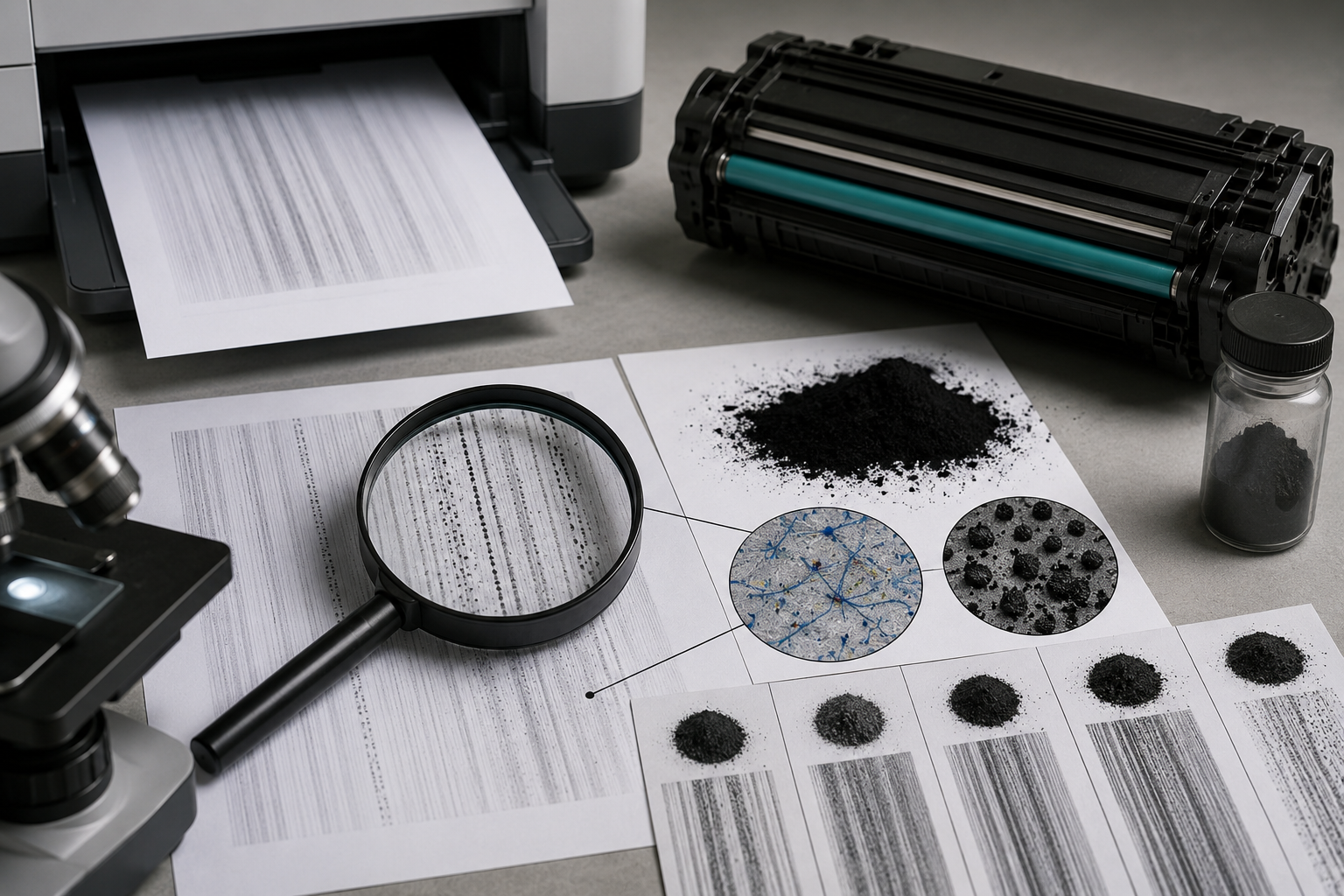
A printer may leave uneven toner spread because of cartridge defects or drum wear.

These patterns can act as identifying characteristics for a specific machine.

2. Chemical Composition

Different toner manufacturers use different formulations.

Laboratory analysis can sometimes identify the toner’s source and narrow down the printer type used.

3. Fusion Characteristics

Toner bonds to paper through heat and pressure.

Examining this bonding helps experts determine whether the printing occurred naturally or if suspicious modifications were made later.

4. Layer Examination

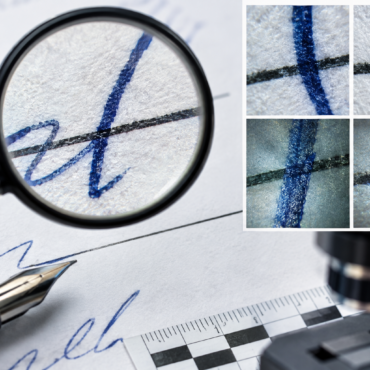
Under magnification, experts can identify whether text or signatures were printed in separate stages.

This often exposes:

  • Altered contracts
  • Added clauses
  • Replaced dates
  • Fake signatures

Common Fraud Cases Solved Through Printer Analysis

Printer and toner examination is commonly used in cases involving:

  • Forged legal agreements
  • Counterfeit academic certificates
  • Fake bank statements
  • Altered wills
  • Insurance fraud claims
  • Fraudulent identification documents

In many investigations, identifying the source printer becomes a crucial link between the forged document and the suspect.

Tools Used by Forensic Experts

Modern forensic labs rely on advanced techniques to examine printed evidence.

Microscopic Examination

Reveals toner texture, defects, and printing irregularities invisible to the naked eye.

Spectral Analysis

Uses infrared and ultraviolet light to study toner composition and detect alterations.

Electrostatic Detection Devices (EDD)

Recover hidden impressions left by documents written or printed on top of previous sheets.

Digital Print Pattern Comparison

Matches repeated printer defects to known printer signatures.

Machine Identification Code Analysis

Some color laser printers secretly embed microscopic tracking dots.

These dots can reveal:

  • Printer serial number
  • Date of printing
  • Time of printing

This hidden data can provide strong forensic evidence during investigations.

Challenges in Printer Identification

Although highly effective, printer identification has limitations.

Experts may face difficulties when:

  • The document is a poor-quality photocopy
  • Toner has faded over time
  • Multiple print generations reduce clarity
  • A fraudster deliberately attempts to hide traces

Because of this, forensic conclusions usually rely on multiple methods rather than one single clue.

Why It Matters in Modern Forensics

Today, digital editing software makes document fraud easier than ever.

A forged file can be created on a computer and printed to appear legitimate.

However, printers often leave microscopic evidence that criminals overlook.

That hidden evidence can expose fraud, verify authenticity, and connect suspects to forged materials.

Final Thoughts

Printer and toner identification is one of the most powerful tools in questioned document examination.

What looks like an ordinary printed page may contain microscopic proof of forgery, alteration, or authenticity.

In forensic science, every printed document tells a story — and trained experts know how to uncover it.

Written by: Neerav Jindal

Tagged as: .

Rate it

Previous post

Similar posts

Post comments (0)

Leave a reply

Your email address will not be published. Required fields are marked *