Introduction
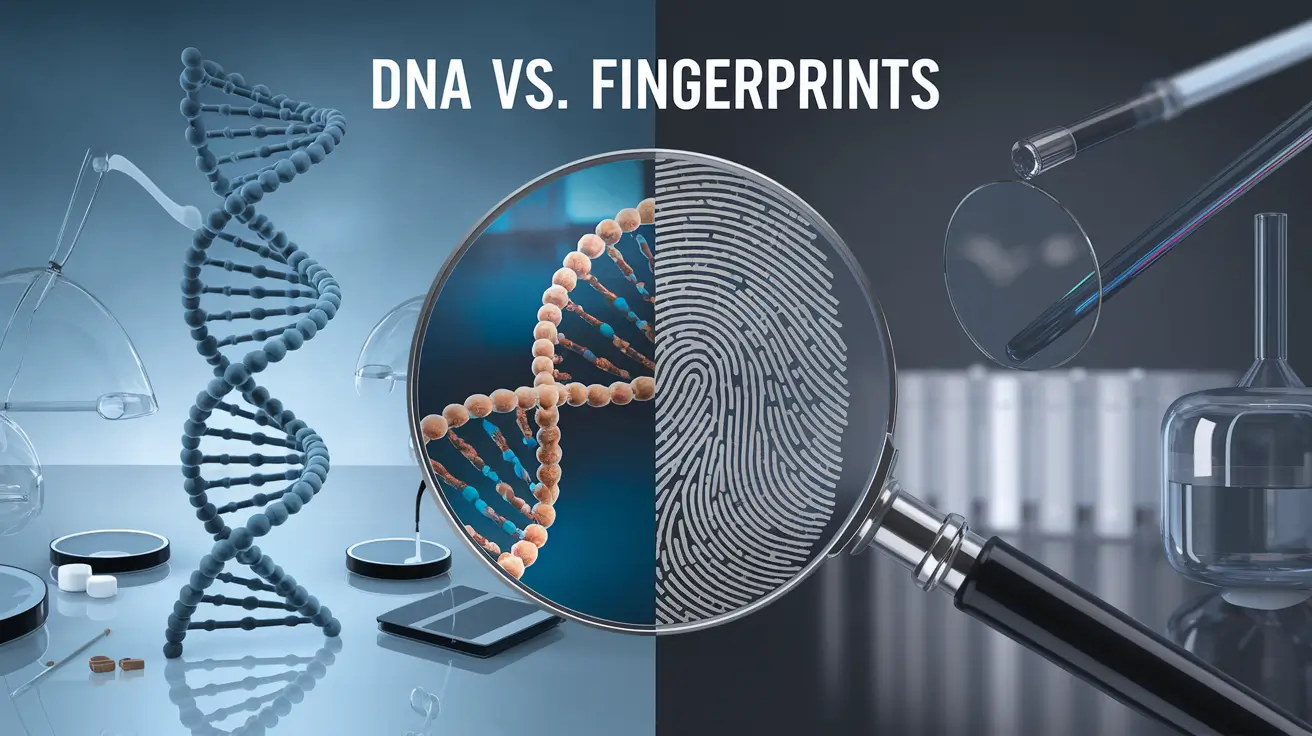
In modern forensic science, few debates are as compelling as the comparison between touch DNA and fingerprint evidence. Both are powerful tools used to link suspects to crime scenes, yet they operate on entirely different scientific principles; more importantly, they carry different weight in courtrooms.
So, which one actually “wins” in court?
The answer is not as straightforward as it seems. It depends on context, quality, interpretation, and how well the evidence is presented. Let’s break it down.
Let’s understand the basics.
What is touch DNA?
Touch DNA, also known as trace DNA, refers to genetic material left behind when a person touches an object. Even a few skin cells can be enough to generate a DNA profile.
Advancements in forensic genetics now allow analysts to extract usable DNA profiles from extremely small samples, making touch DNA an increasingly important investigative tool.
However, the keyword here is trace. This type of DNA is often minimal, fragile, and prone to complications.
What are fingerprints?
Fingerprints are patterns of friction ridges on the skin that leave impressions when a person touches a surface. They have been used in criminal investigations for over a century and are widely accepted in courts worldwide.
Each fingerprint consists of unique ridge patterns—loops, whorls, and arches—used for identification, and these patterns are so distinct and unique that they remain different even in identical twins.
Scientific Strength: DNA vs Pattern Evidence
From a purely scientific standpoint, DNA evidence has a major advantage.
DNA profiling is considered one of the most reliable forms of forensic identification because it is backed by strong biological and statistical models. In fact, DNA analysis often provides extremely high discriminatory power, meaning the probability of two unrelated individuals sharing the same DNA profile is extraordinarily low.
Fingerprints, on the other hand, are based on pattern comparison. While widely trusted, they lack the same level of statistical validation and rigorous scientific studies supporting their accuracy
Reliability Issues: Not All DNA is Equal
This is where things get interesting.
Touch DNA is not the same as DNA from blood, saliva, or semen. It comes from skin cells, which are:
- Often degraded
- Present in very small quantities
- Frequently mixed with DNA from multiple individuals
This makes interpretation difficult.
Additionally, touch DNA introduces a major forensic problem: secondary transfer.
DNA can be transferred indirectly—for example,
- Through a handshake
- Via shared objects
- Even though airborne skin cells
This means a suspect’s DNA can appear at a crime scene without them ever being there.
There’s also no reliable way to determine when the DNA was deposited.
Persistence and Stability
Fingerprint evidence tends to be more stable.
Latent fingerprints can persist for years under favourable conditions, especially on protected surfaces.
Touch DNA, however, degrades quickly—sometimes within months and even faster in outdoor environments.
This affects the ability to obtain complete DNA profiles and increases uncertainty.
Courtroom Impact: What Do Judges and Juries Prefer?
In court, evidence is not judged only on science—it is judged on clarity and interpretation.
Fingerprints in Court:
- Easy for juries to understand
- Visually demonstrable (ridge patterns, comparisons)
- Long history of legal acceptance
Touch DNA in Court:
- Requires expert explanation
- Complex statistical interpretation
- Vulnerable to challenges like contamination and transfer
Because of this, fingerprint evidence is often more persuasive to juries, even if it is scientifically less robust.
Error Rates and Challenges
Both methods are reliable, but not infallible.
Fingerprints:
- Studies have shown measurable false positive rates (e.g., errors in matching latent prints).
- Subjective interpretation by examiners can influence results
Touch DNA:
- Risk of contamination
- Mixed DNA profiles
- Possibility of indirect transfer
- Misinterpretation of presence vs activity
Interestingly, touch DNA is sometimes used more effectively by the defence to exclude suspects than to prove guilt.
The Power of Combining Both
The most powerful cases don’t rely on one type of evidence—they use both.
A fingerprint can place a suspect at a scene, while DNA can confirm identity independently. When both point to the same individual, the evidentiary value becomes significantly stronger.
This combination reduces doubt and strengthens prosecution arguments.
Final Verdict
There is no universal winner, but if forced to choose,
- Scientifically strongest: Touch DNA
- Most reliable in practice: Fingerprints
- Most persuasive in court: Fingerprints
- Most powerful overall: Combination of both
Conclusion
The debate between touch DNA and fingerprints highlights a crucial truth in forensic science: evidence is only as strong as its interpretation.
Touch DNA represents the future—highly sensitive, scientifically powerful, and capable of solving complex cases. But it comes with interpretational challenges that courts are still learning to navigate.
Fingerprints, meanwhile, remain the courtroom veteran—simple, trusted, and effective, even if they are not perfect.
In the end, justice is rarely decided by a single piece of evidence. It is the convergence of multiple forensic tools—DNA, fingerprints, digital evidence, and expert analysis—that truly determines the outcome.
And in that combined approach, there is no competition—only collaboration.



Post comments (0)