In forensic science, precision documentation plays a critical role in evidence examination and courtroom presentation. Two terms often confused in imaging science are photomicrography and microphotography. Although they sound similar, they refer to entirely different processes.
Understanding the distinction is essential, especially in questioned document examination, trace evidence analysis, and forensic microscopy, where imaging accuracy can determine the validity of expert findings.
What is Photomicrography?
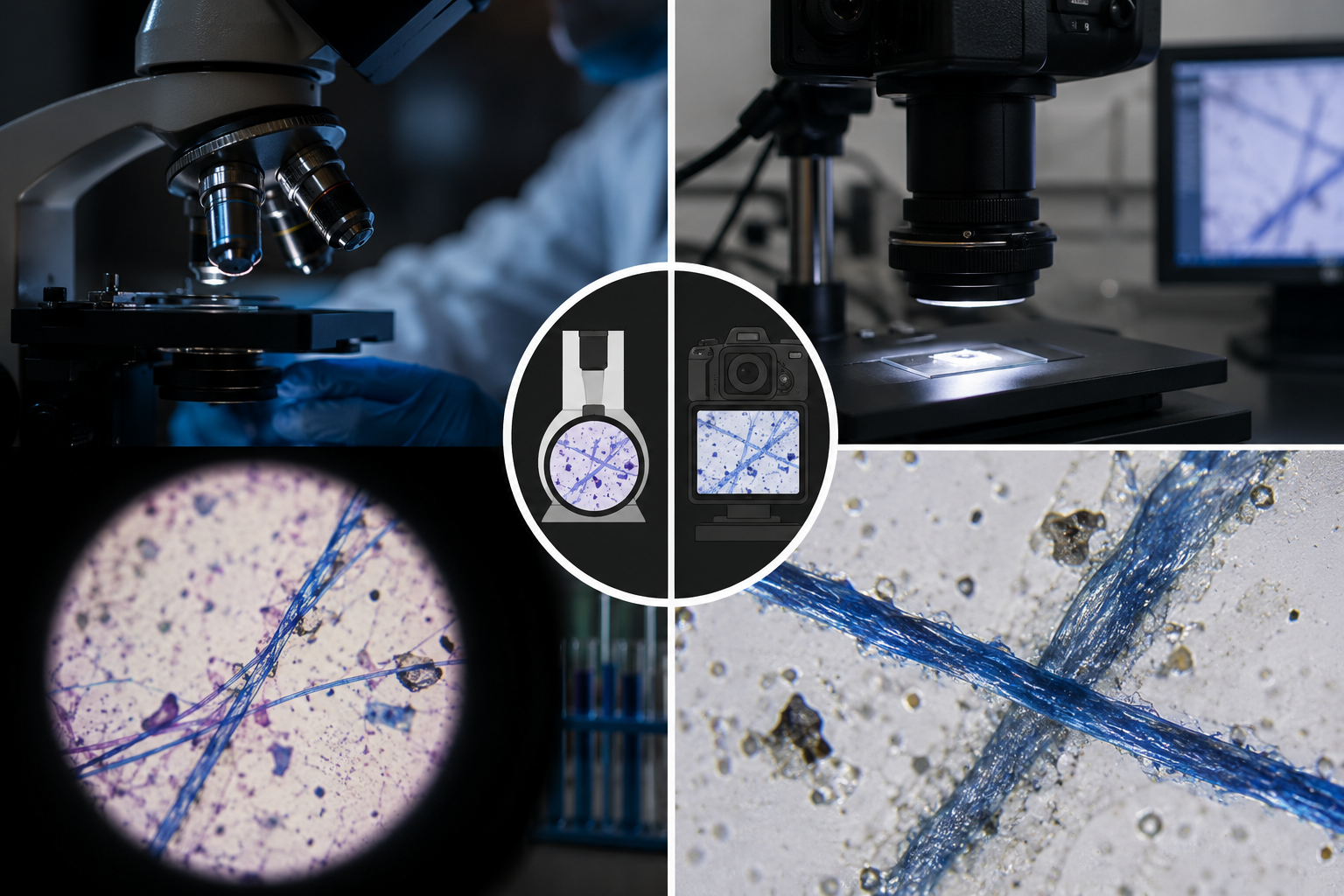
Photomicrography is the process of capturing highly magnified photographs of microscopic objects using a microscope attached to a camera.
It allows forensic experts to record details invisible to the naked eye, such as:
- Ink stroke intersections
- Paper fiber structures
- Printer toner distribution
- Erasures and alterations
- Security features in currency
- Microscopic indentations on questioned documents
In simple terms:
Small object → Magnified through microscope → Captured as photograph
This technique is widely used in forensic laboratories because it provides visual evidence for detailed comparison and analysis.
Applications of Photomicrography in Forensic Science
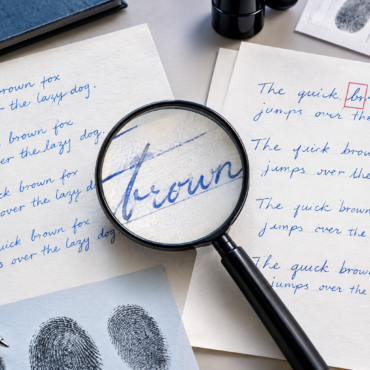
1. Questioned Document Examination
Experts use photomicrography to analyze:
- Sequence of intersecting strokes
- Ink deposition patterns
- Pen pressure variations
- Surface disturbances caused by erasures
These details help determine whether a document has been altered or forged.
2. Fingerprint Examination
At high magnification, photomicrographs reveal:
- Ridge edge characteristics
- Pore structure
- Surface contamination patterns
This improves comparison accuracy.
3. Trace Evidence Analysis
Microscopic fibers, hair fragments, paint particles, and glass shards can be photographed for comparison and courtroom presentation.
What is Microphotography?
Microphotography is the process of producing extremely small photographs of large objects or documents, often requiring magnification to view.
Historically, it was used for:
- Archival document storage
- Intelligence and espionage
- Microfilm records
- Compact information preservation
In simple terms:
Large object/document → Reduced photographically → Viewed later with magnification
Unlike photomicrography, the subject itself is not microscopic — the resulting image is tiny.
Applications of Microphotography
Microphotography has been used in:
Archival Preservation
Large volumes of records stored compactly.
Intelligence Operations
Miniaturized confidential documents.
Historical Record Management
Libraries preserving manuscripts on microfilm.
Although less common in modern forensic labs due to digital imaging, microphotography remains historically significant.
Key Differences Between Photomicrography and Microphotography
| Feature |
Photomicrography |
Microphotography |
| Subject Size |
Microscopic object |
Normal-sized object |
| Image Result |
Enlarged image |
Reduced miniature image |
| Equipment |
Microscope + camera |
Specialized reduction camera |
| Forensic Use |
Very common |
Rare in modern practice |
| Purpose |
Detailed examination |
Compact storage |
Why This Distinction Matters in Forensic Documentation
Using the wrong terminology can create confusion in:
- Expert witness testimony
- Laboratory reports
- Academic publications
- Training documentation
Forensic professionals must communicate precisely, especially when presenting scientific findings in legal proceedings.
A photomicrograph demonstrates magnified evidence for analysis, while a microphotograph is a miniaturized reproduction for storage or transmission.
The distinction may seem subtle, but in forensic communication, accuracy matters.
The Future of Forensic Imaging
Modern digital microscopy has significantly enhanced photomicrography by enabling:
- Ultra-high-resolution capture
- Automated measurement overlays
- 3D surface reconstruction
- AI-assisted pattern analysis
These advancements improve documentation reliability and analytical precision across forensic disciplines.
Conclusion
Though often mistaken as interchangeable terms, photomicrography and microphotography serve entirely different purposes.
Photomicrography helps forensic experts reveal hidden microscopic details for examination and evidence presentation, while microphotography reduces large information into compact form for storage.
In forensic science, especially questioned document examination, understanding this distinction strengthens both technical accuracy and professional communication.
Precision in terminology reflects precision in science — and in forensics, precision is everything.


Post comments (0)