Introduction
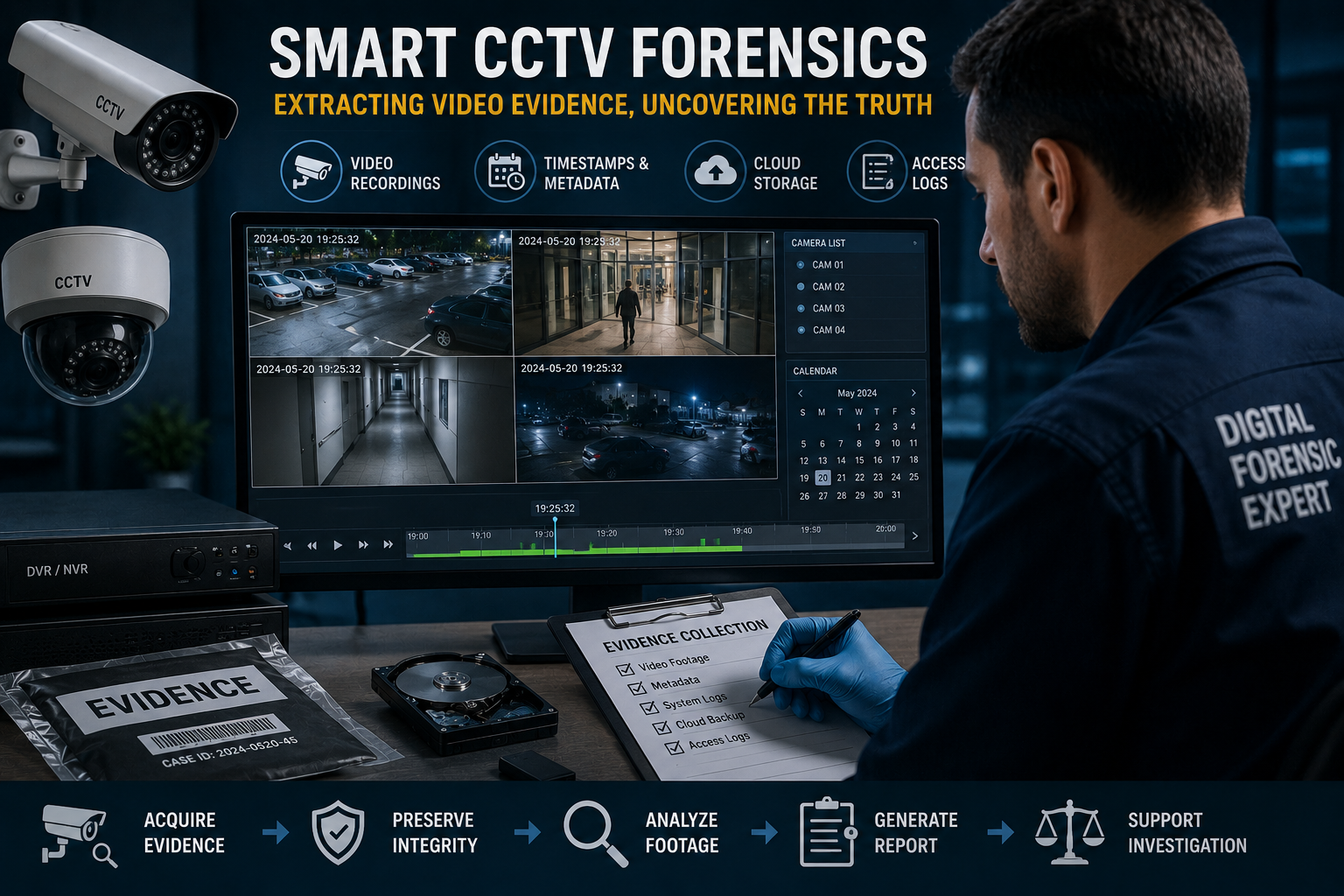
Smart CCTV Forensics has become a crucial component of modern digital investigations. Unlike traditional surveillance systems, smart CCTV cameras store high-definition video, metadata, timestamps, motion detection logs, and cloud-based recordings that can provide valuable evidence in criminal, civil, and corporate investigations.
Today, smart CCTV systems are widely used in homes, businesses, public spaces, and industrial facilities. As a result, investigators frequently rely on Smart CCTV Forensics to recover, preserve, analyze, and authenticate video evidence. Whether investigating theft, fraud, cybercrime, workplace incidents, or accidents, CCTV footage often plays a key role in establishing facts and reconstructing events.
This article explores the importance of Smart CCTV Forensics, common sources of evidence, investigation techniques, challenges, and best practices for handling surveillance footage.
What Is Smart CCTV Forensics?
Smart CCTV Forensics is the process of identifying, acquiring, preserving, analyzing, and presenting digital evidence obtained from smart surveillance systems.
Modern CCTV systems generate more than just video recordings. They often collect:
- High-definition video footage
- Audio recordings
- Motion detection events
- User access logs
- Device configuration data
- GPS information
- Cloud-stored recordings
- Network activity logs
Investigators analyze these artifacts to establish timelines and verify events.
Why Smart CCTV Forensics Is Important
Smart CCTV cameras continuously monitor and record activities. Consequently, they often capture critical evidence that may not be available from other sources.
Smart CCTV Forensics helps investigators:
- Reconstruct incidents
- Identify suspects
- Verify witness statements
- Establish timelines
- Detect unauthorized access
- Authenticate video recordings
- Support legal proceedings
- Investigate workplace incidents
Furthermore, CCTV footage often provides objective evidence that helps clarify disputed events.
Sources of Evidence in Smart CCTV Forensics
CCTV Video Recordings
The primary source of evidence is recorded video footage. Investigators analyze:
- Live recordings
- Archived footage
- Motion-triggered recordings
- Event-based recordings
These recordings often reveal important details about activities and individuals involved in an incident.
Metadata Analysis
Modern surveillance systems store metadata such as:
- Date and time information
- Camera identifiers
- Recording duration
- Resolution settings
- Frame rates
Metadata helps investigators verify the authenticity of recordings.
User Access Logs
Many CCTV systems maintain logs showing:
- User logins
- Configuration changes
- Camera access history
- Remote viewing sessions
These logs may identify who accessed the system and when.
Cloud Storage Records
Many smart CCTV systems synchronize data with cloud platforms. Investigators may recover:
- Cloud backups
- Deleted recordings
- User account information
- Synchronization history
Cloud evidence often becomes critical when local recordings are unavailable.
Smart CCTV Forensics Investigation Process
Evidence Preservation
The first step involves preserving the original evidence.
Investigators:
- Secure the CCTV system
- Prevent data overwriting
- Document device information
- Maintain chain of custody
- Create forensic copies
Proper preservation ensures evidence integrity.
Video Acquisition
Investigators collect footage from:
- DVR systems
- NVR systems
- Memory cards
- Cloud storage
- Network-attached storage
Furthermore, they use forensic methods to avoid altering original recordings.
Video Analysis
During analysis, experts examine:
- Timestamps
- Motion events
- Camera angles
- Object movements
- Individual identification
- Vehicle movements
This process helps reconstruct the sequence of events.
Timeline Reconstruction
Investigators combine CCTV footage with other digital evidence to create a detailed timeline.
Sources may include:
- Mobile phone records
- Access control logs
- GPS data
- Computer activity logs
As a result, investigators gain a comprehensive understanding of the incident.
Challenges in Smart CCTV Forensics
Video Tampering
Suspects may attempt to:
- Delete recordings
- Modify timestamps
- Alter footage
- Disable cameras
Therefore, investigators must verify video authenticity.
Storage Limitations
Many systems automatically overwrite old recordings after a certain period.
Consequently, delayed investigations may result in loss of evidence.
Proprietary Formats
Different manufacturers use proprietary file formats.
As a result, specialized forensic tools may be required to access recordings.
Poor Video Quality
Low resolution, poor lighting, and camera placement may reduce the usefulness of footage.
However, modern enhancement techniques can sometimes improve visibility.
Tools Used in Smart CCTV Forensics
Digital forensic experts commonly use:
- Magnet AXIOM
- Cellebrite Inspector
- DVR Examiner
- Amped FIVE
- Belkasoft X
- FTK
- Autopsy
- Manufacturer-specific tools
These tools assist with acquisition, enhancement, and analysis of surveillance footage.
Best Practices for Smart CCTV Forensics
Investigators should:
- Preserve original recordings immediately.
- Maintain a documented chain of custody.
- Create forensic copies before analysis.
- Verify timestamps across systems.
- Document every investigative action.
- Analyze both local and cloud evidence.
- Use validated forensic tools.
Following these practices helps ensure the admissibility of evidence.
Future of Smart CCTV Forensics
The future of Smart CCTV Forensics continues to evolve with advances in technology.
Emerging trends include:
- AI-powered video analysis
- Facial recognition integration
- Automated object detection
- Cloud-native investigations
- Real-time incident monitoring
- Enhanced video authentication techniques
Furthermore, investigators will increasingly rely on artificial intelligence to process large volumes of surveillance footage efficiently.
Conclusion
Smart CCTV systems have become valuable sources of digital evidence in modern investigations. Through Smart CCTV Forensics, investigators can recover video recordings, analyze metadata, reconstruct events, and verify the authenticity of surveillance footage.
As surveillance technology continues to advance, forensic examination of CCTV systems will remain essential for criminal investigations, corporate inquiries, civil litigation, and cybersecurity incidents. Proper collection and analysis of CCTV evidence can provide critical insights that support legal proceedings and uncover the truth.


Post comments (0)