Introduction
Not all evidence is visible to the naked eye. In forensic document examination, investigators often find some of the most critical clues hidden beneath the surface. Such a subtle yet powerful form of evidence is known as ghost lines.
These faint impressions, often overlooked, can uncover previously written content. They can expose document tampering and even help reconstruct events. In cases involving fraud, threats, or disputed documents, ghost lines can quietly become the strongest witness.
What Are Ghost Lines?
Ghost lines form when writing on one sheet presses into the paper beneath it. Even without any ink transfer, the pressure from the pen leaves behind microscopic impressions.
In simple terms:
“Invisible writing impressions left by pen pressure.”
These marks are not visible but can be revealed using specialized forensic techniques.
How Are Ghost Lines Formed?
Whenever a person writes on paper, the pen applies pressure. If there are underlying sheets beneath the top page, that pressure transfers onto them.
Ghost lines typically form when:
-
- Multiple sheets are stacked together while writing
- A notepad is used without a hard backing
- Heavy pen pressure is applied
- Important notes are written on the top sheet and removed later
Even after the original page is removed, the underlying sheet retains a pressure memory of the writing.
Why Are Ghost Lines Important in Forensics?
Ghost lines can provide crucial insights in investigations, especially in
-
-
Recovering Hidden or Removed Content:
They can reveal:
-
-
- Previous notes
- Drafts of documents
- Threatening messages
- Financial entries
-
Establishing the Sequence of Events:
Ghost impressions can help determine:
-
- Determine what was written first
- Identifying whether pages were removed or replaced
-
Detecting Fraud and Forgery:
In the case of:
-
- Altered agreements
- Fake wills
- Manipulated contracts
Ghost lines reveal original content that someone intentionally tried to conceal.
-
Linking Documents:
They can connect different pages from the same notepad, helping investigators reconstruct missing pieces of evidence.
How Are Ghost Lines Detected?
Since ghost lines are not visible under normal lighting, forensic experts use advanced tools:
-
Electrostatic Detection Apparatus (ESDA)
One of the most widely used techniques, it can
-
-
- Detects indented impressions on paper
- Uses electrostatic charge and toner to visualise hidden writing
- Produces clear, photographable results
-
-
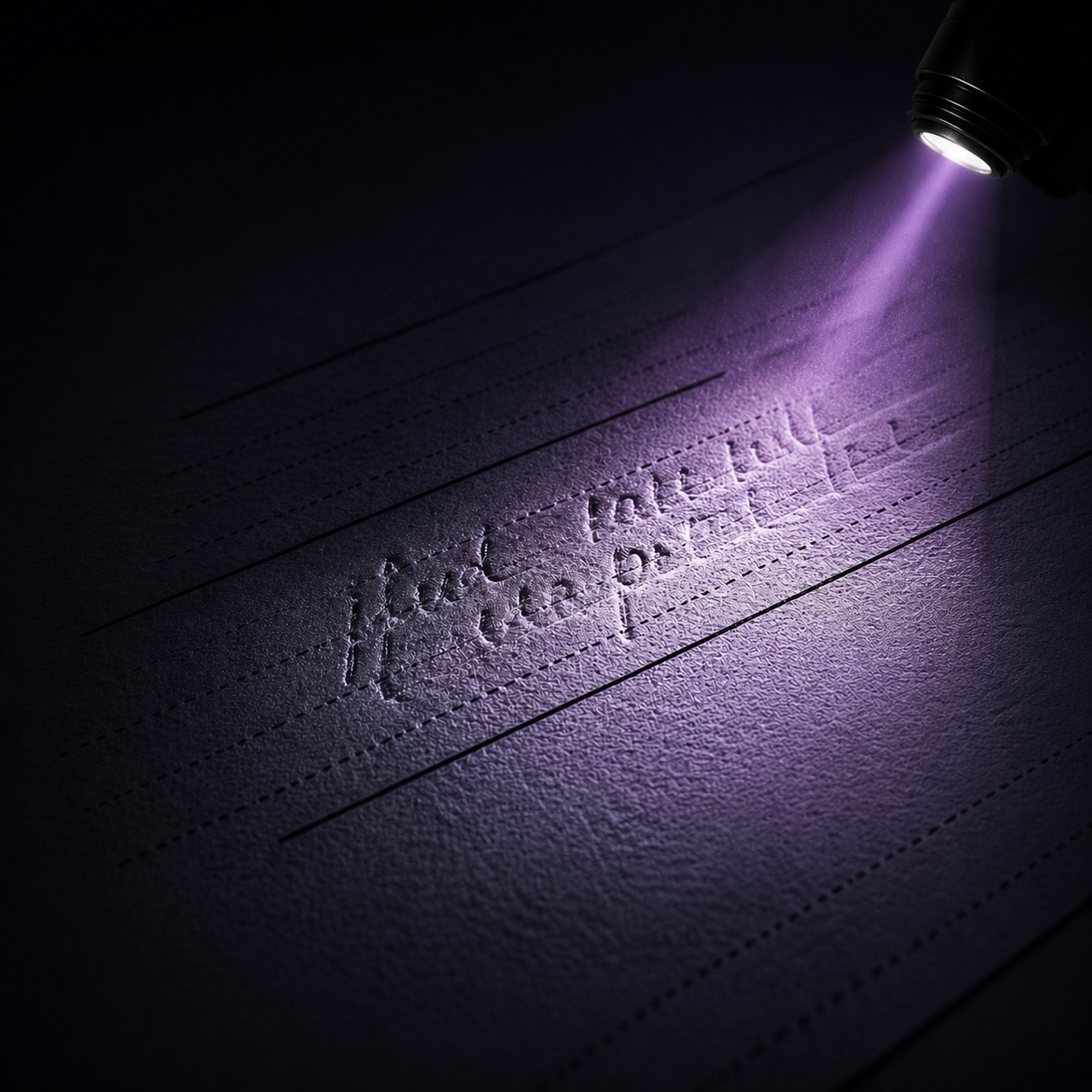
- Light hits a surface at a low, angled direction
- Shadows highlight surface indentations
-
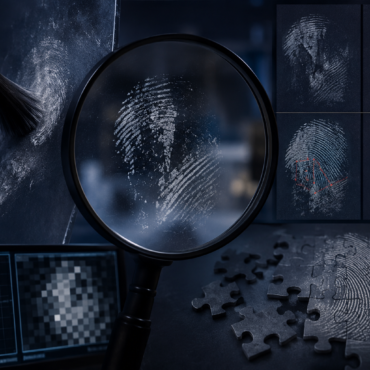
Digital Imaging Techniques
-
-
- Provides a high-resolution scanning
- Contrast enhancement
Real-World Applications
Investigators commonly use ghost line analysis for the following:
Recovering notes related to threats, extortion, or planning
Revealing hidden transactions or altered records
Identifying original terms in contracts or agreements
Detecting internal document manipulation
Role of Ghost Lines in Modern Courtroom Presentation
In modern forensic practice, experts increasingly connect ghost line detection with digital documentation and courtroom presentation techniques.
High-resolution techniques like ESDA help capture hidden impressions clearly, allowing experts to preserve and enhance them into visual exhibits. This makes it much easier for judges and juries to see and understand evidence that would otherwise remain invisible.
This not only strengthens the evidentiary value but also improves transparency in forensic reporting. As technology advances, the ability to detect and interpret ghost lines continues to evolve, reinforcing their importance in both traditional and digital forensic investigations
Limitations of Ghost Line Analysis
While powerful, ghost line examination has certain limitations:
-
- Impressions may fade over time
- Thin or soft paper may not retain strong indentations
- Environmental factors (humidity, handling) can degrade evidence
- Excessive handling can distort impressions
This is why proper evidence handling is critical.
Best Practices for Preserving Ghost Line Evidence
To maintain the integrity of such evidence:
-
- Avoid writing or placing pressure on recovered documents
- Store documents flat and protected
- Use gloves while handling
- Preserve original condition as much as possible
Even slight mishandling can destroy these delicate impressions.
Conclusion
Ghost lines are a perfect example of how forensic science uncovers what the eye cannot see.
These faint impressions may seem insignificant, but they often hold the key to solving complex cases.
In the hands of a skilled forensic document examiner, ghost lines can:
-
- Reveal hidden truths
- Expose manipulation
- Strengthen legal evidence


Post comments (0)