Introduction
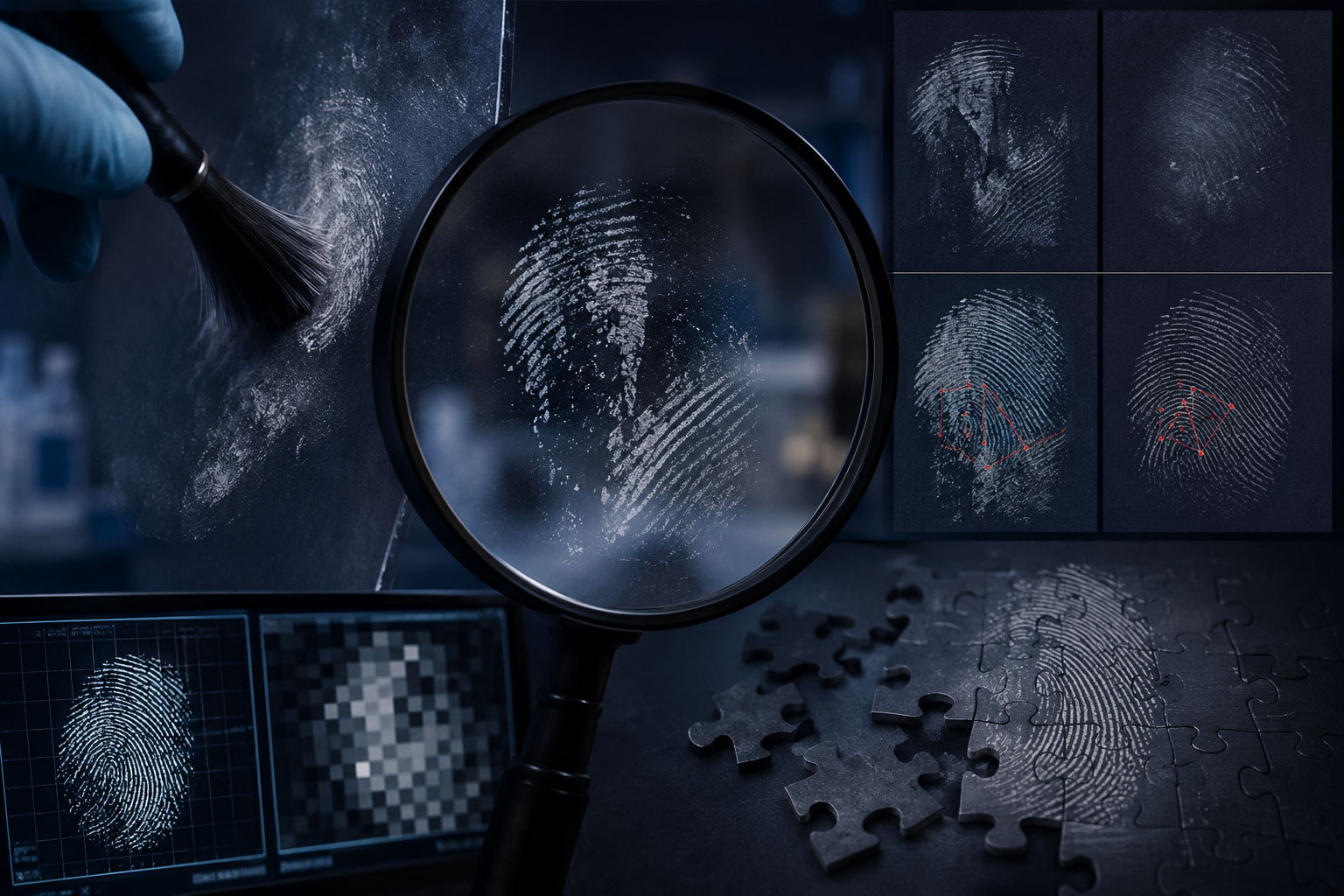
Fingerprint analysis has long been considered one of the most reliable methods of personal identification in forensic science. However, real-world crime scenes rarely provide perfect, textbook-quality prints. Investigators often encounter partial, distorted, or smudged fingerprints, which introduce significant complexity into the identification process. These imperfect impressions can still hold crucial evidentiary value—but extracting that value requires expertise, advanced tools, and careful interpretation.
What Are Partial and Smudged Fingerprints?
A partial fingerprint contains only a fragment of the full ridge pattern, often lacking key identifying features. A smudged fingerprint, on the other hand, results from movement during deposition or environmental interference, leading to blurred or distorted ridge details.
These types of prints are common due to:
- Incomplete contact between finger and surface
- Movement during touch
- Environmental conditions (heat, moisture, dust)
- Surface texture (porous, rough, or curved surfaces)
Key Challenges in Analysis
1. Limited Ridge Detail
Fingerprint identification relies on unique ridge characteristics, known as minutiae points (ridge endings, bifurcations, dots, etc.). Partial prints may contain very few of these features, making comparison difficult and sometimes inconclusive.
2. Distortion and Smudging
Smudging can alter ridge flow and spacing, creating misleading patterns. Distortion may occur due to pressure, angle, or movement, complicating accurate interpretation and increasing the risk of misidentification.
3. Lack of Reference Points
A full fingerprint provides a clear pattern type (loop, whorl, arch) and orientation. Partial prints often lack these reference markers, making it harder to determine alignment during comparison.
4. Surface Interference
Different surfaces affect how fingerprints are deposited and preserved. For example:
- Porous surfaces (paper) absorb residues, often preserving detail but limiting recovery methods
- Non-porous surfaces (glass, metal) may produce clearer prints but are more prone to smudging or environmental damage
5. Environmental Degradation
Factors such as humidity, temperature, sunlight, and time can degrade fingerprint residues, further reducing clarity and detail.
6. Subjectivity in Interpretation
Unlike automated systems, human examiners must interpret unclear patterns. With partial or smudged prints, the level of subjectivity increases, which can lead to disagreements among experts.
Role of Technology
Automated Fingerprint Identification Systems (AFIS)
AFIS databases can assist by comparing partial prints against millions of stored records. However, their effectiveness depends on the quality and quantity of input data. Poor-quality prints often yield low-confidence matches or multiple candidates.
Image Enhancement Techniques
Digital tools can improve contrast, highlight ridge details, and reduce noise. Techniques include:
- Contrast adjustment
- Edge detection
- Ridge flow enhancement
While helpful, these methods must be used cautiously to avoid introducing artifacts.
Legal and Evidentiary Concerns
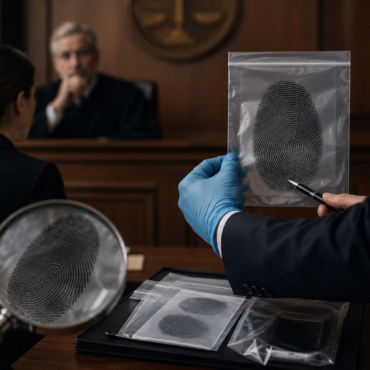
In court, the reliability of fingerprint evidence depends on clarity and the examiner’s confidence. Partial or smudged prints can raise issues such as:
- Reasonable doubt due to incomplete data
- Challenges from defense regarding interpretation bias
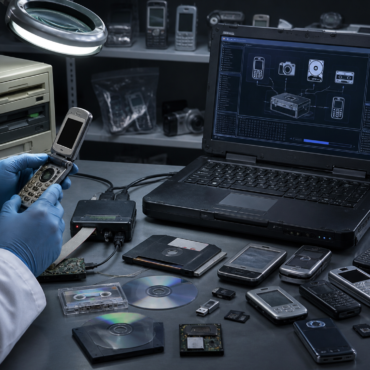
- Need for corroborative evidence (DNA, CCTV, digital data)
Courts increasingly scrutinize forensic methods, emphasizing transparency and scientific validation.
Best Practices for Handling Challenging Prints
- Proper Collection Techniques: Using appropriate powders, chemicals, or alternate light sources
- Documentation: High-resolution photography before and after development
- Multiple Examinations: Peer review by independent experts
- Use of Complementary Evidence: Combining fingerprint analysis with other forensic findings
- Continuous Training: Keeping examiners updated with evolving standards and technologies
Conclusion
Partial and smudged fingerprints represent one of the most demanding aspects of forensic identification. While they may not always provide definitive answers, they can still play a critical role when analyzed carefully and in conjunction with other evidence. The balance between scientific rigor and expert interpretation is essential to ensure accuracy, reliability, and justice.

Post comments (0)