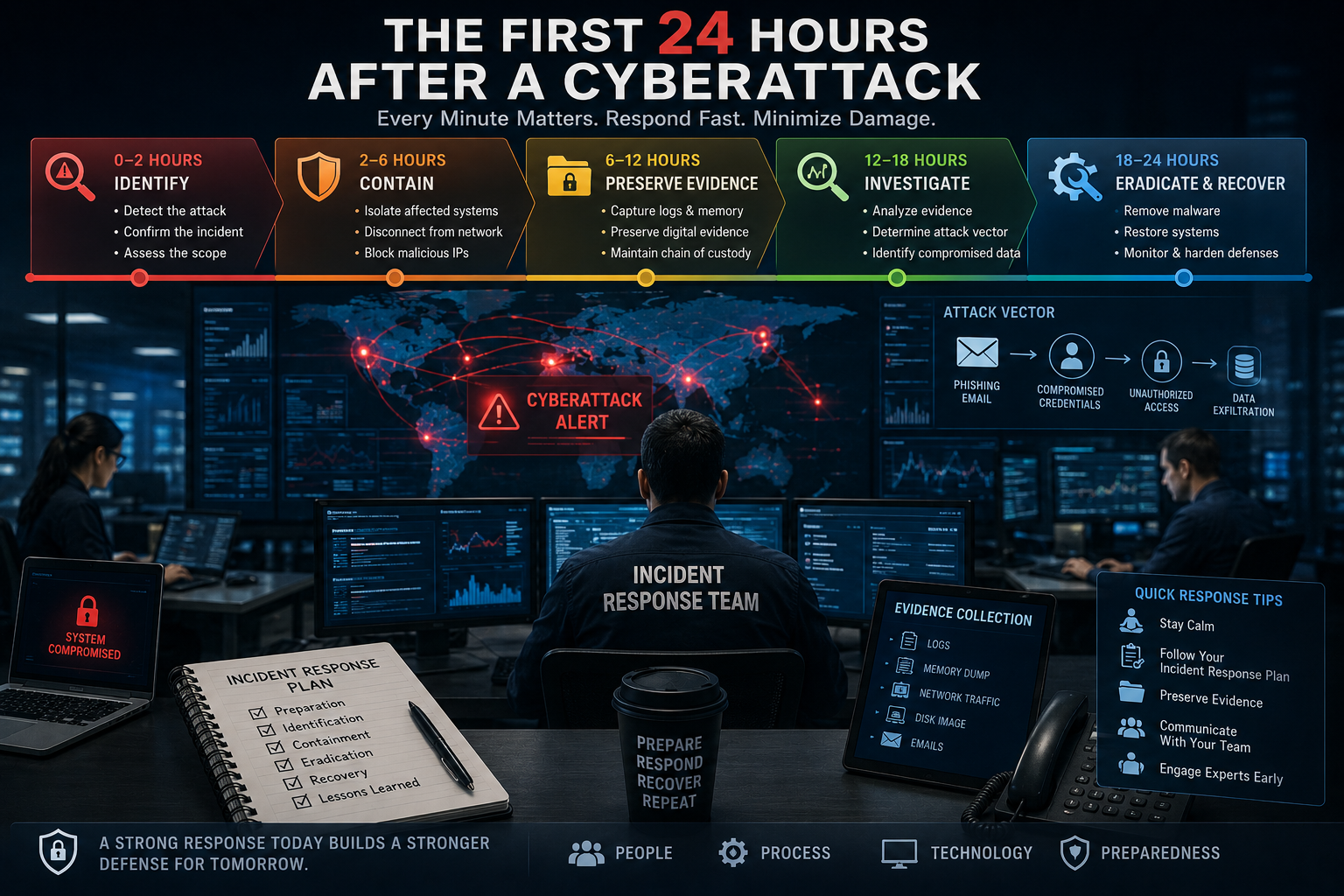
The first 24 hours after a cyberattack are the most critical period in any cybersecurity incident. Whether an organization experiences ransomware, a phishing attack, unauthorized network access, or data theft, the actions taken during the initial hours can significantly influence the outcome of the investigation and recovery process.
Cybercriminals often move quickly to steal sensitive data, spread malware, or erase evidence. Consequently, organizations must respond immediately to contain the attack, preserve digital evidence, and minimize operational and financial damage. A well-coordinated incident response, combined with digital forensics, helps investigators determine what happened, how the attackers gained access, and what information may have been compromised.
This article explains the key actions organizations should take during the first 24 hours after a cyberattack and highlights the role of digital forensics in effective incident response.
Why the First 24 Hours Matter
The initial response to a cyberattack determines how effectively an organization can contain the incident and preserve evidence.
A rapid response helps to:
- Limit the spread of malware
- Protect sensitive data
- Preserve digital evidence
- Reduce downtime
- Support legal and regulatory requirements
- Improve recovery efforts
Furthermore, delaying the response may allow attackers to steal additional information or destroy valuable evidence.
Hour 1–2: Identify the Cyberattack
The first priority is identifying the nature and scope of the incident.
Organizations should look for signs such as:
- Unusual network activity
- Unauthorized logins
- Ransom notes
- Missing or encrypted files
- Unexpected account activity
- Suspicious emails
- Disabled security software
Additionally, employees should immediately report any unusual system behavior to the IT or cybersecurity team.
Hour 2–6: Contain the Threat
Once the attack has been identified, organizations should focus on containing it.
Important actions include:
- Disconnect infected devices from the network
- Disable compromised accounts
- Block malicious IP addresses
- Isolate affected servers
- Prevent unauthorized remote access
However, investigators should avoid powering off systems unless absolutely necessary, as this may result in the loss of volatile evidence stored in memory.
Hour 6–12: Preserve Digital Evidence
Preserving evidence is essential for understanding the attack and supporting legal proceedings.
Digital forensic experts typically preserve:
- System logs
- Memory (RAM) dumps
- Network traffic
- Firewall logs
- Email records
- Security alerts
- Disk images
- Cloud logs
Moreover, investigators maintain a documented chain of custody to ensure the evidence remains legally admissible.
Hour 12–18: Begin the Investigation
Digital forensic investigators analyze the collected evidence to determine:
- How attackers gained access
- Which systems were affected
- What data was accessed or stolen
- Whether malware remains active
- The timeline of the attack
Furthermore, investigators correlate evidence from computers, servers, mobile devices, cloud platforms, and network infrastructure to reconstruct the incident.
Hour 18–24: Eradicate and Recover
After identifying the attack, organizations can begin recovery activities.
Common steps include:
- Removing malware
- Resetting compromised passwords
- Applying security patches
- Restoring clean backups
- Monitoring systems for suspicious activity
- Verifying system integrity
Additionally, organizations should confirm that attackers no longer have access before reconnecting systems to the network.
The Role of Digital Forensics
Digital forensics is a critical part of every cyberattack investigation.
Forensic experts help organizations by:
- Preserving digital evidence
- Creating forensic images
- Recovering deleted data
- Analyzing malware
- Examining email communications
- Investigating attacker activity
- Reconstructing attack timelines
- Preparing forensic reports
Consequently, organizations gain a clear understanding of the incident and can strengthen their future security measures.
Common Mistakes to Avoid
Organizations often make mistakes that can complicate investigations.
Avoid:
- Deleting suspicious files
- Restarting infected systems unnecessarily
- Paying ransomware without expert advice
- Ignoring system logs
- Failing to preserve evidence
- Delaying incident reporting
- Using compromised devices for investigation
Instead, involve qualified digital forensic professionals as early as possible.
Best Practices for Organizations
To improve cyber resilience, organizations should:
- Maintain an incident response plan
- Train employees regularly
- Enable multi-factor authentication
- Perform regular data backups
- Monitor network activity
- Keep software updated
- Conduct periodic security audits
- Preserve logs for forensic analysis
Furthermore, organizations should perform incident response exercises to ensure teams are prepared for real-world attacks.
Future of Cyber Incident Response
Cyber threats continue to evolve rapidly.
Emerging trends include:
- AI-powered threat detection
- Automated incident response
- Cloud-native forensic investigations
- Zero Trust security models
- Extended Detection and Response (XDR)
- Threat intelligence integration
These technologies help organizations detect and respond to cyberattacks more quickly and effectively.
Conclusion
The first 24 hours after a cyberattack are crucial for limiting damage, preserving evidence, and beginning a successful recovery. Every decision made during this period can influence the outcome of the investigation and the organization’s ability to resume normal operations.
Digital forensics plays a central role by helping investigators preserve evidence, determine the attack method, identify compromised systems, and support legal proceedings. By preparing in advance and responding quickly, organizations can significantly reduce the impact of cyber incidents and strengthen their overall cybersecurity posture.




Post comments (0)