Introduction
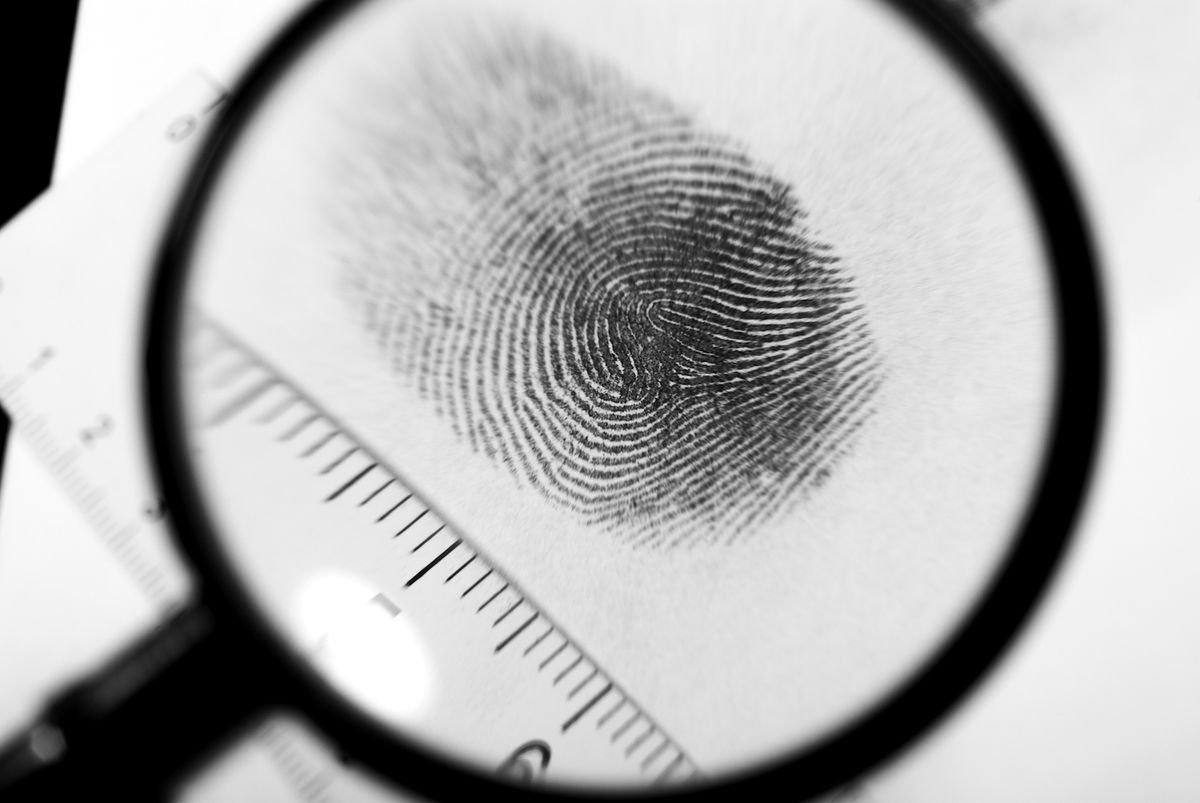
Fingerprint analysis is one of the oldest and most reliable methods of personal identification used in criminal investigations. Every individual possesses unique fingerprint patterns that remain unchanged throughout life, making fingerprints a powerful tool in forensic science. Over centuries, fingerprint analysis has evolved from simple observations of skin patterns to sophisticated digital identification systems used worldwide today. The history of fingerprint analysis reflects the development of science, law enforcement, and technology working together to improve criminal investigations and human identification.
Early Use of Fingerprints in Ancient Civilisations
The use of fingerprints can be traced back thousands of years. Ancient civilizations recognized that the patterns on human fingers were unique, even though they did not fully understand the scientific basis behind them.
In ancient Babylon, around 2000 BCE, fingerprints were pressed into clay tablets during business transactions. Similarly, ancient Chinese records from the Qin Dynasty show the use of fingerprints on legal documents and seals. These practices suggest that people understood fingerprints could serve as a form of personal identification.
However, these early uses were practical rather than scientific. Fingerprints were used mainly to verify identity or authenticate documents without any formal classification or analysis methods.
Scientific Study of Fingerprints Begins
The scientific examination of fingerprints began much later during the 17th and 18th centuries. Several scientists studied friction ridge skin patterns and documented their observations.
In 1686, Italian anatomist Marcello Malpighi examined the ridges, spirals, and loops present on fingers and palms. The layer of skin known as the “Malpighian layer” was later named after him.
Later, in 1788, German anatomist Johann Christoph Andreas Mayer stated that no two individuals have identical fingerprints. This observation became one of the foundational principles of fingerprint science.
Although these scientists contributed important discoveries, fingerprints had not yet become an official identification system.
Development of Fingerprint Classification
The modern use of fingerprints for identification began during the 19th century. During this period, researchers and administrators developed systems to classify and compare fingerprints systematically.
In 1858, British civil servant William James Herschel began using fingerprints in India for contracts and administrative purposes. He noticed that fingerprints remained permanent over time and could reliably identify individuals.
At the same time, Scottish physician Henry Faulds studied fingerprints in Japan and proposed their use in criminal investigations. In 1880, he published an article in the scientific journal Nature, suggesting that fingerprints could identify criminals by comparing latent prints found at crime scenes.
Another major contributor was English scientist Francis Galton, who conducted extensive research on fingerprint patterns. In 1892, he published the book Finger Prints, which established that fingerprints are unique and permanent. Galton also identified the primary fingerprint patterns:
Loops
Whorls
Arches
His work laid the scientific foundation for fingerprint identification.
The Henry Classification System
As fingerprint records increased, law enforcement agencies needed an organized system for storing and retrieving prints efficiently.
In 1897, Edward Henry developed the Henry Classification System in India with assistance from Indian fingerprint experts Azizul Haque and Hem Chandra Bose. This system categorised fingerprints according to ridge patterns and numerical values, making large-scale record management possible.
The Henry System was later adopted by police departments in many countries, including the United Kingdom and the United States. It became the standard fingerprint classification method for decades.
The establishment of fingerprint bureaus marked a major milestone in forensic science. Law enforcement agencies could now maintain criminal identification databases and compare fingerprints from crime scenes systematically.
Fingerprints in Criminal Investigations
Fingerprint evidence became increasingly important during the early 20th century. Courts began accepting fingerprints as reliable evidence for identification.
One of the first major criminal cases solved using fingerprint evidence occurred in Argentina in 1892. Police officer Juan Vucetich used bloody fingerprints to identify a mother responsible for the murder of her children. This case demonstrated the practical value of fingerprint identification in solving crimes.
Soon afterwards, police departments around the world adopted fingerprinting for criminal records, suspect identification, and crime scene investigation.
Fingerprint analysis also replaced earlier identification methods such as anthropometry, which relied on body measurements but proved less reliable.
Development of Latent Fingerprint Techniques
As forensic science advanced, investigators developed better methods for detecting latent fingerprints—invisible prints left by sweat and oils on surfaces.
Early techniques involved powder dusting, where fine powders adhered to fingerprint residues. Investigators later introduced chemical methods such as:
- Ninhydrin for porous surfaces like paper
- Silver nitrate processing
- Iodine fuming
- Cyanoacrylate (superglue) fuming
These methods significantly improved the ability to recover fingerprints from crime scenes.
Advances in photography and microscopy also enhanced fingerprint comparison and documentation.
Introduction of Automated Fingerprint Identification Systems (AFIS)
The late 20th century brought major technological advancements in fingerprint analysis.
Before computers, fingerprint comparison was performed manually, requiring experts to examine ridge details visually. This process was time-consuming and labor-intensive.
In the 1980s, Automated Fingerprint Identification Systems (AFIS) revolutionized forensic identification. AFIS allowed computers to scan, digitize, store, and compare fingerprints rapidly against large databases.
AFIS improved:
- Speed of identification
- Accuracy of comparisons
- Criminal database management
- International information sharing
Law enforcement agencies worldwide adopted computerized fingerprint systems, making investigations more efficient.
Modern Fingerprint Technology
Today, fingerprint analysis combines traditional forensic principles with advanced digital technology.
Modern fingerprint systems use:
- Live-scan digital fingerprint collection
- High-resolution imaging
- Artificial intelligence-assisted matching
- Biometric authentication systems
Fingerprint recognition is now used not only in criminal investigations but also in:
- Mobile phone security
- Border control
- Banking systems
- Employee attendance systems
- National identification programs
Despite technological advancements, forensic experts still play a critical role in fingerprint examination. Human analysis remains essential for verifying matches and interpreting complex or partial prints.
Challenges and Future Developments
Although fingerprint analysis is highly reliable, challenges still exist. Poor-quality prints, distorted impressions, and environmental damage can complicate comparisons. Errors may occur if procedures are not followed carefully.
To improve reliability, forensic laboratories follow strict quality assurance protocols and international standards.
Future developments in fingerprint analysis may include:
- Enhanced AI-driven comparison systems
- Three-dimensional fingerprint imaging
- Improved latent print recovery techniques
- Integration with other biometric technologies
Research continues to strengthen the accuracy and efficiency of fingerprint identification.
Conclusion
The history and evolution of fingerprint analysis demonstrate the remarkable progress of forensic science over centuries. From ancient fingerprint impressions on clay tablets to modern computerised biometric systems, fingerprint analysis has become one of the most trusted methods of human identification.
The contributions of pioneers such as William James Herschel, Henry Faulds, Francis Galton, and Edward Henry helped transform fingerprinting into a scientific discipline that continues to support criminal justice systems worldwide.
As technology advances, fingerprint analysis will continue evolving while remaining a cornerstone of forensic identification and crime investigation.




Post comments (0)