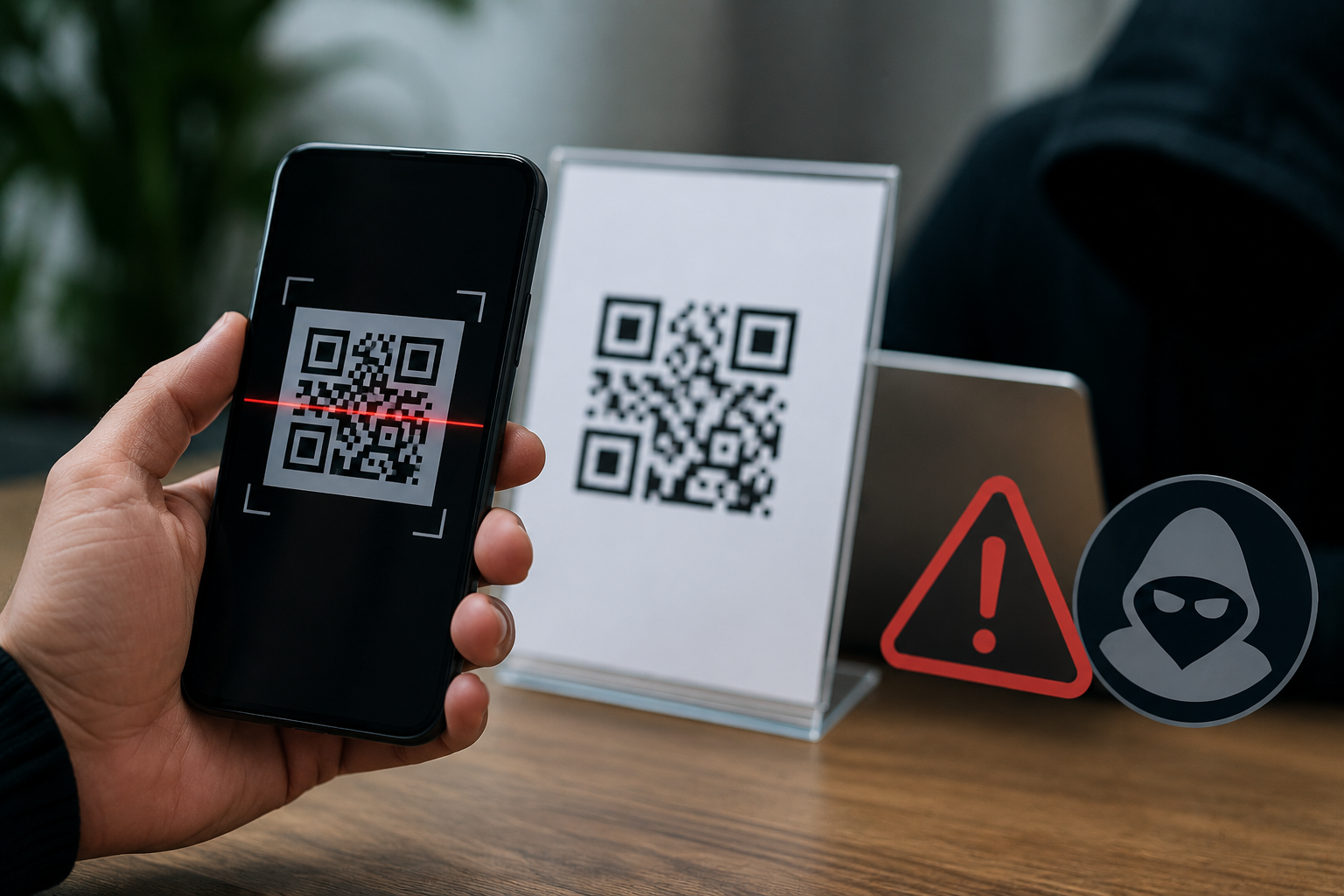
QR Code Scams have emerged as one of the fastest-growing cyber threats in today’s digital world. From restaurant menus and online payments to event tickets and banking applications, QR codes have become an essential part of everyday life. While they offer speed and convenience, cybercriminals are increasingly exploiting them to steal personal information, financial data, and login credentials.
Unlike traditional phishing attacks that rely on suspicious links, QR code scams hide malicious websites behind seemingly harmless QR codes. Victims often scan these codes without verifying their destination, making them easy targets for cybercriminals.
This article explains how QR Code Scams work, common attack techniques, warning signs, and how digital forensics helps investigate these cybercrimes.
What Are QR Code Scams?
QR Code Scams (also known as Quishing) are cyberattacks where criminals create or modify QR codes that redirect users to malicious websites or fraudulent payment portals.
The attacker may place fake QR codes on:
- Parking meters
- Restaurant tables
- Public advertisements
- Utility bills
- Product packaging
- Event tickets
- ATM machines
- Business invoices
Once scanned, victims may unknowingly provide sensitive information or install malware on their devices.
Why QR Code Scams Are Increasing
The popularity of digital payments and contactless services has made QR codes a favorite target for cybercriminals.
Several factors contribute to the rise of QR Code Scams:
- Increased use of digital payments
- Growing dependence on smartphones
- Difficulty verifying QR code destinations
- Limited user awareness
- Widespread public trust in QR codes
As a result, both individuals and businesses face an increased risk of becoming victims.
Common Types of QR Code Scams
Fake Payment QR Codes
Criminals replace legitimate payment QR codes with fraudulent ones.
Victims unknowingly transfer money directly into the scammer’s account.
Fake Banking Login Pages
A QR code redirects users to a website that looks identical to a legitimate banking portal.
Victims enter:
- Internet banking credentials
- Debit card details
- Credit card information
- OTPs
- PIN numbers
The information is immediately stolen.
Malware Distribution
Some QR codes lead users to download malicious applications disguised as:
- Banking apps
- Security updates
- Payment software
- Business applications
Once installed, malware can steal personal and financial information.
Fake Wi-Fi QR Codes
Cybercriminals place fake QR codes that connect users to malicious wireless networks.
Attackers may then intercept internet traffic and collect sensitive information.
Phishing Through QR Codes
Instead of sending suspicious links through email, attackers embed malicious URLs inside QR codes.
This technique often bypasses traditional email security filters.
How Digital Forensics Investigates QR Code Scams
Digital forensic experts play a vital role in identifying how QR Code Scams are executed and who may be responsible.
Mobile Device Analysis
Investigators examine:
- Browser history
- QR scanning applications
- Downloaded files
- Installed applications
- SMS messages
- Email records
- Payment applications
These artifacts help determine what occurred after the QR code was scanned.
URL Analysis
Experts analyze:
- Redirect chains
- Domain registrations
- Shortened URLs
- Website hosting information
- SSL certificates
This helps identify malicious infrastructure.
Network Forensics
Investigators examine:
- Network traffic
- DNS requests
- IP addresses
- Suspicious connections
- Remote servers
Network logs often reveal communication with attacker-controlled systems.
Malware Analysis
If malware was installed, forensic specialists analyze:
- Application behavior
- File modifications
- Registry changes
- Network activity
- Persistence mechanisms
This helps determine the malware’s capabilities.
Financial Investigation
Where financial fraud occurs, investigators review:
- Bank transaction records
- UPI transactions
- Payment gateway logs
- Cryptocurrency transfers
- Account information
These records assist law enforcement agencies in tracing fraudulent payments.
Digital Evidence Collected
A QR Code Scam investigation may recover:
- Browser history
- Scan history
- QR code images
- Device logs
- Payment confirmations
- Chat conversations
- Call records
- Email communications
- Malware samples
- Network logs
Together, these digital artifacts help reconstruct the incident.
Warning Signs of QR Code Scams
Be cautious if you notice:
- QR codes pasted over existing ones
- Requests for immediate payment
- Unknown websites after scanning
- Requests for banking credentials
- Unexpected app downloads
- Poor website design
- Suspicious domain names
Whenever possible, verify the destination URL before proceeding.
How to Protect Yourself
To reduce the risk of becoming a victim:
- Verify QR codes before scanning.
- Inspect public QR codes for signs of tampering.
- Use trusted QR scanner applications.
- Avoid downloading unknown apps.
- Enable Multi-Factor Authentication (MFA).
- Keep your smartphone updated.
- Use reputable mobile security software.
- Verify payment details before completing transactions.
Furthermore, organizations should regularly inspect public payment QR codes to ensure they have not been replaced.
Role of Businesses in Preventing QR Code Scams
Businesses can strengthen security by:
- Regularly inspecting displayed QR codes
- Using tamper-resistant stickers
- Monitoring payment transactions
- Educating employees and customers
- Implementing secure payment systems
- Reporting suspicious activity promptly
These measures significantly reduce the likelihood of successful attacks.
Future of QR Code Security
As QR code usage continues to grow, security technologies are also evolving.
Emerging developments include:
- AI-powered scam detection
- Secure dynamic QR codes
- Real-time URL verification
- Enhanced payment authentication
- Mobile threat detection
- Fraud monitoring systems
These innovations will help reduce the success of QR Code Scams while improving user safety.
Conclusion
QR Code Scams represent a rapidly growing form of cybercrime that exploits convenience and trust. A simple scan can expose users to phishing websites, malware, financial fraud, and identity theft.
Digital forensics plays a crucial role in investigating these incidents by recovering digital evidence, analyzing malicious infrastructure, tracing financial transactions, and supporting legal proceedings. By understanding how these scams operate and following cybersecurity best practices, individuals and organizations can protect themselves from becoming victims.


Post comments (0)