Introduction
Fingerprint identification is one of the most established and widely accepted methods of personal identification in forensic science. The uniqueness and permanence of friction ridge patterns make fingerprints a valuable form of evidence in criminal investigations. However, forensic experts do not always receive complete and clear fingerprint impressions from crime scenes. In many cases, only a portion of a fingerprint, known as a partial fingerprint, is recovered. These partial impressions present significant challenges during examination, comparison, and identification.
Partial fingerprint identification requires specialized knowledge, advanced techniques, and careful interpretation to ensure accuracy. Understanding the challenges associated with partial fingerprints is essential for forensic professionals and investigators alike.
What is a Partial Fingerprint?
A partial fingerprint is an incomplete impression containing only a section of the friction ridge pattern from a finger. Unlike full rolled fingerprints collected during booking procedures, partial prints often lack the complete ridge structure needed for straightforward comparison.
Partial fingerprints may be recovered from:
- Crime scene surfaces
- Weapons
- Documents
- Glass objects
- Electronic devices
- Vehicles
- Packaging materials
The quality and quantity of ridge detail present in these prints vary significantly, making identification more complex.
Why Partial Fingerprints Occur
Several factors contribute to the formation of partial fingerprints:
Limited Contact Area
When a finger touches a surface briefly, or at an angle, only a small section of the friction ridge skin may come into contact with the surface.
Surface Characteristics
Rough, curved, textured, or porous surfaces often prevent complete fingerprint deposition.
Movement During Contact
Sliding, twisting, or smudging of fingers can distort the impression and leave only fragmented ridge patterns.
Environmental Conditions
Heat, moisture, dust, and exposure to environmental elements can degrade fingerprint evidence over time.
Incomplete Development
Improper fingerprint development techniques may reveal only portions of a latent print.
Importance of Partial Fingerprints in Investigations
Despite their limitations, partial fingerprints frequently play a critical role in criminal investigations.
Many crime scene fingerprints are partial rather than complete impressions.
A well-preserved partial print may:
- Link a suspect to a crime scene
- Exclude innocent individuals
- Corroborate witness statements
- Support other forensic evidence
- Establish contact between a person and an object
Therefore, forensic examiners must maximize the information obtained from every recoverable ridge detail.
Major Challenges in Partial Fingerprint Identification
Limited Ridge Detail:
One of the most significant challenges is the reduced amount of friction ridge information available for examination.
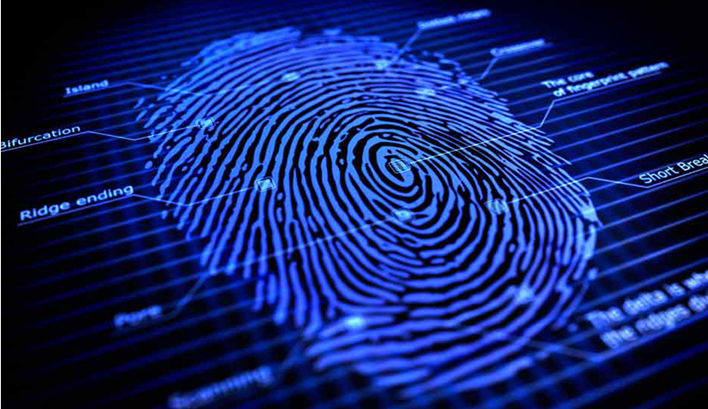
Fingerprint identification relies on:
- Ridge endings
- Bifurcations
- Dots
- Islands
- Enclosures
- Short ridges
These features, collectively called minutiae, are compared between the unknown print and known fingerprints.
In partial prints, only a few minutiae may be visible, making reliable comparison more difficult.
Absence of Pattern Information:
Fingerprint classification often begins with recognizing overall ridge patterns such as:
Partial fingerprints may not contain enough area to determine the pattern type. Without this information, narrowing down potential matches becomes more challenging.
Distortion and Smudging:
Crime scene fingerprints are rarely deposited under ideal conditions.
Distortions may occur due to:
- Finger movement
- Pressure variations
- Curved surfaces
- Surface contamination
These distortions alter ridge spacing and shape, making comparison with known prints more complicated.
Poor Quality Impressions:
Latent fingerprints are often faint and difficult to visualize.
Factors affecting quality include:
- Insufficient sweat or oils
- Dirty surfaces
- Weather exposure
- Improper evidence handling
Low-quality prints may contain broken or unclear ridge structures, increasing the risk of misinterpretation.
Insufficient Minutiae Points:
Historically, some jurisdictions required a minimum number of matching minutiae for identification.
Although many modern forensic systems focus on overall ridge detail rather than a fixed numerical standard, partial fingerprints often contain fewer identifiable minutiae.
This limitation may prevent examiners from reaching a definitive conclusion.
Increased Examiner Interpretation:
Partial prints require greater examiner judgment compared to complete fingerprints.
Examiners must evaluate:
- Ridge flow
- Spatial relationships
- Available minutiae
- Distortions
- Print quality
Because less information is available, subjective interpretation may play a larger role, requiring strict adherence to examination protocols and verification procedures.
Difficulty in Automated Searches:
Automated Fingerprint Identification Systems (AFIS) are valuable tools for searching large fingerprint databases.
However, partial fingerprints often create challenges for automated systems because:
- They contain fewer features.
- Pattern information may be absent.
- Distortions can affect matching algorithms.
As a result, AFIS may generate numerous candidate matches, requiring extensive manual review by fingerprint examiners.
Similarity Among Common Ridge Features
Many minutiae configurations can appear similar among different individuals when only a small fingerprint area is available.
A partial print containing only a few ridge characteristics may not provide enough uniqueness for positive identification. This increases the importance of examining the overall friction ridge structure rather than relying solely on isolated features.
Scientific Approaches to Overcome These Challenges
Advanced Fingerprint Development Techniques
Modern laboratories use specialized methods to enhance latent fingerprints, including:
- Fingerprint powders
- Cyanoacrylate fuming
- Ninhydrin
- DFO (1,8-Diazafluoren-9-one)
- Physical Developer
- Vacuum Metal Deposition
These techniques can reveal additional ridge detail that may not be visible initially.
Digital Image Enhancement
Computer-assisted enhancement tools help improve fingerprint visibility by:
- Increasing contrast
- Reducing background noise
- Clarifying ridge structures
- Enhancing latent impressions
Digital processing can significantly improve the examination of weak or fragmented prints.
ACE-V Methodology
Fingerprint examiners commonly follow the ACE-V process:
- Analysis: Evaluate the quality and quantity of ridge detail.
- Comparison: Compare unknown and known prints.
- Evaluation: Determine whether sufficient agreement exists.
- Verification: Independent review by another qualified examiner.
This systematic approach helps maintain reliability when examining partial fingerprints.
Use of Multiple Evidence Sources
Partial fingerprint evidence is often interpreted alongside other forensic evidence, such as:
- DNA profiles
- CCTV footage
- Trace evidence
- Digital evidence
- Witness testimony
Combining multiple evidence types strengthens investigative conclusions and reduces reliance on a single partial print.
Legal and Forensic Considerations
Because partial fingerprints may contain limited information, forensic experts must exercise caution when reporting conclusions.
Possible outcomes of an examination include:
- Identification
- Exclusion
- Inconclusive result
An inconclusive finding does not indicate examiner failure; rather, it reflects the scientific limitation of the available evidence. Courts increasingly expect forensic conclusions to be supported by clear documentation, quality assurance measures, and peer verification.
Conclusion
Partial fingerprint identification remains one of the most challenging areas of friction ridge examination. Limited ridge detail, poor quality impressions, distortion, and reduced pattern information can complicate the identification process and increases the need for careful analysis. Nevertheless, advances in fingerprint development, digital enhancement, automated databases, and standardized examination methodologies have significantly improved the ability of forensic experts to evaluate partial fingerprints accurately.
Although partial fingerprints may not always lead to definitive identifications, they continue to provide valuable investigative leads and supporting evidence in criminal cases. Through rigorous scientific procedures and expert interpretation, forensic examiners can extract meaningful information even from the smallest fragment of a fingerprint.



Post comments (0)