Introduction
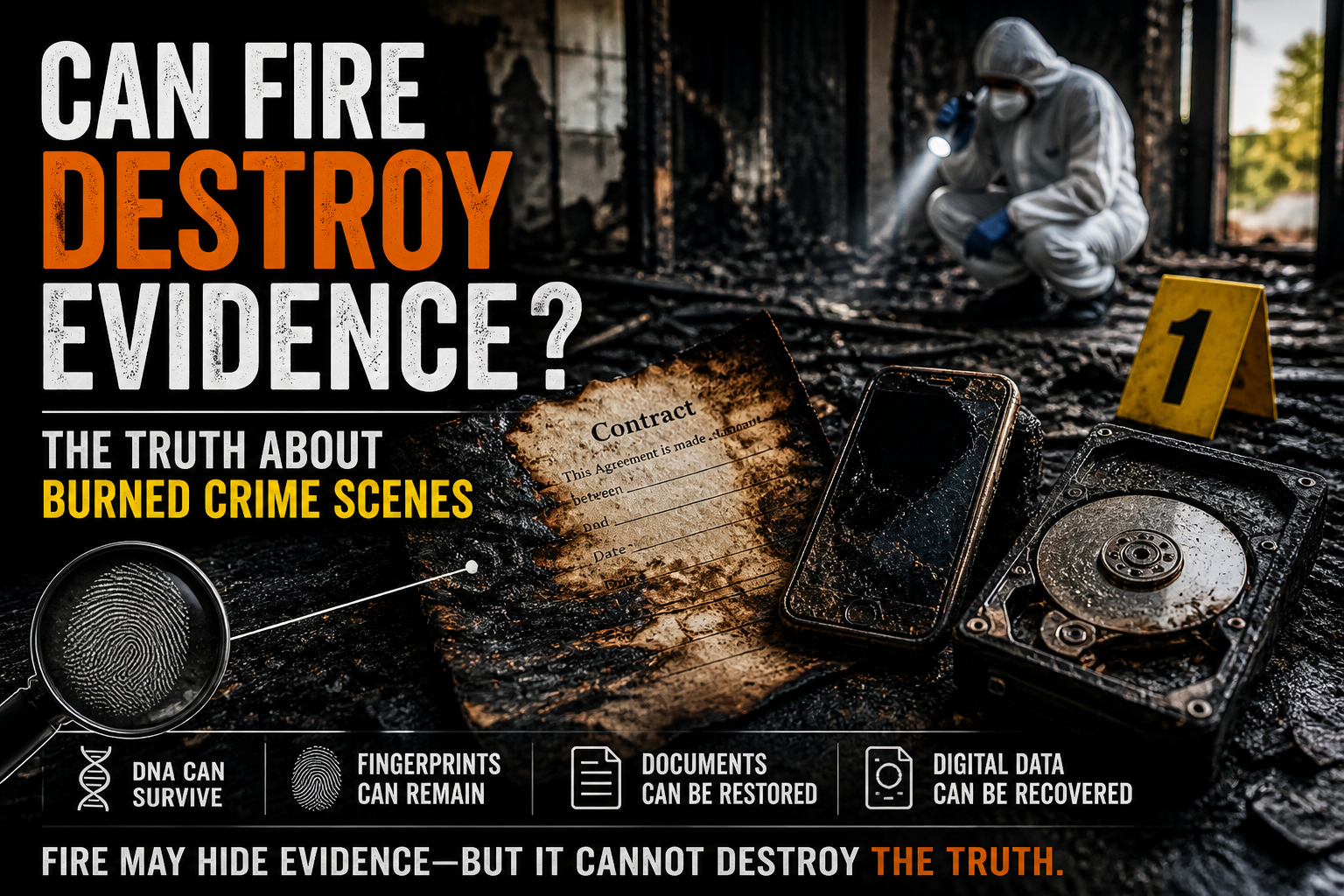
Fire is often seen as a perfect eraser, which is capable of reducing objects, structures, and even entire crime scenes to ashes. In popular imagination, setting a fire is the perfect way to destroy evidence and eliminate traces of a crime. But in reality, fire is far from a flawless or perfect cover-up tool. While it can damage or alter evidence, it rarely eliminates it completely. As a matter of fact, burned crime scenes often reveal just as much, if not more, than untouched ones.
Let’s explore the truth behind fire and forensic evidence.
The Myth: Fire Destroys Everything
At first glance, fire appears devastating. It chars surfaces, melts materials, and reduces items to debris. This leads many to assume that crucial evidence, such as fingerprints, DNA, documents, and digital devices, would be completely destroyed.
However, this assumption is misleading.
Fire does not burn uniformly. Temperature variations, oxygen levels, and material composition all influence how an object reacts to heat. As a result, some parts of a crime scene may be heavily damaged, while others remain partially intact. This uneven destruction often works in favor of forensic investigators.
Burned Documents Still Tell Stories
Paper is highly vulnerable to fire, but even burned documents can reveal hidden information.
- Partially burned papers may retain text that can be enhanced using infrared or ultraviolet light.
- Charred documents can sometimes be reconstructed layer by layer.
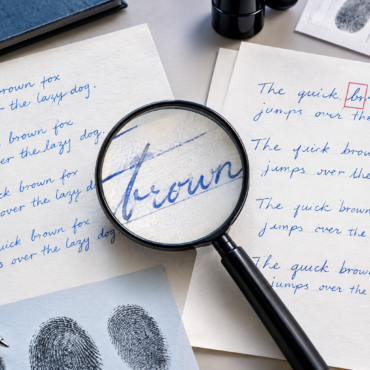
- Indented writing (impressions left on underlying pages) may still be visible.
Forensic document examiners often recover critical details such as signatures, financial records, or handwritten notes from what appears to be destroyed material.
Digital Evidence Is More Resilient Than You Think
Many people believe that burning a phone or laptop will permanently erase data. This is not entirely true.
- Storage devices like hard drives, SSDs, and memory cards can sometimes survive fires.
- Even if the outer casing is damaged, internal components may remain intact.
- Specialised labs can recover some data from heat-damaged devices using advanced techniques.
In some cases, investigators don’t even need the physical device—data may already be stored in cloud systems, backups, or network logs.
Fire Leaves Its Own Evidence
Ironically, fire itself becomes a source of forensic evidence.
Investigators trained in fire forensics analyse burn patterns to understand how the fire started and spread. Key indicators include:
- Burn patterns: V-shaped marks can indicate the fire’s origin point.
- Accelerants: Substances like petrol or kerosene leave chemical residues that can be detected.
- Heat intensity: Different materials react differently to heat, helping reconstruct the sequence of events.
If a fire was intentionally set (arson), these clues often expose the attempt to conceal a crime.
Fire Can Alter Evidence—but That’s Also a Clue
While fire doesn’t completely destroy evidence, it can alter it. But even these alterations can be useful.
- Melted objects can indicate temperature levels.
- Warped metal or glass can reveal the duration of the fire.
- Unusual burn patterns may suggest tampering or staging.
Forensic experts are trained to interpret these changes, turning damage into valuable insight.
Human Error in Staged Fire
Many offenders who use fire to destroy evidence make a critical mistake:
- They underestimate how much evidence survives.
- They fail to control the fire, leading to unintended spread.
- They leave behind traces of accelerants or ignition sources.
In some cases, the act of setting the fire itself becomes the strongest piece of evidence against them.
Role of Fire Investigators and Forensic Experts
Burned crime scenes require a collaborative approach:
- Fire investigators determine the origin and cause of the fire.
- Forensic scientists recover and analyse physical and biological evidence.
- Digital forensic experts examine damaged devices.
This multidisciplinary effort ensures that even heavily burned scenes are thoroughly examined.
Real-World Insight: Fire as a Failed Cover-Up
In numerous real-life cases, criminals have attempted to destroy evidence through fire, only to be caught because of what remained.
From identifiable DNA in charred remains to recoverable data in burned devices, fire often exposes more than it conceals.
Instead of erasing evidence, it adds another layer of investigation.
Conclusion
Undoubtedly, fire is powerful but not perfect. It can damage, distort, or even complicate a crime scene, but it rarely eliminates all evidence.
Modern forensic science is designed to work under challenging conditions, including burned environments.
With advanced tools and expertise, investigators can uncover hidden details from even the most damaged scenes.
The truth is simple:
“Fire may hide evidence—but it cannot destroy the truth.”


Post comments (0)