Introduction
Bullets are one of the most critical components of ammunition and play a significant role in determining the performance, accuracy, and terminal effects of a firearm. While many people use the terms bullet and cartridge interchangeably, they are not the same. A bullet is the projectile that leaves the firearm’s barrel, whereas a cartridge consists of the bullet, cartridge case, primer, and propellant.
In forensic investigations, identifying the type of bullet recovered from a crime scene can provide valuable information regarding the firearm used, shooting distance, wound characteristics, and even help establish links between different cases.
What is a Bullet?
A bullet is the projectile portion of a cartridge that is propelled through the barrel of a firearm by the expanding gases generated when the propellant burns. Bullets are manufactured in different shapes, sizes, materials, and designs depending on their intended purpose, such as target shooting, hunting, self-defense, military use, or specialized applications.
Types of Bullets
Full Metal Jacket (FMJ) Bullet
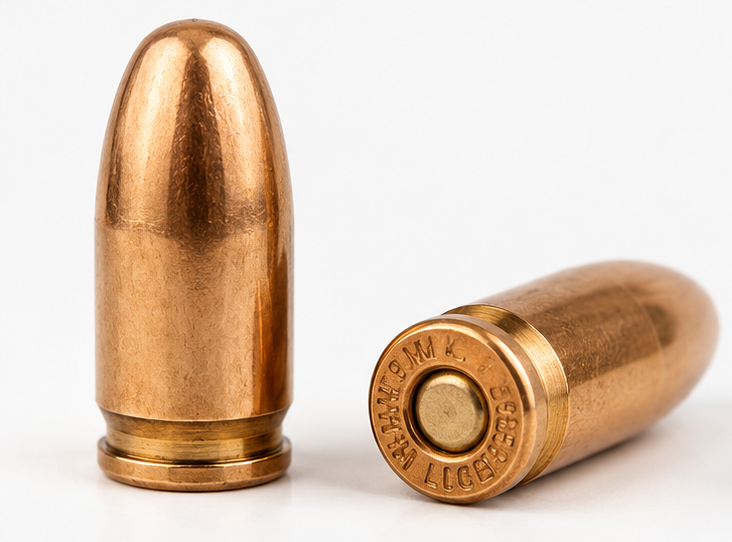
The Full Metal Jacket (FMJ) bullet consists of a soft lead core completely enclosed by a harder metal jacket, usually made of copper or a copper alloy.
Characteristics:
- Smooth feeding in semi-automatic firearms.
- Minimal deformation upon impact.
- High penetration capability.
- Commonly used for military training and target shooting.
Forensic Importance:
FMJ bullets often retain their original shape after impact, making them more likely to preserve rifling marks that assist firearm examiners in identifying the weapon used.
Jacketed Hollow Point (JHP) Bullet
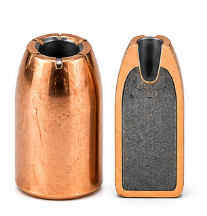
A Jacketed Hollow Point (JHP) bullet features a hollow cavity at the tip surrounded by a metal jacket. Upon impact, the cavity expands, causing the bullet to mushroom.
Characteristics:
- Controlled expansion.
- Reduced risk of over-penetration.
- Larger wound channel.
- Commonly used in law enforcement and self-defense.
Forensic Importance:
The expanded shape can help determine the type of ammunition used and provides valuable information regarding terminal ballistics.
Hollow Point Bullet
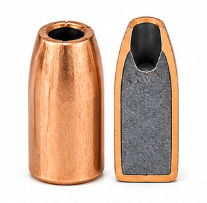
Unlike the jacketed version, a standard Hollow Point bullet may have little or no metal jacket surrounding the lead core.
Characteristics:
- Rapid expansion.
- High energy transfer.
- Limited penetration.
- Suitable for self-defense applications.
Forensic Importance:
These bullets frequently deform significantly, which may reduce the visibility of rifling marks but provide useful evidence regarding bullet expansion and impact characteristics.
Soft Point (SP) Bullet
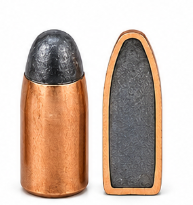
Soft Point bullets have an exposed lead tip while the remainder of the bullet is enclosed within a metal jacket.
Characteristics:
Moderate expansion.
Better penetration than hollow points.
Frequently used for hunting medium and large game.
Forensic Importance:
Soft Point bullets exhibit predictable deformation, allowing forensic experts to estimate impact velocity and bullet performance.
Ballistic Tip Bullet
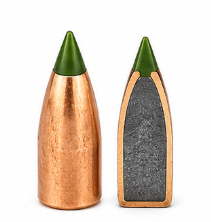
Ballistic Tip bullets combine a hollow cavity with a polymer tip that improves aerodynamics while initiating controlled expansion upon impact.
Characteristics:
- Excellent long-range accuracy.
- Rapid expansion.
- High ballistic coefficient.
- Commonly used by hunters.
Forensic Importance:
The distinctive polymer tip often leaves characteristic evidence that may assist in bullet identification.
Wadcutter Bullet
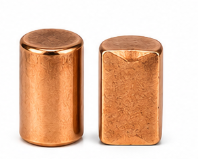
A Wadcutter bullet has a completely flat front surface designed primarily for target shooting.
Characteristics:
- Produces clean circular holes in paper targets.
- Low recoil.
- High accuracy at short distances.
Forensic Importance:
Their unique flat profile produces characteristic entrance wounds and distinctive target impressions useful during reconstruction.
Semi-Wadcutter (SWC) Bullet
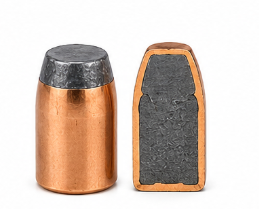
The Semi-Wadcutter combines a flat nose with a conical shape.
Characteristics:
- Improved feeding reliability.
- Better penetration than wadcutters.
- Suitable for both target shooting and hunting.
Forensic Importance:
These bullets may produce wound characteristics intermediate between wadcutters and round-nose bullets.
Round Nose (RN) Bullet
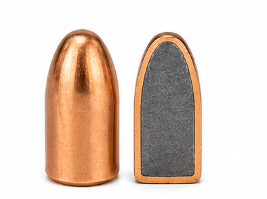
Round Nose bullets feature a smooth, rounded front profile.
Characteristics:
- Reliable feeding.
- Deep penetration.
- Widely used in training ammunition and older military cartridges.
Forensic Importance:
Round Nose bullets often pass through soft tissue with relatively little expansion, leaving identifiable rifling impressions.
Flat Nose (FN) Bullet
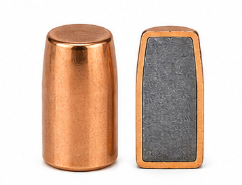
Flat Nose bullets have a flattened front instead of a pointed or rounded tip.
Characteristics:
- Improved energy transfer.
- Moderate penetration.
- Commonly used in lever-action rifles and revolvers.
Forensic Importance:
Their flat striking surface may produce wound patterns different from pointed projectiles.
Armor-Piercing (AP) Bullet
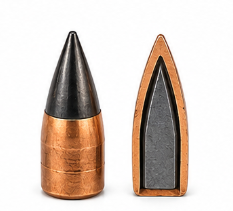
Armor-Piercing bullets contain a hardened steel, tungsten, or similar penetrator core designed to defeat hard barriers.
Characteristics:
- Extremely high penetration.
- Limited expansion.
- Primarily used for military applications.
Forensic Importance:
Recovered penetrator cores and jacket fragments assist investigators in identifying specialized ammunition.
Bullet Materials
Bullets are manufactured using various materials depending on their intended purpose.
Lead: Traditional material offering excellent weight and malleability.
Copper: Often used as jackets or in solid copper bullets.
Brass: Used in certain specialized bullets.
Steel: Common in armor-piercing ammunition.
Polymer: Used for ballistic tips and lightweight projectile designs.
Powdered Metal: Used in frangible bullets.
Each material influences penetration, expansion, barrel wear, and forensic examination.
Forensic Importance of Bullet Identification
In forensic ballistics, every fired bullet carries microscopic markings imparted by the firearm barrel.
These include lands, grooves, and individual striation patterns unique to the firearm. Firearm examiners compare these markings under comparison microscopes to determine whether a recovered bullet was fired from a particular weapon.
Additionally, bullet type assists investigators in:
- Estimating firearm caliber.
- Understanding wound characteristics.
- Determining penetration and expansion behavior.
- Reconstructing shooting incidents.
- Linking multiple crime scenes through ammunition characteristics.
When bullets fragment or deform, investigators examine jacket fragments, lead cores, and recovered pieces to identify the ammunition type.
Conclusion
Bullets are engineered for specific purposes, ranging from precision target shooting to hunting, self-defense, and military applications. Their design directly affects accuracy, penetration, expansion, and terminal performance. For forensic professionals, understanding different bullet types is essential for firearm identification, crime scene reconstruction, and interpreting ballistic evidence. Careful examination of recovered bullets and their microscopic characteristics enables investigators to establish valuable links between firearms, ammunition, and criminal events, making bullet analysis an indispensable part of modern forensic science.


Post comments (0)