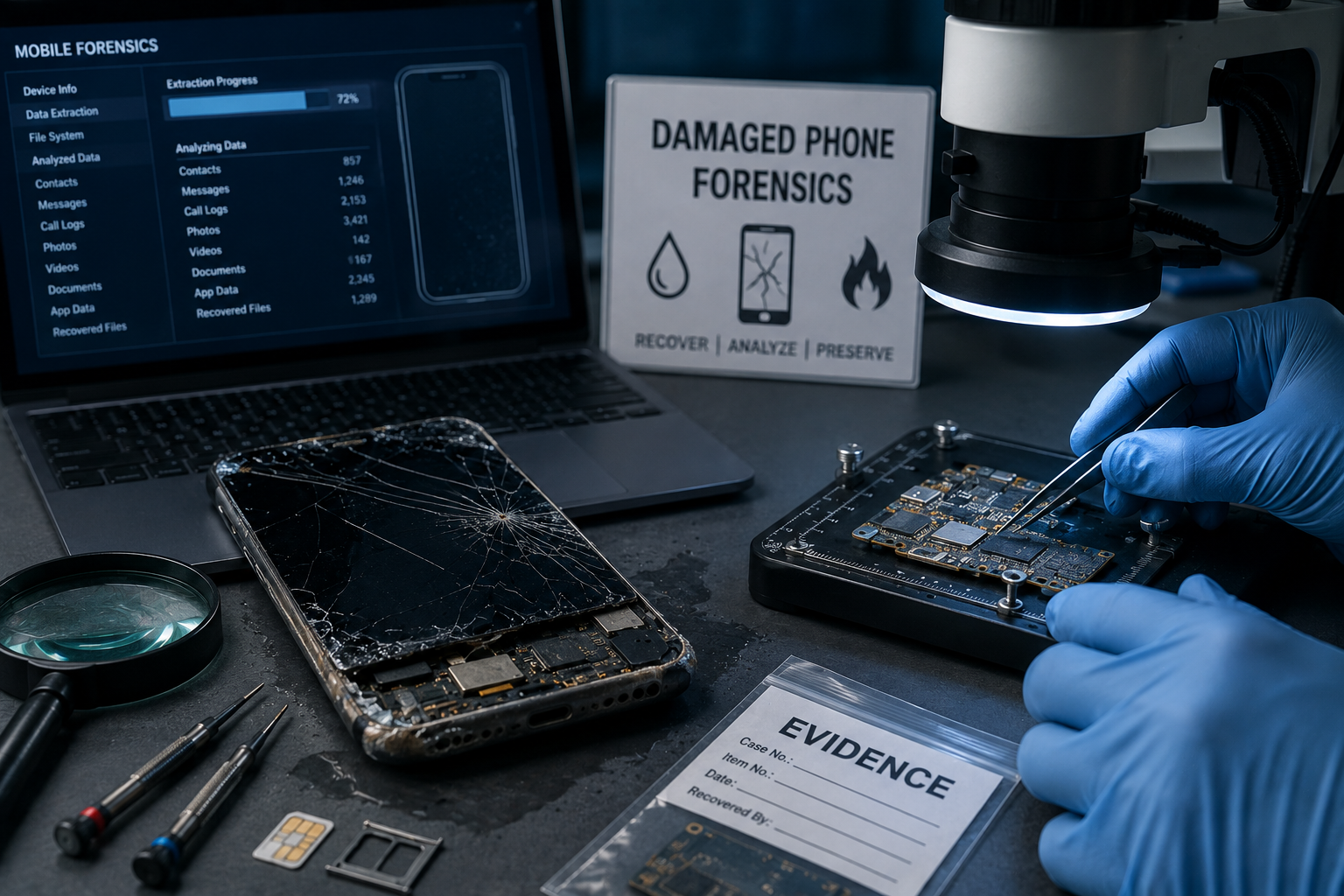
Damaged Phone Forensics is a specialized branch of digital forensics that focuses on recovering and analyzing digital evidence from physically damaged smartphones. Whether a phone has been damaged by water, fire, accidental drops, or hardware failure, forensic experts use advanced tools and scientifically accepted techniques to recover valuable data while preserving its integrity. Damaged Phone Forensics is widely used in criminal investigations, corporate cases, and legal proceedings.Digital evidence from damaged mobile phones plays a crucial role in criminal investigations, civil disputes, corporate cases, and data recovery. Using specialized forensic tools and scientifically accepted methodologies, digital forensic experts can extract, preserve, and analyze data without compromising its integrity.
This article explains how investigators recover digital evidence from damaged mobile phones, the challenges involved, and the forensic techniques used to uncover critical information.
Why Damaged Mobile Phones Still Contain Valuable Evidence
A damaged phone does not always mean the data has been destroyed. In many cases, only certain hardware components fail while the internal storage remains intact.
Digital forensic experts may recover:
- Call logs
- SMS messages
- WhatsApp chats
- Photos and videos
- Contacts
- Emails
- GPS location history
- Browser history
- Documents
- Application databases
- Deleted files
- Cloud synchronization records
Consequently, even severely damaged devices can provide valuable evidence for an investigation.
Common Causes of Mobile Phone Damage
Mobile phones may become damaged due to various reasons, including:
Water Damage
Exposure to water can damage internal circuits and prevent the device from powering on.
Physical Impact
Phones dropped from a height may suffer cracked screens, damaged connectors, or broken circuit boards.
Fire Damage
Heat and smoke can damage components while leaving portions of the internal storage unaffected.
Electrical Damage
Power surges or faulty charging accessories may damage the motherboard or charging circuit.
Corrosion
Long-term exposure to moisture can corrode electronic components and interfere with data access.
Each type of damage requires a different forensic approach.
How Investigators Recover Digital Evidence
Initial Examination
The investigation begins with a careful inspection of the device.
Experts document:
- Device condition
- Visible damage
- SIM card status
- Memory card presence
- Model information
- Serial numbers
Photographs are taken before any forensic work begins.
Evidence Preservation
Before attempting recovery, investigators preserve the integrity of the evidence.
They:
- Document the chain of custody
- Prevent further physical damage
- Use anti-static handling procedures
- Store the device securely
Maintaining evidence integrity is essential for legal proceedings.
Hardware Assessment
Digital forensic experts determine whether:
- The screen is damaged
- The battery has failed
- The charging port is defective
- The motherboard is damaged
- The storage chip remains functional
This assessment guides the recovery process.
Logical Extraction
If the phone powers on, investigators may perform a logical extraction.
This method can recover:
- Contacts
- Messages
- Call history
- Photos
- Installed applications
- Device settings
Logical extraction is generally the least invasive recovery technique.
File System Extraction
When supported, investigators perform a file system extraction to access a larger amount of data.
This includes:
- Application data
- System files
- Deleted records
- User directories
- Configuration files
File system extraction provides a more detailed view of the device.
Physical Extraction
In cases where supported by the device and forensic tools, investigators may perform a physical extraction.
This method creates a bit-by-bit copy of the device’s storage, allowing forensic experts to analyze:
- Deleted files
- Hidden data
- Unallocated space
- System artifacts
Physical extraction often provides the most comprehensive source of digital evidence.
Specialized Recovery Techniques
When standard forensic methods are not possible, specialists may use advanced hardware-assisted recovery techniques.
These procedures are performed only in controlled laboratory environments using specialized forensic equipment.
Depending on the condition of the device, experts may repair damaged components or access data directly from storage media while maintaining forensic integrity.
Types of Digital Evidence Recovered
A damaged phone may still contain:
- WhatsApp conversations
- SMS messages
- Email communications
- Photos and videos
- Audio recordings
- Call history
- Contact lists
- Calendar entries
- Notes
- GPS data
- Internet browsing history
- Download history
- Cloud backup information
- Deleted data
- Application databases
Combining these artifacts helps investigators reconstruct user activity and establish timelines.
Challenges in Recovering Data
Recovering evidence from damaged devices can be difficult due to:
- Severe hardware damage
- Corroded circuit boards
- Encrypted storage
- Locked devices
- Missing components
- Overwritten data
- Unsupported device models
Despite these challenges, experienced forensic professionals can often recover critical evidence.
Tools Used in Mobile Forensics
Digital forensic laboratories commonly use professional tools such as:
- Cellebrite UFED
- Magnet AXIOM
- Oxygen Forensic Detective
- MOBILedit Forensic
- XRY
- FTK
- EnCase
These tools help investigators acquire, preserve, and analyze mobile data while maintaining forensic standards.
Best Practices for Handling Damaged Phones
If a mobile phone contains important information:
- Do not attempt repeated power-on attempts.
- Avoid charging a water-damaged phone immediately.
- Do not disassemble the device without expertise.
- Keep the phone in a safe, dry environment.
- Preserve the original condition of the device.
- Contact a qualified digital forensic laboratory as soon as possible.
Early examination significantly improves the chances of successful evidence recovery.
The Future of Mobile Forensics
As smartphones continue to evolve, mobile forensic techniques are becoming more advanced.
Emerging developments include:
- AI-assisted evidence analysis
- Improved cloud data acquisition
- Enhanced encrypted device support
- Automated artifact analysis
- Advanced chip-level recovery methods
These innovations help investigators recover evidence more efficiently while maintaining forensic reliability.
Conclusion
Recovering digital evidence from damaged mobile phones is a specialized process that combines technical expertise, forensic tools, and scientifically accepted methodologies. Even when a phone appears unusable, valuable digital artifacts may still be preserved within its storage.
Digital forensic investigators play a critical role in identifying, preserving, recovering, and analyzing this evidence while ensuring its integrity for legal proceedings. As mobile devices continue to store increasing amounts of personal and business information, the ability to recover evidence from damaged phones remains an essential part of modern digital investigations.


Post comments (0)