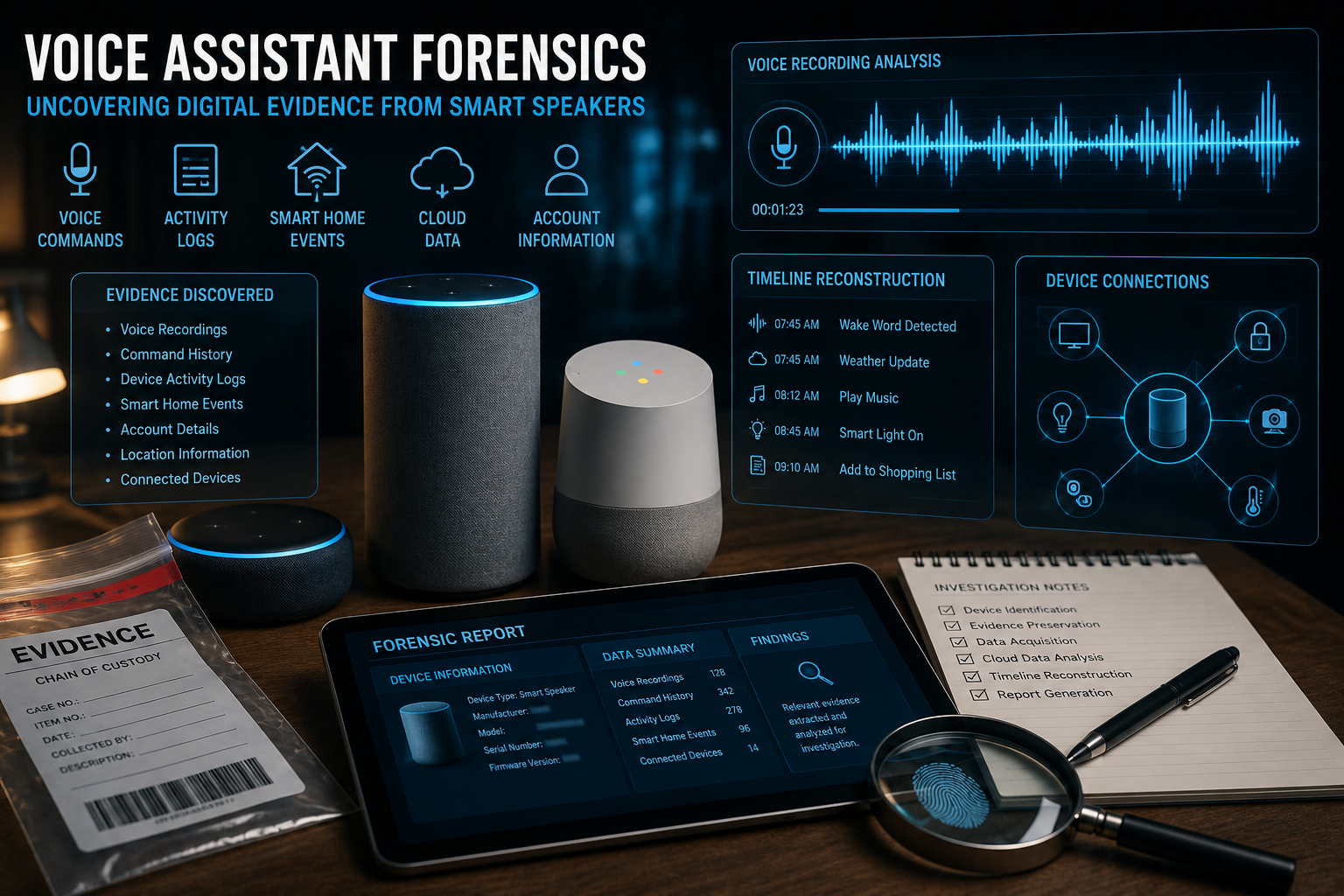
Voice Assistant Forensics is an emerging branch of digital forensics that focuses on recovering and analyzing digital evidence from smart speakers and voice-enabled devices. As virtual assistants such as Amazon Alexa, Google Assistant, and Apple Siri become part of everyday life, they continuously collect and process information through voice commands, cloud services, and connected smart devices.
These devices can store valuable digital evidence, including voice recordings, user interactions, device activity, and automation logs. In criminal investigations, corporate incidents, and civil disputes, Voice Assistant Forensics helps investigators reconstruct events, verify timelines, and identify crucial digital artifacts that may support legal proceedings.
This article explores how Voice Assistant Forensics works, the types of evidence that can be recovered, and the challenges investigators face when examining smart speakers.
What Is Voice Assistant Forensics?
Voice Assistant Forensics involves the identification, preservation, acquisition, and analysis of digital evidence generated by voice-enabled smart devices.
Common devices include:
- Amazon Echo (Alexa)
- Google Nest speakers
- Apple HomePod (Siri)
- Smart displays
- Smart TVs with voice assistants
- Voice-enabled IoT devices
These devices interact with cloud services and other smart home products, creating a rich source of digital evidence.
Why Voice Assistant Forensics Is Important
Smart speakers have become central to modern smart homes and offices. Every interaction can generate valuable digital records.
Voice Assistant Forensics helps investigate:
- Cybercrime incidents
- Homicide investigations
- Theft cases
- Domestic disputes
- Corporate investigations
- Missing person cases
- Fraud investigations
- Unauthorized smart home access
The collected evidence often helps establish timelines and verify user activity.
Types of Digital Evidence Recovered
Investigators may recover various digital artifacts, including:
Voice Commands
Recorded voice requests made to the assistant.
Examples include:
- Playing music
- Searching the internet
- Setting reminders
- Controlling smart devices
- Making calls
Device Activity Logs
Smart speakers maintain logs of user interactions.
These logs may include:
- Device activation time
- Commands received
- Response history
- Connected devices
- Account activity
Account Information
Associated user accounts may reveal:
- Registered email addresses
- Device names
- User profiles
- Linked services
- Authentication history
Smart Home Automation Logs
Connected smart home devices generate records such as:
- Door lock activity
- Security camera events
- Smart light schedules
- Motion sensor alerts
- Thermostat adjustments
These records help investigators reconstruct events.
Location Information
Some voice assistants synchronize with mobile devices and may contain:
- Device locations
- Wi-Fi information
- Time zone settings
- Registered addresses
How Voice Assistant Forensics Works
Evidence Identification
Investigators first identify:
- Smart speakers
- Mobile applications
- Linked cloud accounts
- Connected IoT devices
- Wireless networks
Proper documentation begins before any evidence is collected.
Evidence Preservation
To maintain evidence integrity, investigators:
- Photograph the device
- Document its condition
- Record connected accessories
- Preserve the chain of custody
- Prevent unauthorized access
This ensures the evidence remains legally defensible.
Device Examination
If supported, investigators analyze:
- Device configuration
- System logs
- Firmware details
- Local storage
- Connection history
Cloud Data Analysis
Most voice assistant data is stored in cloud services.
Investigators may examine:
- Voice recordings
- Command history
- Device synchronization
- Smart home events
- User account activity
Cloud analysis often provides the most valuable evidence.
Timeline Reconstruction
Investigators combine evidence from multiple sources to create a timeline showing:
- Voice commands
- Device activations
- User interactions
- Smart device events
- Mobile phone activity
- Internet connections
Timeline reconstruction helps explain what occurred before, during, and after an incident.
Challenges in Voice Assistant Forensics
Investigating smart speakers presents several challenges:
- Cloud-based evidence storage
- Encrypted communications
- Privacy protections
- Multiple user accounts
- Automatic deletion of recordings
- Cross-platform synchronization
- Jurisdictional issues involving cloud providers
These factors require specialized forensic expertise and legal processes.
Tools Used in Voice Assistant Forensics
Digital forensic experts use specialized forensic platforms alongside cloud and mobile forensic tools to examine smart devices.
These tools assist investigators in:
- Recovering device information
- Examining mobile applications
- Analyzing cloud data
- Correlating smart home activity
- Creating forensic timelines
- Generating investigation reports
Best Practices for Investigators
To preserve evidence from smart speakers:
- Document the device before handling it.
- Isolate the device from unauthorized access when appropriate.
- Preserve associated mobile devices.
- Identify linked cloud accounts.
- Maintain a complete chain of custody.
- Use validated forensic tools.
- Document every investigative step.
Following these practices helps maintain the integrity of digital evidence.
Future of Voice Assistant Forensics
As smart home technology continues to evolve, Voice Assistant Forensics is becoming increasingly important.
Emerging trends include:
- AI-powered voice analysis
- Improved cloud forensic techniques
- Enhanced IoT investigations
- Voice authentication analysis
- Smart home ecosystem investigations
- Automated forensic timeline generation
These developments will help investigators analyze voice-enabled devices more effectively.
Conclusion
Voice Assistant Forensics has become an essential area of digital forensics as smart speakers and voice-enabled devices continue to expand in homes and workplaces. These devices generate valuable digital evidence that can help investigators reconstruct events, verify user interactions, and support legal investigations.
Although cloud storage, encryption, and privacy regulations present challenges, modern forensic methodologies allow investigators to recover and analyze digital artifacts while preserving their integrity. As voice-controlled technology becomes more widespread, Voice Assistant Forensics will play an increasingly significant role in cybercrime investigations and digital evidence analysis.

Post comments (0)