In today’s digital world, audio recordings have become some of the most powerful forms of evidence. From phone conversations and WhatsApp voice notes to CCTV recordings and hidden microphones, audio files often play a crucial role in criminal investigations, corporate disputes, legal proceedings, and media verification. But a recording is only valuable if it is authentic.
This is where Audio Forensics comes into play.
What is Audio Forensics?
Audio forensics is the scientific examination, authentication, enhancement, and analysis of audio recordings to determine their integrity, identify speakers, detect tampering, and extract meaningful information. It combines principles of signal processing, acoustics, digital forensics, and investigative science to answer one fundamental question:
Can this recording be trusted?
Unlike basic audio editing or noise reduction, forensic audio analysis follows validated methodologies that ensure findings can withstand legal and investigative scrutiny.
Why Audio Forensics Matters
With modern editing software and AI-generated voices becoming increasingly sophisticated, manipulating audio has become easier than ever. A few clicks can alter conversations, remove statements, insert new words, or even create convincing fake voices.
Without forensic examination, it can be difficult to distinguish between genuine recordings and fabricated evidence.
Audio forensics helps organizations, investigators, and courts determine:
- Whether an audio recording has been edited or manipulated
- If multiple recordings have been stitched together
- Whether background noise is consistent throughout the recording
- Whether the recording is original or has undergone processing
- Whether a speaker can be identified or compared
- Whether timestamps and metadata support authenticity
Common Applications of Audio Forensics
Criminal Investigations
Law enforcement agencies often rely on forensic audio experts to analyze threatening calls, ransom demands, covert recordings, intercepted communications, and surveillance audio.
Civil and Corporate Disputes
Businesses may require authentication of recorded meetings, employee conversations, contractual negotiations, or whistleblower evidence where the legitimacy of a recording is disputed.
Family and Personal Disputes
Audio recordings are frequently presented in matters involving property disputes, divorce proceedings, workplace harassment, domestic violence allegations, and blackmail cases.
Media Verification
Journalists and fact-checking organizations increasingly use audio forensic techniques to verify leaked recordings before publication.
Key Services in Audio Forensics
Audio Authentication
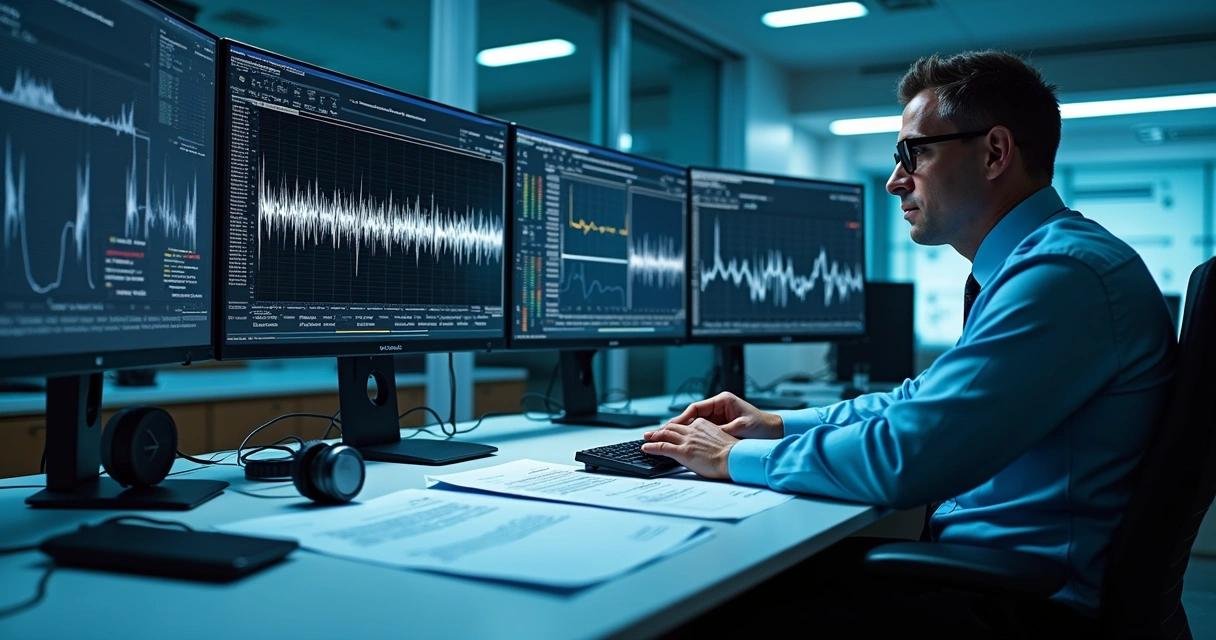
Authentication determines whether a recording is genuine or has been altered. Experts examine waveform continuity, compression artifacts, encoding inconsistencies, environmental noise, and digital signatures to identify signs of editing.
Audio Enhancement
Poor-quality recordings often contain background noise, hum, reverberation, or low speech intelligibility. Audio enhancement improves clarity while preserving the evidentiary value of the recording.
Enhancement may involve:
- Noise reduction
- Hum removal
- Equalization
- Speech clarification
- Volume normalization
It is important to note that enhancement should never alter the actual content of the recording.
Speaker Identification
Speaker comparison evaluates whether two or more recordings are likely to originate from the same individual. Analysts examine vocal characteristics such as pitch, formant frequencies, speech rhythm, pronunciation patterns, and acoustic features.
Tampering Detection
One of the most requested forensic services involves determining whether an audio file has been edited.
Indicators may include:
- Abrupt waveform discontinuities
- Inconsistent background ambience
- Compression anomalies
- Missing environmental continuity
- Spectral inconsistencies
- Metadata conflicts
No single indicator proves tampering. Experts evaluate multiple factors before reaching a scientific conclusion.
How an Audio Forensic Examination is Conducted
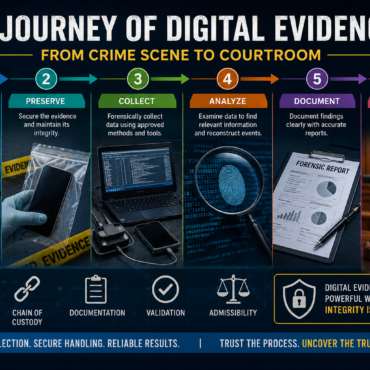
A standard forensic workflow typically includes:
- Evidence Collection – Secure acquisition of the original recording while maintaining chain of custody.
- File Verification – Examination of file format, metadata, encoding, and integrity.
- Technical Analysis – Detailed inspection using specialized forensic software and signal processing techniques.
- Comparative Analysis – Cross-verification of acoustic and digital characteristics.
- Documentation – Preparation of observations, methodology, and findings.
- Expert Reporting – A comprehensive forensic report suitable for investigative or legal purposes.
Challenges in Modern Audio Forensics
Audio forensics continues to evolve due to rapidly advancing technology. Some of today’s biggest challenges include:
- AI-generated synthetic voices
- Deepfake speech generation
- Multiple file conversions
- Lossy compression from messaging platforms
- Background noise and overlapping conversations
- Edited social media clips
These challenges require forensic experts to use advanced analytical techniques rather than relying solely on listening tests.
Best Practices for Preserving Audio Evidence
If you possess an audio recording that may become evidence, consider the following recommendations:
- Preserve the original file without modification.
- Avoid editing, trimming, or converting the recording.
- Store copies securely while retaining the original.
- Document when, where, and how the recording was obtained.
- Share the original file instead of forwarding it through multiple applications whenever possible.
Proper preservation significantly improves the reliability of forensic analysis.
The Future of Audio Forensics
Artificial Intelligence is transforming both audio creation and audio analysis. While AI enables increasingly realistic voice synthesis, it also equips forensic experts with more sophisticated detection tools capable of identifying subtle anomalies invisible to the human ear.
Future audio forensic investigations will increasingly combine traditional acoustic science with machine learning, statistical analysis, and advanced signal processing to improve accuracy and reliability.
Conclusion
Audio recordings have become an integral part of modern investigations, but not every recording tells the complete truth. Manipulation, editing, compression, and synthetic voice technologies can all affect the authenticity of digital evidence.
Audio forensics bridges the gap between suspicion and scientific verification. Through systematic analysis, validated methodologies, and expert interpretation, forensic specialists help determine whether an audio recording is genuine, altered, or misleading.
As digital evidence continues to shape legal, corporate, and investigative decisions, audio forensics will remain an essential discipline for uncovering the truth hidden within sound.


Post comments (0)