Introduction
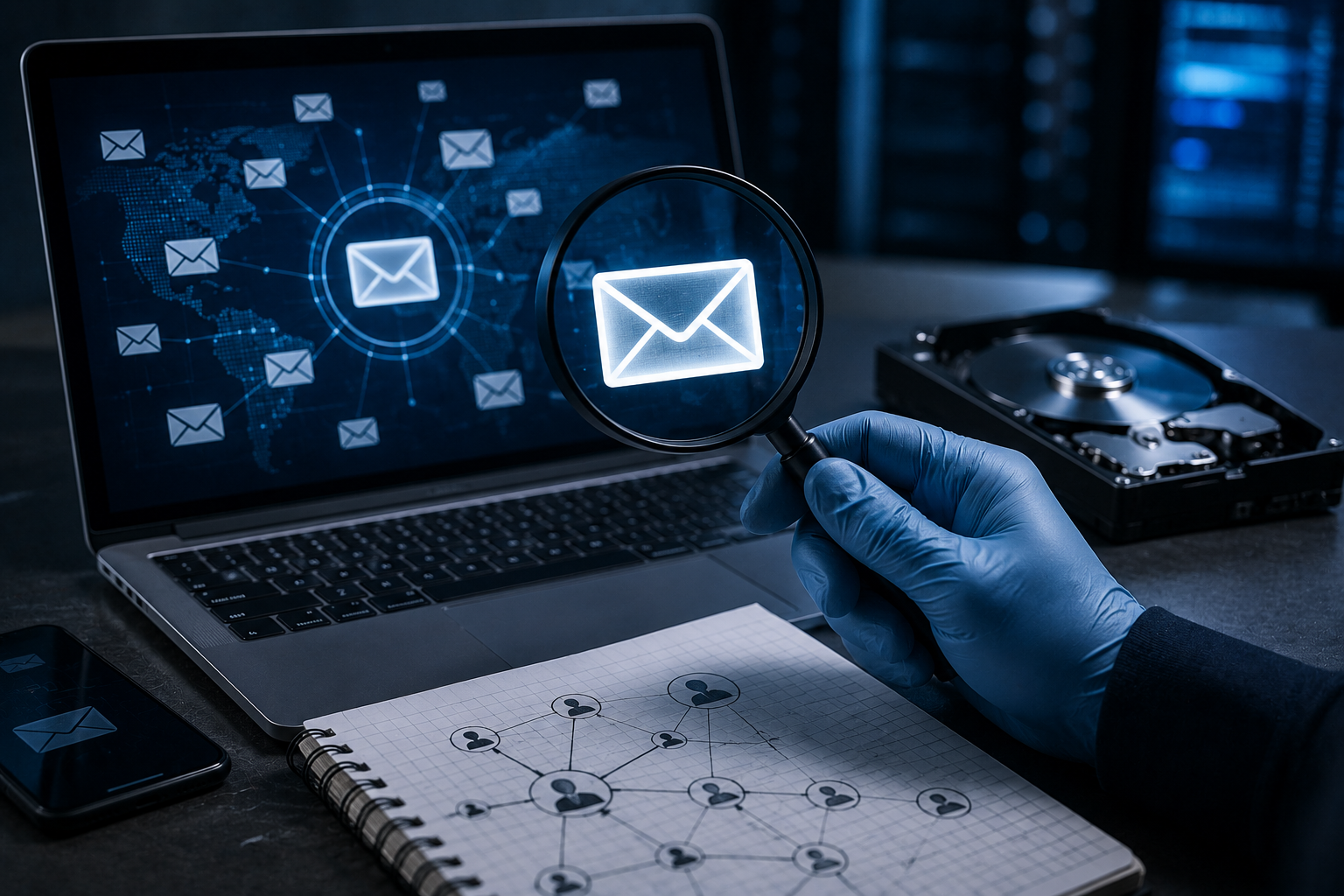
Email Forensics is a specialized branch of digital forensics that focuses on identifying, preserving, analyzing, and presenting evidence found in email communications. Despite the rise of instant messaging and collaboration platforms, email remains one of the most widely used communication channels for businesses, government agencies, and individuals.
Consequently, cybercriminals frequently exploit email for phishing attacks, business email compromise (BEC), fraud, malware distribution, and social engineering campaigns. As a result, investigators increasingly rely on Email Forensics to uncover digital evidence, trace malicious activities, and support legal proceedings.
This article explores the fundamentals of Email Forensics, common investigative techniques, challenges, and the role it plays in modern cybercrime investigations.
What Is Email Forensics?
Email Forensics is the process of examining email messages and related data to determine the origin, authenticity, content, and transmission path of electronic communications.
Investigators analyze various email components, including:
- Email headers
- Sender information
- Recipient details
- Routing paths
- Attachments
- Embedded links
- Message content
- Metadata
Furthermore, Email Forensics helps establish whether an email is legitimate, spoofed, altered, or part of a cybercrime activity.
Why Email Forensics Is Important
Email communications often contain critical evidence related to:
- Cybercrime investigations
- Financial fraud
- Business Email Compromise (BEC)
- Intellectual property theft
- Insider threats
- Harassment cases
- Corporate disputes
- Data breaches
Moreover, email records frequently provide valuable timelines that help investigators reconstruct events and identify responsible parties.
Common Cybercrimes Involving Email
Phishing Attacks
Cybercriminals send fraudulent emails that appear to come from trusted organizations.
These emails often attempt to:
- Steal login credentials
- Collect banking information
- Deliver malware
- Redirect victims to fake websites
Business Email Compromise (BEC)
BEC attacks involve impersonating executives, suppliers, or business partners to trick employees into transferring money or sensitive information.
Malware Distribution
Attackers frequently use email attachments or malicious links to distribute ransomware, spyware, and other malware.
Email Spoofing
Fraudsters manipulate sender information to make emails appear as if they originated from legitimate sources.
Key Components of an Email Investigation
Email Headers
Email headers contain valuable technical information about message transmission.
Investigators examine:
- Source IP addresses
- Sending servers
- Receiving servers
- Message IDs
- Authentication results
- Time stamps
Email headers often reveal the true origin of suspicious messages.
Sender Authentication Analysis
Investigators verify whether the sender passed security checks such as:
- SPF (Sender Policy Framework)
- DKIM (DomainKeys Identified Mail)
- DMARC (Domain-based Message Authentication)
Failures in these checks may indicate spoofing attempts.
Attachment Examination
Attachments often contain important evidence.
Investigators analyze:
- Document metadata
- Embedded malware
- File creation dates
- Hidden content
- Modification history
Link Analysis
Many phishing emails contain malicious URLs.
Investigators examine:
- Destination websites
- Redirect chains
- Domain registrations
- Hosting information
This analysis helps identify attacker infrastructure.
Email Header Analysis
One of the most important aspects of Email Forensics is email header analysis.
Headers provide information about:
- The path an email followed
- Mail servers involved
- Sending IP addresses
- Delivery times
- Authentication results
By analyzing “Received” fields, investigators can often identify the original sending server and detect forged messages.
Digital Evidence Recovered from Emails
Email investigations may reveal:
- Communication records
- Financial fraud evidence
- Phishing attempts
- Malicious attachments
- Deleted emails
- User activity timelines
- Contact relationships
- Insider threat indicators
Consequently, email evidence often becomes a key component in legal and corporate investigations.
Challenges in Email Forensics
Email Spoofing
Attackers frequently forge sender addresses to conceal their identities.
Encrypted Communications
Some email services encrypt communications, making investigations more complex.
Cloud-Based Email Services
Modern platforms store data across multiple locations and jurisdictions.
Deleted Messages
Users may intentionally or accidentally delete critical emails.
However, forensic techniques can sometimes recover deleted messages from backups or servers.
Tools Used in Email Forensics
Digital forensic experts commonly use:
- Magnet AXIOM
- Cellebrite Inspector
- FTK
- EnCase
- Belkasoft X
- MailXaminer
- eMailTrackerPro
- Autopsy
These tools help acquire, analyze, and preserve email evidence.
Best Practices in Email Forensics
Investigators should:
- Preserve original email data.
- Maintain chain of custody.
- Analyze complete email headers.
- Verify sender authentication records.
- Examine attachments safely.
- Correlate email evidence with other digital artifacts.
- Document all investigative actions.
Following these practices helps ensure the reliability and admissibility of evidence.
Future of Email Forensics
As cyber threats evolve, Email Forensics continues to advance.
Emerging developments include:
- AI-powered phishing detection
- Automated email analysis
- Advanced threat intelligence integration
- Improved cloud email investigations
- Real-time fraud detection systems
Furthermore, organizations increasingly rely on Email Forensics to detect and respond to sophisticated cyber threats.
Conclusion
Email remains one of the most important sources of digital evidence in modern investigations. Through Email Forensics, investigators can uncover hidden information, trace attacker activities, analyze suspicious communications, and support legal proceedings.
As cybercriminals continue to exploit email for fraud, phishing, and malware distribution, Email Forensics will remain a critical tool for protecting organizations, investigating incidents, and uncovering the truth behind digital communications



Post comments (0)