Security Features of Bank Cheques: How Modern Cheques Prevent Fraud
Introduction
Despite the rapid growth of digital banking and online payments, bank cheques continue to play an important role in financial transactions across the world. Businesses, government organizations, and individuals still rely on cheques for various payments due to their legal acceptance and ease of use. However, because cheques represent direct access to funds, they have long been targets for fraudsters.
To protect customers and financial institutions from forgery, alteration, duplication, and counterfeiting, modern bank cheques incorporate a range of sophisticated security features. These features help banks verify authenticity and detect tampering before processing payments.
This article explores the major security features found in modern bank cheques and explains how they contribute to fraud prevention.
Why Cheque Security Matters:
Cheque fraud can occur in several forms, including:
- Signature forgery
- Alteration of cheque amounts
- Modification of payee names
- Counterfeit cheque printing
- Chemical washing and rewriting
- Unauthorized duplication
Such fraudulent activities can result in financial losses, legal disputes, and damage to customer trust.
Therefore, banks use multiple layers of security to make forgery difficult and easily detectable.
Security Paper:
One of the most important protections begins with the paper itself.
Bank cheques are generally printed on specially manufactured security paper that differs significantly from ordinary office paper. Security paper is designed to resist tampering and copying.
Key characteristics include:
- Controlled paper manufacturing process
- Specific thickness and texture
- Resistance to erasures
- Chemical sensitivity
- Embedded security elements
The paper often contains features that become visible when subjected to chemicals, heat, or physical alteration attempts.
Chemical-Sensitive Paper:
Cheque alteration often involves the use of solvents, bleach, or chemicals to remove existing information and replace it with fraudulent details.
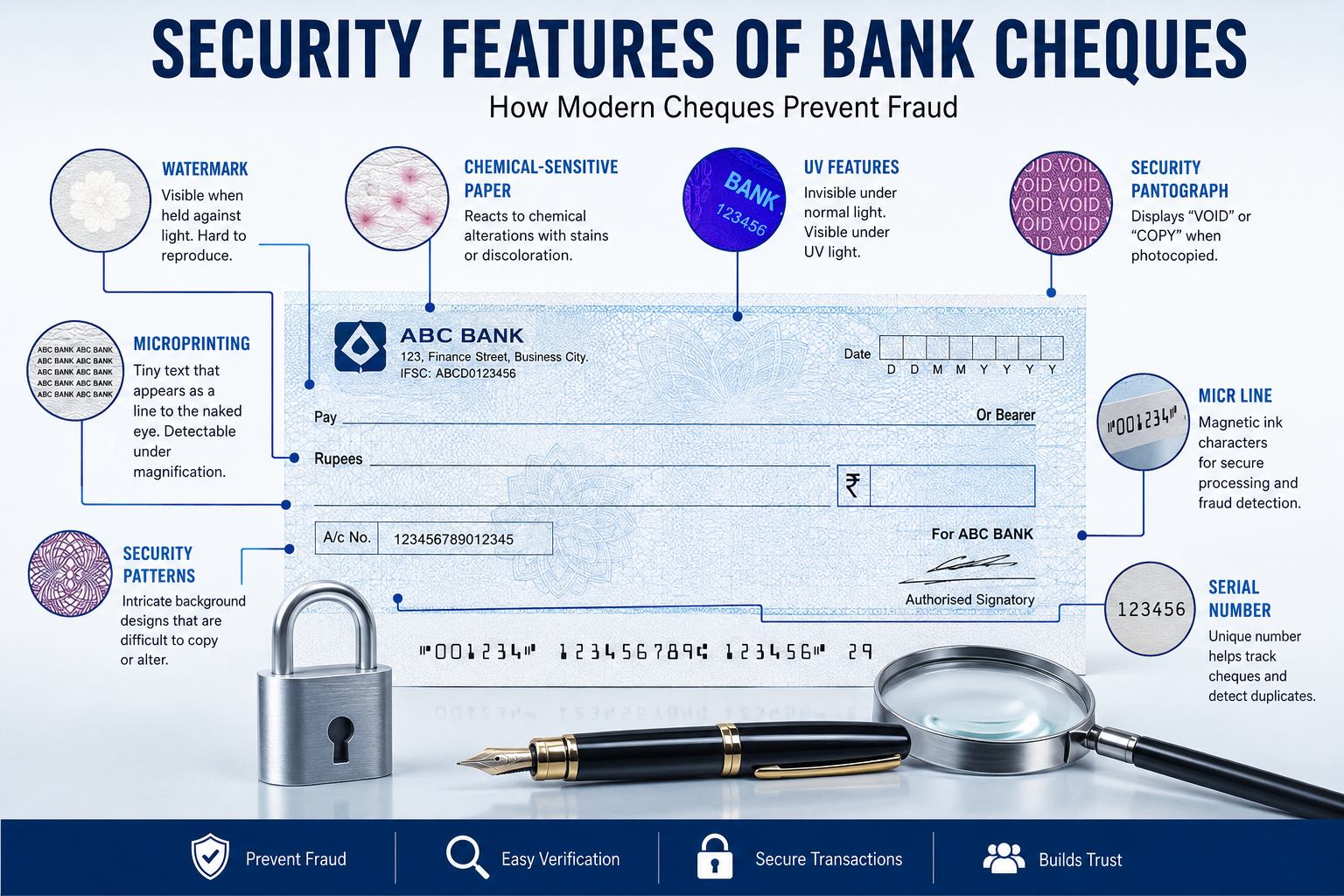
To combat this, banks use chemical-sensitive paper that reacts when exposed to chemical agents.
How It Works
When a fraudster attempts to erase writing using chemicals:
- The paper may develop stains.
- Visible discoloration may appear.
- Warning messages such as “VOID” may emerge.
- Security backgrounds may fade or change color.
These reactions provide clear evidence that the cheque has been tampered with.
Visual Identification
Chemical sensitivity is usually not visible under normal conditions.
The paper appears ordinary until exposed to tampering agents.
Once activated, the security response becomes permanent and easily detectable by bank personnel.
Watermarks:
Watermarks are one of the oldest and most trusted security features.
A watermark is embedded during paper manufacturing rather than printed on the surface.
Characteristics
- Visible when held against light.
- Cannot be photocopied accurately.
- Difficult to reproduce using commercial printers.
- Unique to the issuing bank or cheque manufacturer.
Because watermarks are integrated into the paper structure, counterfeiters find them extremely challenging to replicate.
Microprinting:
Microprinting consists of extremely small text printed in areas that appear as simple lines to the naked eye.
Examples include:
- Bank name
- Security statements
- Repeated text patterns
Under magnification, the text becomes clearly readable.
Security Advantage
Photocopiers and scanners often blur microprinted text, causing it to appear as a solid line rather than distinct characters.
Bank examiners can quickly inspect suspicious cheques using magnification devices and identify counterfeit reproductions.
Background Security Patterns:
Most cheques contain intricate background designs known as security screens or guilloche patterns.
These patterns consist of:
- Fine geometric lines
- Complex curves
- Multi-layered designs
- Color gradients
Purpose
- These designs make reproduction difficult because:
- Scanners struggle to capture fine details accurately.
- Copies often produce distorted patterns.
- Alterations become more noticeable.
The complexity of these patterns acts as a visual deterrent against counterfeiting.
UV Fluorescent Features:
Many modern cheques include ultraviolet (UV) security elements.
These features remain invisible under normal lighting but become visible when exposed to ultraviolet light.
Examples include:
- Bank logos
- Security symbols
- Serial numbers
- Hidden patterns
Benefits
- UV features provide an additional layer of authentication that counterfeiters may not know exists.
- Banks routinely use UV examination devices to verify the legitimacy of cheques during processing.
Security Pantographs:
A security pantograph is a hidden background pattern designed to reveal warning messages when copied.
How It Works
On an original cheque:
The background appears normal.
On a photocopy:
Words such as “VOID,” “COPY,” or “UNAUTHORIZED COPY” become visible.
This feature prevents fraudsters from successfully reproducing cheques using standard copying equipment.
Magnetic Ink Character Recognition (MICR):
At the bottom of every cheque is a line containing account and routing information printed in magnetic ink.
This is known as the MICR line.
Information Included
- Bank identification number
- Branch code
- Account number
- Cheque number
Security Benefits
MICR technology allows:
- Automated cheque processing
- Faster verification
- Reduced data-entry errors
- Detection of fraudulent alterations
Because MICR characters use specialized magnetic ink and standardized fonts, counterfeit versions are easier to identify.
Serial Numbers and Check Digits:
Every cheque contains a unique serial number.
These numbers help banks:
- Track issued cheques
- Detect duplicate submissions
- Identify missing cheque books
- Monitor suspicious transactions
Advanced banking systems automatically flag unusual cheque-number sequences or duplicate cheque presentations.
Holograms and Security Foils:
Some banks use holographic patches or metallic security foils on high-value cheques.
These features:
- Display changing images when tilted.
- Reflect light differently from printed graphics.
- Are difficult to duplicate using standard printing methods.
Holograms provide both visual appeal and strong anti-counterfeiting protection.
Anti-Scan and Anti-Copy Technology:
Modern cheque printing incorporates anti-scan technologies designed to confuse digital copying devices.
Features may include:
- Specialized color combinations
- Fine-line distortions
- Hidden image structures
When scanned or photocopied, these elements degrade significantly, revealing the document as a reproduction rather than an original cheque.
Signature Verification Features:
Signatures remain a critical component of cheque authentication.
Banks use:
- Specimen signature databases
- Automated signature verification systems
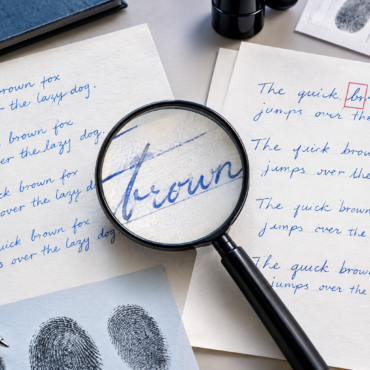
- Forensic handwriting examination in disputed cases
In suspicious transactions, trained document examiners compare questioned signatures with known specimens to determine authenticity.
Positive Pay System
Many banks now offer Positive Pay services for additional security.
Under this system:
- The issuer provides cheque details to the bank.
- Information includes:
- Cheque number
- Date
- Amount
- Payee name
- When the cheque is presented, the bank compares submitted details with the original records.
- Any mismatch triggers verification before payment.
This significantly reduces cheque fraud.
Role of Forensic Examination in Cheque Fraud Cases:
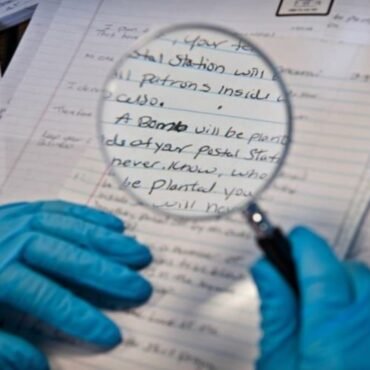
When a disputed cheque is suspected of forgery or alteration, forensic document examiners may analyze:
- Handwriting
- Signatures
- Ink differences
- Erasures
- Chemical alterations
- Printing methods
- Security feature integrity
Using microscopes, UV light sources, infrared examination systems, and digital imaging tools, experts can determine whether a cheque has been tampered with.
Their findings often serve as valuable evidence in civil and criminal investigations.
Conclusion:
Bank cheques incorporate multiple layers of security features to protect against fraud and counterfeiting. Features such as chemical-sensitive paper, watermarks, microprinting, UV markings, security pantographs, MICR technology, holograms, and Positive Pay systems work together to ensure cheque authenticity and transaction security.
As fraud techniques continue to evolve, banks regularly enhance cheque security technologies to stay ahead of counterfeiters. Understanding these features not only helps customers recognize genuine cheques but also highlights the sophisticated measures financial institutions employ to safeguard financial transactions.


Post comments (0)