When important files suddenly disappear, a laptop stops booting, or a document becomes corrupted, the first reaction is often to try recovery software or repeatedly open and repair the file. However, in situations involving valuable business information, legal evidence, or suspected cybercrime, data recovery should be approached carefully and systematically.
Data recovery is the process of retrieving inaccessible, deleted, damaged, or corrupted information from a storage device. In digital forensics, the objective goes beyond simply recovering a file—it is also important to preserve the integrity of the evidence and determine what happened to the data, when it happened, and whether the recovered information can be relied upon.
What Causes Data Loss on a Laptop?
Data may become inaccessible for several reasons:
- Accidental deletion or formatting
- Hard drive or SSD failure
- Operating-system corruption
- Malware or ransomware attacks
- Power failure or improper shutdown
- File-system corruption
- Damaged sectors or storage media degradation
- Partition-table damage
- Failed software updates
- Physical damage to the storage device
- Intentional deletion or anti-forensic activity
Not every deleted or corrupted file is permanently lost. The possibility of recovery depends heavily on the condition of the storage medium and what happened after the data became inaccessible.
Deleted Data vs. Corrupted Data
These two situations are often confused.
Deleted data may still exist on the storage medium even though it is no longer visible through the operating system. When a file is deleted, the operating system may mark the space it occupied as available for future use.
Corrupted data, on the other hand, may still have its original file structure or metadata but contain damaged, incomplete, or inconsistent information. For example, a Word document may exist but fail to open, or a video may open but stop playing halfway through.
The recovery approach therefore depends on whether the problem involves deletion, file-system damage, physical storage failure, or actual file-content corruption.
Why You Should Avoid Using the Laptop After Data Loss
One of the most important principles of data recovery is the following:
Do not continue using the affected laptop unnecessarily.
Creating new files, installing applications, downloading software, browsing the internet, or repeatedly attempting recovery can potentially overwrite recoverable information—particularly on traditional hard drives.
With SSDs, recovery can be even more complicated because technologies such as TRIM may make deleted data considerably more difficult or impossible to recover.
If the data has forensic or legal importance, the safest approach is to stop using the system and have the storage media examined by a qualified professional.
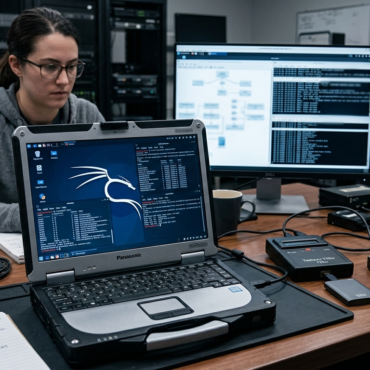
How Forensic Data Recovery Works
A forensic recovery process generally follows a controlled methodology.
1. Preliminary Assessment
The storage device is first examined to determine its condition.
The examiner may assess the following:
- Drive type and capacity
- Partition structure
- File-system type
- Signs of physical failure
- Encryption
- Existing partitions
- Available and unallocated space
- Operating-system information
This assessment helps determine the most appropriate recovery strategy.
2. Forensic Imaging
Instead of repeatedly working directly on the original storage device, a forensic examiner may create a forensic image or bit-by-bit copy of the media.
The purpose is to preserve the original evidence and allow examination to be performed on a working copy.
Depending on the case, forensic imaging may involve formats such as E01 or raw forensic images.
3. Integrity Verification
Hash values can be generated to verify the integrity of forensic evidence.
Common hashing algorithms include:
Hash verification helps demonstrate that the acquired forensic image has not been altered during examination.
4. File-System Examination
The examiner can then analyse the file system and search for:
- Existing files
- Deleted files
- Folders
- File-system metadata
- Unallocated space
- Recycle Bin contents
- Temporary files
- Previous versions
- Application artefacts
This can sometimes reveal information that is no longer visible through the normal operating system.
5. File Carving
When file-system information is damaged or missing, file carving may be used.
File carving identifies files based on known characteristics such as file headers, footers, and internal structures rather than relying entirely on directory information.
For example, a JPEG image commonly begins with a recognizable file signature, while many other file types have their own identifiable structures.
However, carved files may be incomplete or fragmented, so recovery does not automatically mean that the resulting file will be usable.
Recovering Corrupted Files
File corruption requires a different approach from simple deletion.
An examiner may investigate:
- File headers
- File structure
- Metadata
- Internal file objects
- File-system records
- Temporary copies
- Application-generated recovery files
- Previous versions
- Backup locations
- Cloud-synchronisation folders
For example, if a Microsoft Word document is corrupted, recovery may involve examining the document structure, temporary files, autosave data, previous versions, or other copies rather than simply searching for a deleted file.
Similarly, corrupted photographs, videos, PDFs, databases, and spreadsheets may require file-type-specific examination.
Can Permanently Deleted Data Always Be Recovered?
No.
There is no guarantee that deleted data can be recovered.
Recovery may become difficult or impossible when:
- Data has been overwritten
- SSD TRIM has removed previously deleted blocks
- Storage media is physically damaged
- Encryption keys are unavailable
- File structures are severely corrupted
- The device has suffered catastrophic failure
Therefore, claims that “every deleted file can be recovered” should be treated with caution.
Data Recovery vs. Digital Forensics
Although the two areas overlap, they are not the same.
Data recovery primarily focuses on retrieving inaccessible or lost information.
Digital forensics focuses on the identification, preservation, acquisition, examination, analysis, and interpretation of digital evidence.
A forensic investigation may involve recovering deleted files, but it can also examine:
- User activity
- Browser history
- USB device connections
- Login activity
- File-access information
- Internet activity
- Application artefacts
- Malware activity
- Timeline information
- Evidence of data deletion or manipulation
The recovered file is therefore only one part of the investigation.
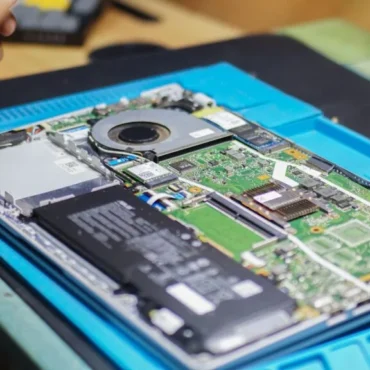
What If the Laptop Is Physically Damaged?
If the laptop does not power on, makes unusual noises, repeatedly disconnects the drive, or the storage device is not detected, software-based recovery should not be the first step.
Physical storage failures may require specialist hardware-level assessment. Repeatedly powering a failing drive on and off can potentially worsen the situation.
In forensic cases, the priority should be preservation of the original media and controlled examination.
The Importance of Maintaining Evidence Integrity
When recovered data may be used in an investigation, disciplinary proceeding, insurance claim, or court matter, the recovery process must be properly documented.
A professional forensic examination should maintain appropriate records regarding:
- Evidence identification
- Acquisition methodology
- Hash values
- Tools and versions used
- Examination procedures
- Recovered artefacts
- Findings
- Limitations of recovery
This documentation helps establish transparency and reproducibility.
Final Thoughts
A deleted or corrupted file does not necessarily mean that the information is gone forever—but recovery is never guaranteed.
The chances of successful recovery depend on how the data was lost, the type of storage device, the condition of the file system, subsequent device usage, encryption, overwriting, and physical damage.
For ordinary accidental deletion, timely professional recovery may be sufficient. Where the laptop is connected to a suspected cyber incident, fraud, employee investigation, litigation, or other legal matter, the process should be handled as a digital forensic examination, rather than simply running a consumer recovery application.
The most important rule is simple: if the data is important, stop using the device and preserve it before attempting recovery.



Post comments (0)