Introduction
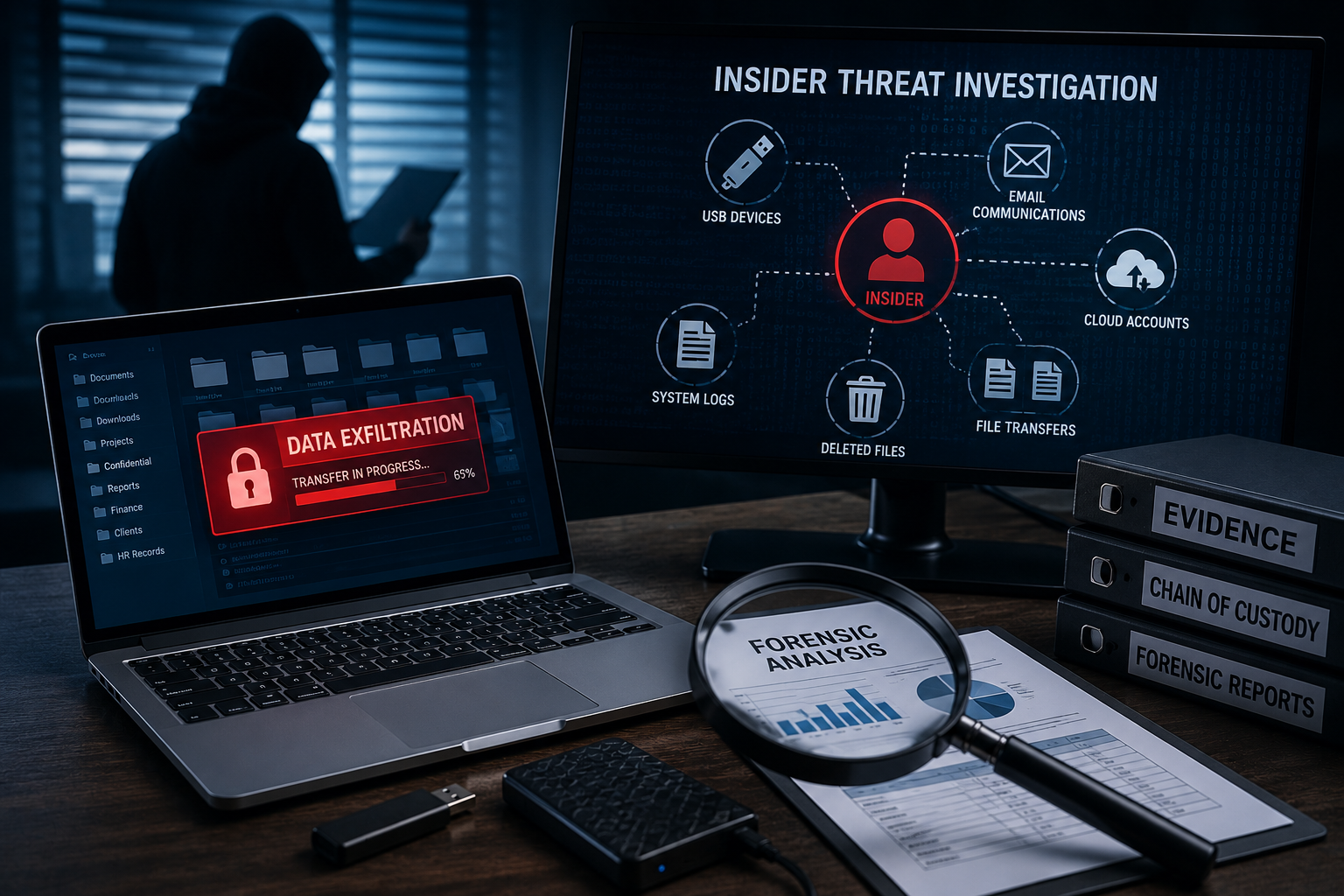
A Data Exfiltration Investigation helps organizations determine how sensitive information was accessed, copied, and transferred outside the company. As insider threats continue to rise, digital forensic experts play a critical role in identifying evidence of unauthorized data movement and protecting organizational assets.
Data exfiltration, the unauthorized transfer of sensitive information outside an organization, is a common objective in insider threat incidents. Whether motivated by financial gain, revenge, corporate espionage, or negligence, insiders can exploit their access privileges to steal valuable data.
Digital forensics plays a critical role in detecting, investigating, and proving insider threat activities. Through forensic examination of computers, mobile devices, emails, cloud accounts, and network logs, investigators can reconstruct events and uncover evidence of data theft.
Understanding Insider Threats
An insider threat occurs when an individual with authorized access to an organization’s systems misuses that access in a way that compromises confidentiality, integrity, or availability of information.
Insider threats generally fall into three categories:
Malicious Insiders
These individuals intentionally steal, leak, or misuse organizational data for personal benefit or to harm the organization.
Negligent Insiders
Employees may accidentally expose sensitive information through poor security practices, such as sharing credentials or using unauthorized applications.
Compromised Insiders
Cybercriminals may gain access to legitimate user accounts and use them to conduct malicious activities within an organization.
Regardless of the motive, insider threats can result in significant financial losses, reputational damage, and legal consequences.
What Is Data Exfiltration?
Data exfiltration refers to the unauthorized copying, transfer, or transmission of information from an organization’s environment.
Common targets include:
-
Customer databases
-
Financial records
-
Trade secrets
-
Source code
-
Research documents
-
Intellectual property
-
Confidential tenders
-
Employee information
Attackers often attempt to hide their activities to avoid detection, making forensic investigations essential.
Common Data Exfiltration Methods
Insiders may use various techniques to remove data from an organization.
USB Storage Devices
Employees may copy confidential files to external hard drives, USB flash drives, or memory cards.
Personal Email Accounts
Sensitive documents may be forwarded to personal email addresses.
Cloud Storage Services
Files can be uploaded to unauthorized cloud platforms for later access.
Mobile Devices
Employees may transfer information to smartphones through messaging applications, email, or cloud synchronization.
Printing Sensitive Documents
Insiders sometimes print confidential information and remove physical copies from the workplace.
Screenshots and Photographs
Sensitive information displayed on computer screens may be captured using mobile devices.
How Digital Forensics Detects Data Exfiltration
Digital forensic investigators use a structured methodology to uncover evidence of insider misconduct.
File Access Analysis
Investigators examine logs and artifacts to determine:
-
Which files were accessed
-
When files were opened
-
Whether files were copied or modified
-
User activity associated with sensitive data
This analysis helps identify suspicious behavior before a data breach occurs.
USB Device Forensics
Windows systems maintain records of connected USB devices.
Forensic experts can identify:
These artifacts often provide critical evidence in insider threat investigations.
Email Forensics
Email analysis can reveal attempts to transfer sensitive information outside the organization.
Investigators examine:
-
Sent emails
-
Attachments
-
Deleted messages
-
Recipient information
-
Communication timelines
Email evidence frequently plays a key role in proving unauthorized data transfers.
Cloud Forensic Analysis
Modern organizations increasingly rely on cloud services.
Digital forensic experts analyze:Upload activity
Cloud evidence can help establish how data left the organization.
Browser Forensics
Web browsers store significant amounts of user activity information.
Investigators review:
-
Download history
-
Upload activity
-
Visited websites
-
Cloud storage access
-
Search history
These artifacts often reveal attempts to transfer confidential information.
Mobile Device Forensics
Smartphones can contain evidence related to insider threat incidents.
Investigators may recover:
Mobile forensic examinations frequently uncover evidence that traditional investigations miss.
Timeline Analysis: Reconstructing the Incident
One of the most powerful forensic techniques is timeline analysis.
By correlating evidence from multiple sources, investigators can reconstruct events leading to the incident.
For example:
-
Employee logs into workstation.
-
Sensitive files are accessed.
-
USB device is connected.
-
Files are copied.
-
Cloud storage account is accessed.
-
Employee deletes files and browser history.
When viewed individually, these events may appear harmless. However, forensic timeline analysis often reveals a clear pattern of data exfiltration.
Challenges in Insider Threat Investigations
Investigating insider threats presents unique challenges.
Encrypted Devices
Many modern devices use strong encryption that can complicate evidence acquisition.
Remote Work Environments
Remote employees often access corporate resources from multiple locations and devices.
Cloud-Based Evidence
Data may reside across several cloud services, requiring specialized forensic expertise.
Anti-Forensic Activities
Sophisticated insiders may attempt to:
Fortunately, forensic artifacts often remain even after deletion attempts.
Best Practices for Organizations
Organizations can reduce insider threat risks by implementing strong security controls.
Recommended measures include:
-
Principle of least privilege
-
Data loss prevention (DLP) solutions
-
User activity monitoring
-
Security awareness training
-
Multi-factor authentication
-
Regular audits
-
Incident response planning
Combining cybersecurity controls with forensic readiness significantly improves an organization’s ability to detect and investigate insider threats.
The Role of Digital Forensic Experts
Digital forensic experts help organizations:
-
Preserve digital evidence
-
Identify unauthorized activities
-
Recover deleted information
-
Trace data movement
-
Reconstruct user actions
-
Prepare forensic reports
-
Support legal proceedings
Their expertise ensures that investigations follow accepted forensic methodologies and maintain evidentiary integrity.
Conclusion
Insider threats remain one of the most difficult security challenges facing organizations today. Because insiders already possess legitimate access to systems and information, detecting malicious activities often requires more than traditional cybersecurity monitoring.
Digital forensics provides the tools and methodologies needed to uncover hidden evidence, reconstruct events, and identify how sensitive information was accessed, copied, and transferred. From USB forensics and email analysis to cloud investigations and mobile device examinations, forensic techniques play a critical role in exposing data exfiltration activities.
As organizations continue to face increasing risks from internal actors, digital forensic investigations will remain essential for protecting sensitive information, supporting legal actions, and maintaining trust in the digital workplace.



Post comments (0)