The Cosmos Bank cyber attack is one of India’s most significant cybercrime incidents, demonstrating how organized cybercriminals can exploit weaknesses in banking infrastructure to steal millions within hours. The attack highlighted the importance of robust cybersecurity, continuous monitoring, and digital forensic investigations in protecting financial institutions.
For banks, investigators, and cybersecurity professionals, the Cosmos Bank incident remains a valuable case study in understanding sophisticated financial cyberattacks and the importance of incident response.
What Happened in the Cosmos Bank Case?
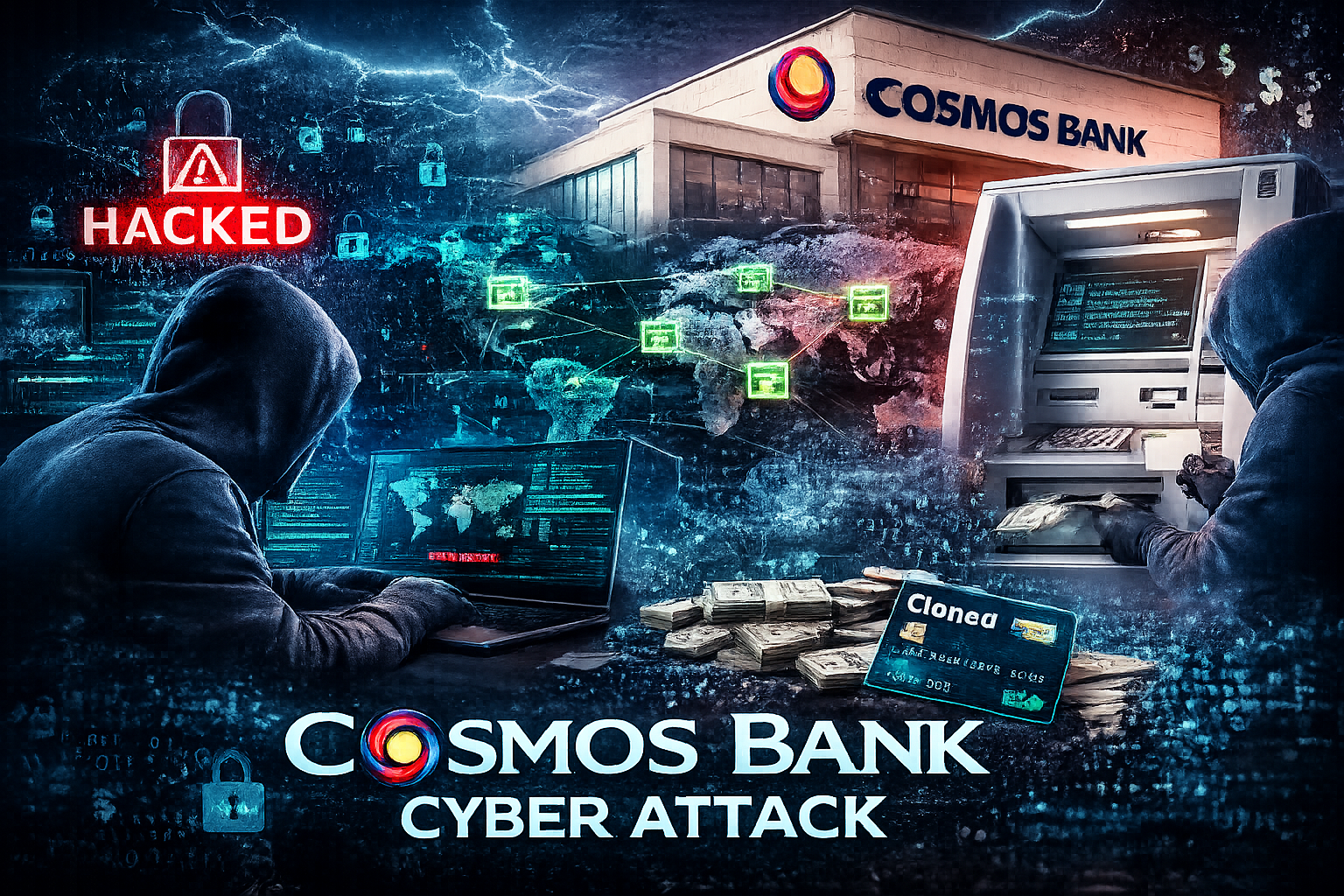
On 11 August 2018, Pune-based Cosmos Cooperative Bank became the victim of a coordinated cyber attack that resulted in losses of approximately ₹94 crore within just a few hours.
Unlike traditional banking frauds, the attackers did not directly breach customer accounts. Instead, they targeted the bank’s ATM switching infrastructure, allowing them to authorize fraudulent ATM withdrawals across multiple countries simultaneously.
Within a short period:
- Thousands of ATM transactions were executed worldwide.
- Withdrawals occurred in more than 25 countries.
- Fraudulent transactions were carried out using cloned debit cards.
- Additional fraudulent SWIFT transactions transferred funds overseas.
The incident shocked India’s banking sector because of the attack’s speed, planning, and global execution.
How Was the Attack Carried Out?
Although investigation details remain confidential, publicly available reports indicate the attack involved several coordinated stages.
1. Compromising the ATM Switch
Cybercriminals reportedly infiltrated the bank’s internal network and gained access to the ATM switch, which validates debit card transactions between ATMs and banking systems.
Once compromised, the switch approved transactions without performing proper balance verification.
2. Cloning Debit Cards
The attackers had previously obtained debit card information, likely through malware or earlier data theft.
Using stolen card data, counterfeit debit cards were created and distributed to cash-out teams operating worldwide.
3. Simultaneous ATM Withdrawals
At a predetermined time, hundreds of individuals withdrew cash simultaneously from ATMs across several countries.
Since the compromised ATM switch falsely approved the transactions, withdrawals continued until the attack was detected.
4. SWIFT-Based Fund Transfers
Besides ATM fraud, attackers also initiated unauthorized SWIFT transactions, transferring funds to foreign bank accounts before the compromise was identified.
Why Was This Attack Significant?
The Cosmos Bank cyber attack demonstrated several important realities about modern financial cybercrime:
- Cybercriminals increasingly target banking infrastructure rather than individual customers.
- Coordinated international attacks can occur within minutes.
- Banking systems require continuous monitoring for anomalous transactions.
- Digital forensic readiness is essential for rapid incident investigation.
The case also reinforced that cybersecurity is no longer just an IT responsibility—it is a critical component of financial risk management.
Digital Forensics in the Investigation
Digital forensics played a central role in investigating the Cosmos Bank incident.
Investigators focused on collecting and analyzing evidence from multiple sources, including:
- Banking servers
- ATM switch logs
- Firewall logs
- Network traffic
- Authentication records
- SWIFT transaction logs
- Endpoint devices
- Malware artifacts
Digital forensic experts reconstructed the attack timeline, identified unauthorized activities, preserved electronic evidence, and assisted law enforcement agencies in understanding the attackers’ methods.
Proper chain of custody procedures ensured that digital evidence remained admissible throughout the investigation.
Challenges Faced During Investigation
Large-scale financial cyber incidents create several investigative challenges:
- Massive volumes of transaction logs
- Cross-border cooperation with international agencies
- Attribution of sophisticated threat actors
- Preservation of volatile digital evidence
- Analysis of encrypted communications
- Identifying the initial compromise vector
These challenges require specialized forensic tools, trained investigators, and coordinated incident response teams.
Lessons Learned from the Cosmos Bank Case
The incident offers valuable lessons for banks and financial organizations.
Strengthen Network Security
Critical banking infrastructure should be isolated through proper network segmentation to reduce lateral movement by attackers.
Continuous Security Monitoring
Security Operations Centers (SOCs) should monitor unusual transaction patterns in real time.
Multi-Factor Authentication
Administrative systems should implement strong authentication mechanisms to reduce unauthorized access.
Regular Security Audits
Routine penetration testing and vulnerability assessments help identify weaknesses before attackers exploit them.
Employee Awareness
Staff members should receive regular cybersecurity awareness training to recognize phishing, credential theft, and social engineering attempts.
Digital Forensic Preparedness
Organizations should maintain forensic-ready logging, secure evidence preservation procedures, and documented incident response plans.
Impact on India’s Banking Sector
Following the Cosmos Bank attack, regulators and financial institutions increased their focus on:
- Cybersecurity governance
- Incident response capabilities
- Real-time fraud detection
- Security audits
- Threat intelligence sharing
- Digital forensic readiness
The incident became a reference point for improving cybersecurity frameworks across Indian banking institutions.



Post comments (0)