Introduction
The BTK Killer Case is one of the most famous examples of how digital forensics can solve even decades-old crimes. Dennis Rader, known as the BTK Killer (Bind, Torture, Kill), terrorised Kansas for over 30 years while successfully evading law enforcement.
However, what ultimately led to his capture was not traditional policing but a simple mistake involving digital evidence. This case highlights the power of digital forensics, metadata analysis, and cyber investigation techniques in modern criminal justice.
Who Was Dennis Rader?
Dennis Rader was an American serial killer responsible for 10 murders between 1974 and 1991. He gave himself the name “BTK” based on his method: bind, torture, kill.
For years, Rader lived a normal life as a compliance officer and church leader while secretly committing brutal crimes. He taunted police and media by sending letters describing his crimes, but managed to avoid detection for decades.
The Role of Digital Forensics in the BTK Case
After years of silence, Rader resurfaced in 2004 and began communicating with authorities again. This time, his actions introduced digital evidence into the investigation.
He sent multiple items to the police, including letters and eventually a floppy disk—a critical mistake that changed everything.
The Floppy Disk That Led to His Arrest
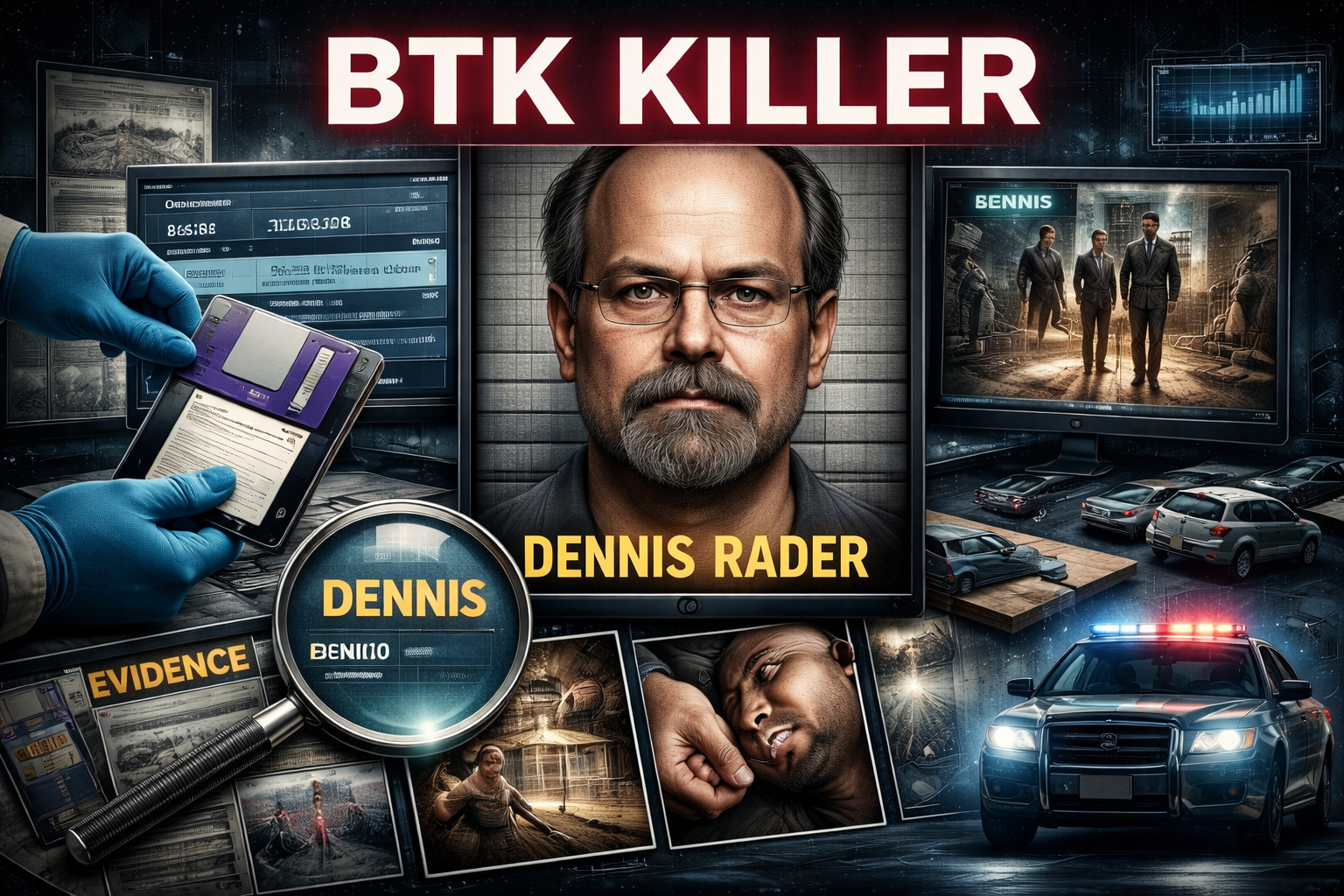
In 2005, Rader sent a floppy disk to investigators, convinced it was untraceable. However, digital forensic experts analyzed the disk using metadata analysis techniques.
What Investigators Found
- The file contained metadata showing it was created by a user named “Dennis.”
- The document was linked to a computer at a local church
- The church records pointed directly to Dennis Rader
This single piece of digital evidence provided a breakthrough in the case.
How Metadata Analysis Exposed the Killer
Metadata is often called “data about data.” It includes hidden information such as:
- Author name
- File creation date
- Device details
- Software used
In the BTK case, metadata became the key to identifying the suspect.
Digital forensic experts used specialized tools to extract this hidden information from the floppy disk. Even though Rader tried to remain anonymous, he overlooked the fact that digital files often store identifying details automatically.
Investigation and Arrest
Once investigators identified Dennis Rader as a suspect, they gathered additional evidence:
- DNA samples
- Surveillance
- Interrogation
In 2005, Rader was arrested and later confessed to all 10 murders. The case was finally solved after more than three decades.
Key Digital Forensic Techniques Used
1. Metadata Analysis
In this case, metadata analysis was the most crucial technique. It revealed the identity behind the digital file.
2. File Recovery and Examination
Experts examined the floppy disk contents and extracted hidden information.
3. Digital Link Analysis
Investigators connected the metadata to a physical location (church computer).
4. Evidence Correlation
Digital evidence was combined with physical and biological evidence for confirmation.
Lessons from the BTK Killer Case
1. Criminals Leave Digital Footprints
Even the smallest digital trace can expose a criminal. Rader’s mistake proves that complete anonymity is difficult to achieve.
2. Metadata is Powerful Evidence
Hidden data can be more valuable than visible content. Forensic experts rely heavily on metadata in investigations.
3. Technology Can Solve Cold Cases
Even cases that remain unsolved for decades can be cracked with modern forensic tools.
4. Human Error is Inevitable
Rader believed the floppy disk was untraceable—but his lack of technical knowledge led to his capture.
Why This Case Matters Today
The BTK Killer case remains relevant in today’s digital age. With the rise of cybercrime, deepfakes, and digital fraud, forensic techniques have become more important than ever.
This case demonstrates the following:
- The importance of digital evidence in criminal investigations
- How simple mistakes can expose even experienced criminals
- The growing role of digital forensics in law enforcement
Conclusion
The capture of Dennis Rader is a landmark moment in forensic history. It shows how digital forensics can succeed where traditional methods may fail.
A single floppy disk—combined with expert analysis—ended a 30-year investigation and brought justice to victims.
As technology continues to evolve, so do the methods used in investigations. The BTK case serves as a powerful reminder: in the digital world, every action leaves a trace.



Post comments (0)