Chain of Custody in Digital Forensics Explained
In today’s digital world, electronic devices play a central role in criminal investigations, civil disputes, corporate incidents, and cybersecurity cases. Computers, mobile phones, hard drives, cloud accounts, and other digital storage media often contain crucial evidence that can establish facts, identify suspects, or reconstruct events. However, collecting digital evidence is only one part of the investigative process. Ensuring that the evidence remains authentic, untampered, and legally admissible is equally important. This is where the Chain of Custody in Digital Forensics becomes a fundamental principle of every forensic investigation.
If you’re new to the field, you may also find our guide on Digital Forensics: An Introduction to Digital Evidence Investigation helpful. (Internal Link)
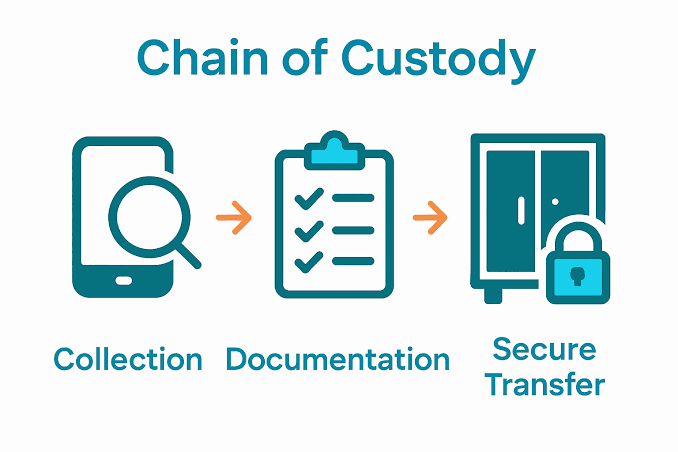
What is Chain of Custody?
The Chain of Custody in Digital Forensics refers to the chronological documentation that records the collection, handling, transfer, storage, examination, and final disposition of digital evidence. It establishes a clear record of who handled the evidence, when it was handled, where it was stored, why it was accessed, and what actions were performed throughout its lifecycle.
The primary objective of maintaining a Chain of Custody is to demonstrate that the digital evidence presented before a court or investigating authority is the same evidence that was originally collected from the source and that it has not been altered, contaminated, or compromised.
Without a properly maintained Chain of Custody, even highly valuable digital evidence may be challenged or declared inadmissible during legal proceedings.
For internationally accepted guidance on preserving digital evidence, refer to ISO/IEC 27037: Guidelines for Identification, Collection, Acquisition and Preservation of Digital Evidence.
Outbound Link: https://www.iso.org/standard/44381.html
Why is Chain of Custody Important?
Digital evidence is inherently fragile. A single action—such as powering on a device, connecting it to a network, or accessing files without proper procedures—can modify metadata or overwrite valuable information. Therefore, investigators must ensure complete accountability throughout the investigation.
A well-maintained Chain of Custody in Digital Forensics helps to:
- Preserve the integrity and authenticity of digital evidence.
- Demonstrate compliance with legal and forensic standards.
- Establish accountability for every individual who handled the evidence.
- Prevent allegations of evidence tampering or contamination.
- Increase the credibility of forensic findings in court.
Whether investigating cybercrime, financial fraud, insider threats, or data breaches, maintaining an accurate Chain of Custody is essential for ensuring that digital evidence withstands legal scrutiny.
Interested in how digital evidence helps solve financial fraud? Read our article on UPI Fraud Investigation: How Digital Forensics Helps Solve Cyber Financial Crimes. (Internal Link)
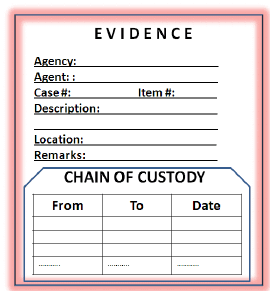
Key Elements of a Chain of Custody Record
A standard Chain of Custody document should include:
- Unique evidence identification number
- Description of the evidence (device type, make, model, serial number)
- Date, time, and location of seizure
- Name and signature of the person collecting the evidence
- Details of every transfer between individuals or departments
- Storage location and security measures
- Dates and reasons for forensic examination
- Final disposition or return of the evidence
Every transfer of custody should be documented immediately to maintain an uninterrupted record.
For best practices in documenting and handling digital evidence, consult the Scientific Working Group on Digital Evidence (SWGDE).
Outbound Link: https://www.swgde.org
Steps in Maintaining Chain of Custody
1. Identification of Evidence
The investigator first identifies all potential digital evidence, such as laptops, mobile phones, USB drives, memory cards, DVRs, servers, cloud accounts, or network devices. Each item should be assigned a unique identification number.
2. Documentation at the Scene
Before collecting any evidence, investigators should document the crime scene thoroughly by photographing devices, recording their condition, noting cable connections, and documenting whether devices are powered on or off.
3. Evidence Collection
Digital evidence should be collected using accepted forensic procedures. Investigators should avoid actions that may modify the data. Appropriate packaging materials, such as anti-static bags and evidence seals, should be used to protect electronic devices.
4. Secure Transportation
Evidence should be transported securely to prevent physical damage, unauthorized access, or accidental alteration. Proper evidence seals should remain intact throughout transportation.
5. Secure Storage
Upon arrival at the forensic laboratory, evidence should be stored in a secure evidence room with restricted access. Every movement of the evidence into or out of storage must be documented.
6. Forensic Examination
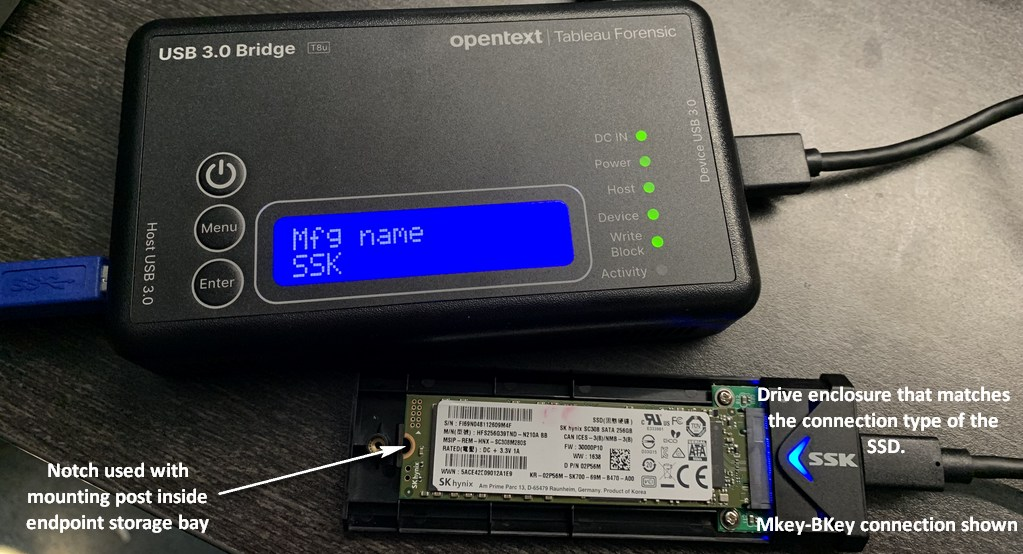
Before analysis, forensic examiners typically create a bit-by-bit forensic image of the original storage media using write blockers to prevent modification. Cryptographic hash values (such as MD5, SHA-1, or preferably SHA-256) are calculated before and after imaging to verify data integrity. The original evidence should be preserved, and all examinations should be performed on the forensic copy whenever possible.
To understand how deleted mobile data is recovered while maintaining forensic integrity, read Can Deleted WhatsApp Messages Really Be Recovered? (Internal Link)
The National Institute of Standards and Technology (NIST) publishes widely accepted guidance on digital forensic techniques and evidence handling.
Outbound Link: https://csrc.nist.gov
7. Reporting and Presentation
The forensic report should clearly describe every action performed during the examination, including the tools used, methods followed, hash values, and findings. Proper documentation strengthens the credibility of the investigation.
Role of Hash Values in Chain of Custody
Hash values act as digital fingerprints of electronic evidence. Even a single-bit modification will produce a completely different hash value. By comparing hash values before and after acquisition, investigators can demonstrate that the evidence remained unchanged throughout the examination.
For example, if a hard drive produces the same SHA-256 hash before imaging and after analysis, it confirms that the evidence has maintained its integrity.
Common Mistakes that Break the Chain of Custody
Several errors can weaken or invalidate digital evidence, including:
- Failing to document evidence transfers
- Accessing evidence without authorization
- Improper labeling of evidence
- Using non-forensic methods to acquire data
- Storing evidence in unsecured locations
- Breaking evidence seals without proper documentation
- Performing analysis directly on original evidence instead of a forensic copy
Even minor documentation errors may create opportunities for legal challenges regarding the authenticity of the evidence.
Best Practices for Maintaining Chain of Custody
To ensure the integrity and admissibility of digital evidence, investigators should:
- Follow established Standard Operating Procedures (SOPs)
- Maintain detailed and contemporaneous documentation
- Use validated forensic tools and write blockers
- Generate and verify cryptographic hash values
- Limit access to authorized personnel only
- Store evidence in secure, access-controlled environments
- Record every transfer, examination, and storage activity without exception
- Regularly train investigators on evidence handling procedures and legal requirements
Law enforcement agencies worldwide also follow guidance from INTERPOL’s Cybercrime Programme for handling digital evidence in international investigations.
Outbound Link: https://www.interpol.int/Crimes/Cybercrime




Post comments (0)