Every click leaves a trace.
Whether someone is researching harmless information, accessing confidential data, or attempting to hide suspicious activity, their browser history often records valuable digital footprints.
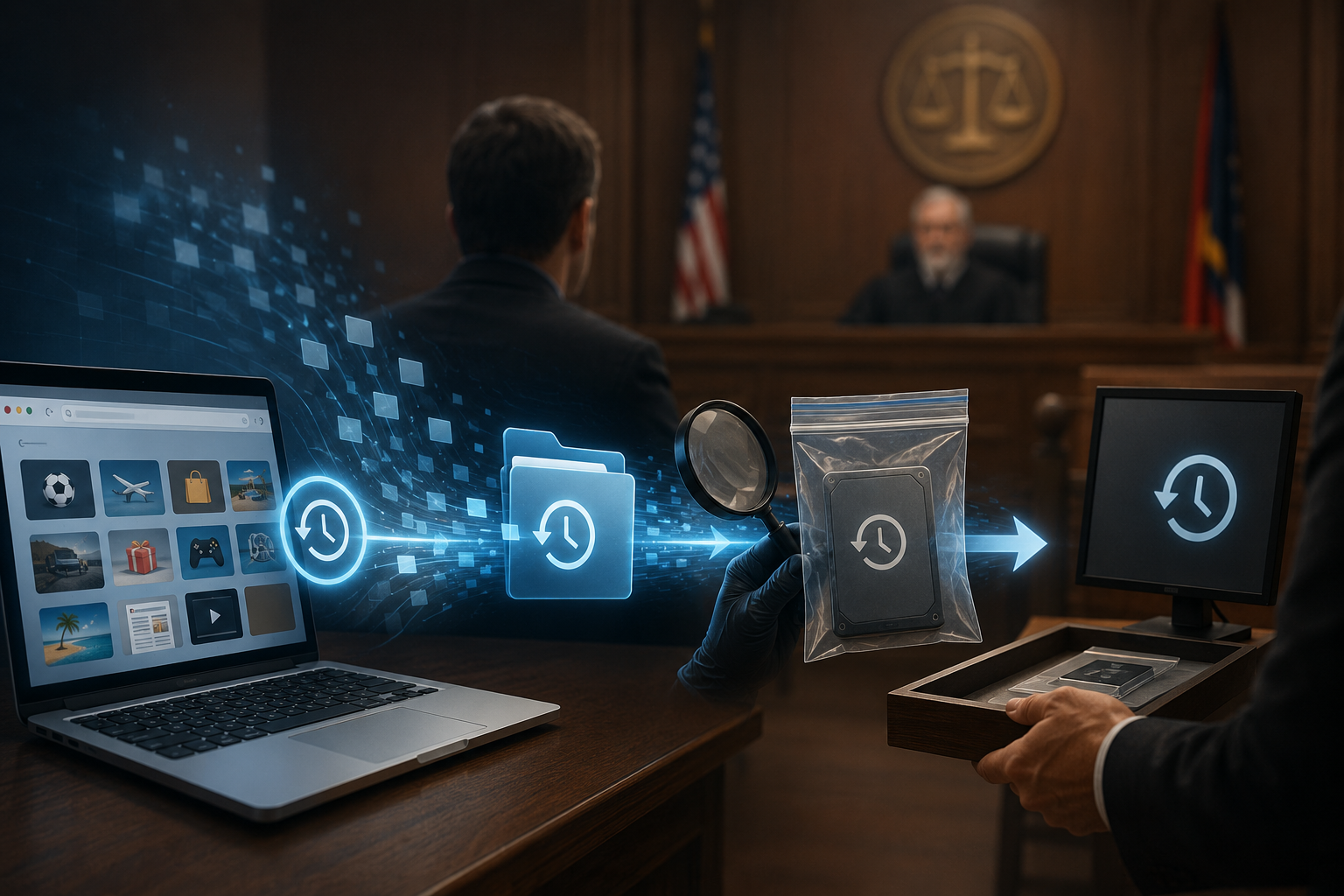
In digital forensic investigations, browser history is far more than a list of visited websites—it can become critical courtroom evidence that helps establish intent, timelines, user behavior, and digital activity patterns.
But how does simple browsing data transform into legally admissible evidence?
Let’s examine the process.
What Is Browser History?
Browser history is the record of websites, searches, downloads, cookies, cached files, login sessions, and timestamps stored by web browsers such as:
- Google Chrome
- Mozilla Firefox
- Microsoft Edge
- Safari
These records reveal:
- Websites visited
- Date and time of access
- Search terms entered
- Downloaded files
- Session duration
- Autofill and saved credentials
- Cookies and tracking data
This information can reconstruct a user’s actions with surprising accuracy.
Why Browser History Matters in Investigations
Browser activity often answers critical investigative questions:
Was the suspect researching illegal activity?
Search history may show preparation or intent.
Did someone access restricted systems?
Visited URLs may indicate unauthorized access attempts.
Was evidence intentionally deleted?
Missing records combined with forensic artifacts can suggest concealment.
Who used the device at a specific time?
Correlating browser timestamps with system logs strengthens attribution.
In many cybercrime, fraud, harassment, intellectual property theft, and insider threat cases, browser artifacts become central evidence.
How Investigators Recover Browser History
Deleting browser history does not always erase evidence.
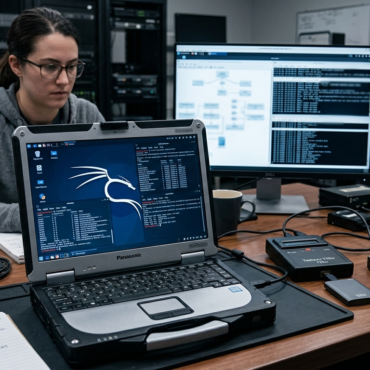
Digital forensic experts use specialized tools to recover artifacts from:
- Browser databases
- Cache files
- Cookies
- Local storage
- System restore points
- Memory dumps
- Deleted file remnants
Popular forensic tools include:
- EnCase
- FTK (Forensic Toolkit)
- Magnet AXIOM
- Autopsy
- X-Ways Forensics
These tools extract and reconstruct browser activity even when users attempt deletion.
The Importance of Timestamps
A browser record is most powerful when linked to time.
Investigators analyze timestamps to establish:
- When searches occurred
- Sequence of browsing events
- Time gaps suggesting manual deletion
- Correlation with external events (emails, transactions, logins)
A precise timeline can support or challenge claims made during legal proceedings.
For example, if a suspect claims they were not researching malicious software, recovered browser timestamps may directly contradict that statement.
Browser History Must Be Collected Properly
For browser evidence to stand in court, it must follow strict forensic protocols:
1. Preservation
The original device must remain unaltered.
2. Forensic Imaging
A bit-by-bit copy is created for analysis.
3. Chain of Custody
Every access to evidence is documented.
4. Validation
Hash values confirm no tampering occurred.
5. Documentation
Findings must be clearly reported and reproducible.
Without these steps, evidence may be challenged or excluded.
Challenges Investigators Face
Browser evidence is not always straightforward.
Common obstacles include:
- Private/incognito browsing
- Encrypted storage
- Anti-forensic wiping tools
- Browser syncing across devices
- Shared-user environments
Investigators must correlate multiple digital artifacts to ensure reliability.
Real Courtroom Impact
Browser history has helped courts establish:
- Criminal intent
- Premeditation
- Fraud planning
- Insider misconduct
- Digital stalking patterns
- Data theft timelines
Even a seemingly harmless search query can become critical when combined with surrounding evidence.
In digital forensics, context transforms raw browser data into meaningful legal proof.
Final Thoughts
Browser history is often underestimated.
To the average user, it is just a convenience feature.
To a forensic investigator, it is a detailed behavioral map.
When properly recovered, preserved, and analyzed, browser history can reveal truth, expose deception, and become compelling courtroom evidence.
In today’s digital-first world, your browser history tells a story—and sometimes, that story is presented before a judge.



Post comments (0)