Introduction
Fingerprints as evidence have long been considered one of the most reliable forms of identification in forensic science. From crime scenes to courtrooms, fingerprints act as silent witnesses, linking individuals to objects, places, and events. Nevertheless, despite rapid advancements in digital forensics, fingerprint analysis continues to play a crucial role in criminal investigations due to its uniqueness and permanence.
The reason is simple: every touch leaves behind a unique trace—and within that trace lies a story waiting to be uncovered.
What are fingerprints?
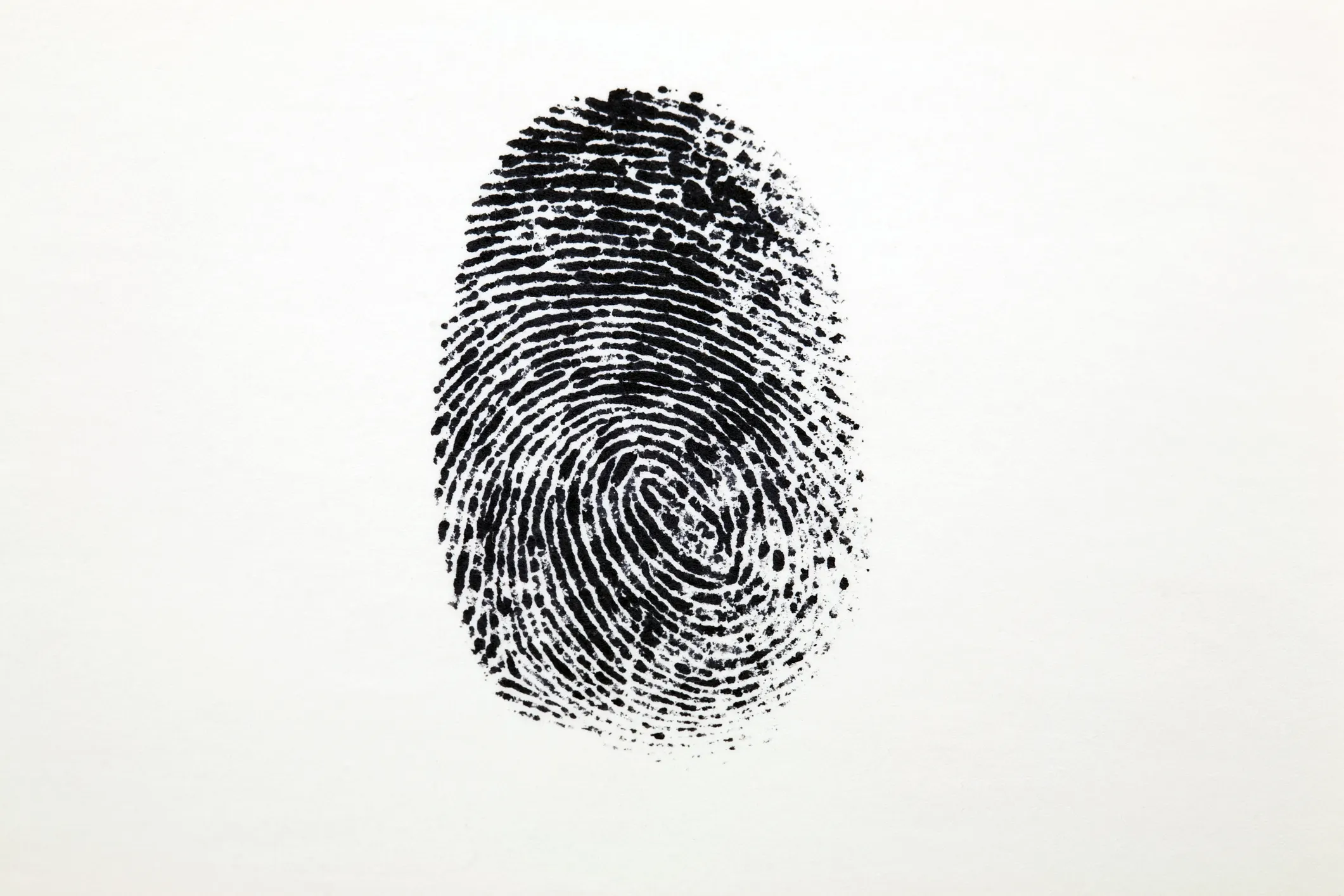
Fingerprints refer to the impressions left by the friction ridges present on human fingers. These ridges form unique patterns that remain unchanged throughout a person’s lifetime, making them a powerful tool for identification.
There are three primary types of fingerprints found at a crime scene:
-
- Latent fingerprints: Invisible or barely visible prints left by natural oils and sweat. They are the most common and are formed by natural oils and sweat from the skin. They are invisible to the naked eye and require development techniques to be visualised.
- Patent fingerprints: Clearly visible prints made by substances like blood, ink, or dirt. These are easier to detect and can often be photographed directly.
- Plastic fingerprints: Impressions left on soft surfaces such as wax, clay, or soap. They are three-dimensional impressions and preserve ridge detail in depth and can be highly valuable for analysis.
Each type requires different techniques for detection and analysis.
How are fingerprints unique?
No two individuals, not even identical twins, share the same fingerprint patterns. This uniqueness arises from random developments in utero (10 to 16 weeks), influenced by genetic and environmental factors. While genetics influence general pattern types (like loops or whorls), the exact ridge details are shaped by random factors such as:
-
- Pressure inside the womb
- Position of the fetus
- Amniotic fluid movement
This randomness ensures that no two fingerprints are exactly the same. Once formed, fingerprints remain unchanged throughout life; they may grow in size (child to adult) or get temporary damage, but the basic ridge structure regenerates in the same pattern.
Levels of Fingerprint Identification
-
Pattern level:
There are three primary patterns, including:
- Loops – ridges enter from one side, curve, and exit on the same side
- Whorls – circular or spiral patterns
- Arches – ridges enter from one side and exit the other without looping
Level 1 details help narrow down possibilities but are not sufficient for individual identification.
-
Minutiae Characteristics:
Level 2 details form the backbone of forensic fingerprint identification. These are specific ridge characteristics known as minutiae points, which are unique in their arrangement.
Common minutiae characteristics are
-
- Ridge Ending
- Bifurcation
- Dot/Island
- Enclosure
- Bridge
- Spur (Hook)
- Crossover
-
Poroscopy & Edgeoscopy:
Level 3 characteristics provide microscopic detail and are used in high-resolution analysis. These include:
-
- Pore structure and location
- Ridge edge shapes
- Ridge width and contour
These features add another layer of certainty, especially in complex or partial print comparisons.
How are fingerprints collected?
The process of fingerprint collection is both a science and an art. Investigators must ensure that prints are preserved without contamination or damage.
Traditional methods include powder dusting, where fine powders adhere to the moisture and oils in latent prints, making them visible. Brushes are used delicately to avoid smudging the ridge details.
Chemical methods are often employed for porous surfaces like paper. Substances such as ninhydrin react with amino acids in sweat to produce a purple-colored print, while cyanoacrylate (superglue) fuming creates a white polymer coating over ridge patterns on non-porous surfaces.
Modern techniques also involve alternate light sources, lasers, and digital enhancement tools to detect and capture prints that might otherwise go unnoticed.
The Process of Fingerprint Examination
Forensic fingerprint analysis follows a systematic approach often referred to as the ACE-V method:
-
- Analysis – examining the quality and features of the print
- Comparison – comparing the print with a known sample
- Evaluation – determining whether there is a match, a non-match, or an inconclusive result
- Verification – independent review by another expert
This structured methodology ensures accuracy, consistency, and reliability in forensic conclusions.
Development Techniques for Latent Prints
Since most fingerprints found at the crime scene are latent prints, they require specialized techniques for visualization:
Common methods include:
-
- Physical Methods:
Techniques like Powder dusting, iodine fuming, and magnetic powder techniques are most common to develop fingerprints on non-porous surfaces. These methods work when the powder or fumes adhere to the moisture and residue left by friction ridges.
- Chemical Methods:
techniques like ninhydrin, silver nitrate, and cyanoacrylate (superglue) fuming to visualise latent prints on porous and semi-porous surfaces by reacting these chemicals with components such as amino acids, salts, and other residues.
AFIS and the Role of Technology
The Automated Fingerprint Identification System (AFIS) helps law enforcement identify individuals based on their fingerprints.In simple terms, AFIS works like a powerful search engine for fingerprints. When investigators collect a fingerprint from a crime scene, the system scans it and compares its unique features—such as ridge patterns and minutiae points—against thousands or even millions of records stored in a database.. Within seconds, AFIS generates a list of possible matches. However, it’s important to understand that AFIS does not make the final decision. A trained fingerprint expert carefully examines these results to confirm whether there is a true match.
AFIS does not replace human experts but assists them by narrowing down potential matches. It analyses ridge patterns and minutiae configurations, generating a list of candidates for further examination. This integration of human expertise and machine efficiency has significantly improved the speed and accuracy of criminal investigations.
Challenges in Fingerprint Examination
Despite its reliability, fingerprint analysis is not without challenges:
-
- Partial or smudged prints
- Environmental degradation
- Overlapping impressions
- Poor-quality surfaces
In such cases, expert interpretation becomes critical, and conclusions may sometimes remain inconclusive rather than definitive.
Fingerprint Evidence in the Courtroom
- Courts have long accepted fingerprint evidence as a reliable method of identification. However, its presentation must be clear, scientific, and unbiased.
- Experts are required to explain their methodology, findings, and conclusions in a way that judges and juries can easily understand.
- Also use visual aids, comparison charts, and enlarged images to demonstrate matching features.
Conclusion
“Every fingerprint left behind is more than just a pattern—it is a silent witness.” It records presence, movement, and interaction, offering insights that no other form of evidence can provide in quite the same way.
In forensic science, the smallest detail can make the biggest difference. A partial print on a glass, a faint impression on paper, or a smudge on a door handle can become the key to solving a case.
As technology continues to evolve, the science of fingerprint analysis will only grow stronger.




Post comments (0)