Introduction
The difference between DoS and DDoS attack is an important topic in modern cybersecurity. Websites, blogs, and online services rely on stable servers to stay accessible. However, cybercriminals often target these servers with denial-of-service attacks.
Attackers send huge amounts of traffic to overwhelm the server. The server cannot handle all the requests at once. As a result, the website becomes slow or completely unavailable.
Understanding the difference between DoS and DDoS attack helps website owners, developers, and businesses protect their online platforms from downtime and security threats.
What is a DoS Attack?
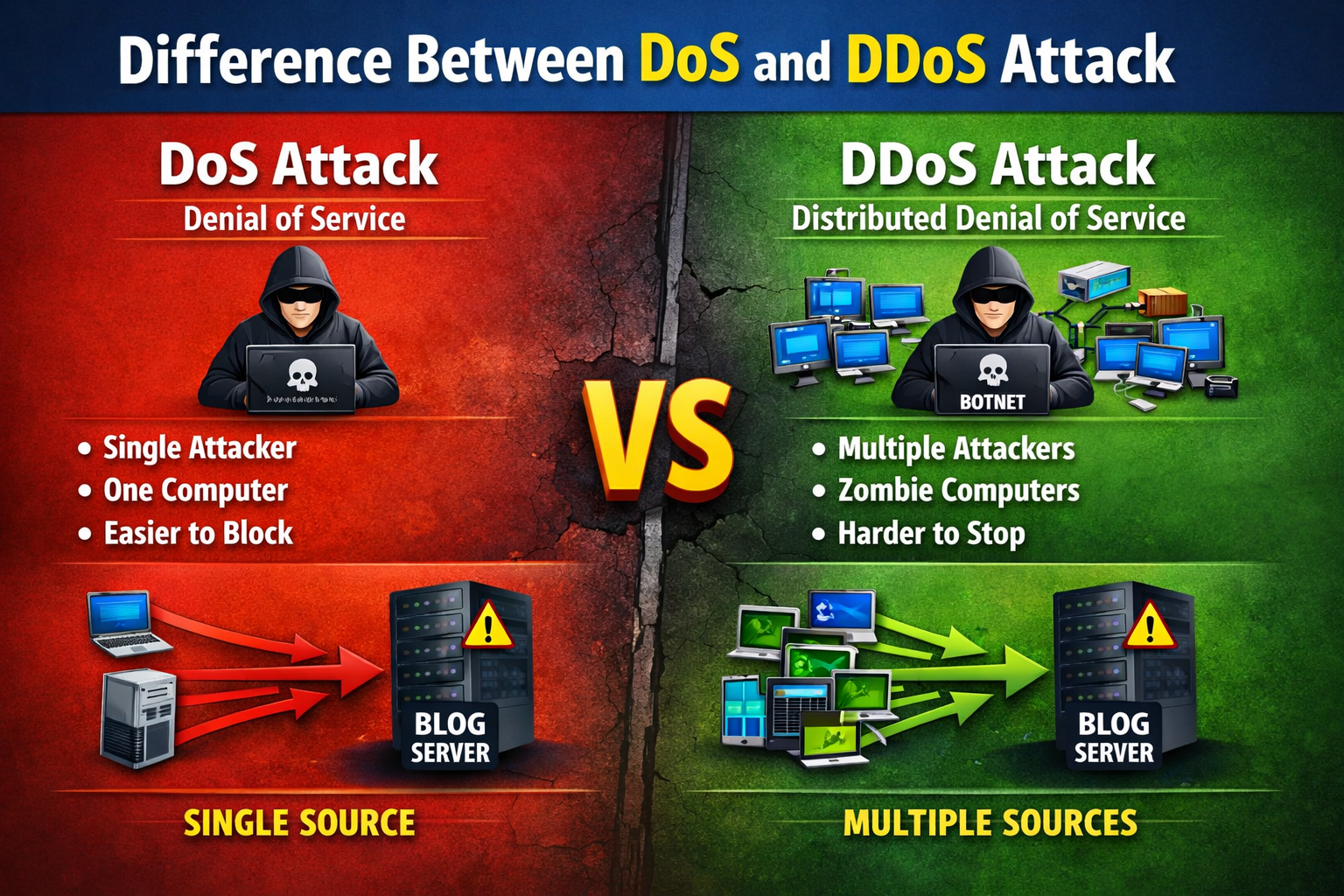
A Denial-of-Service (DoS) attack occurs when a single computer or system sends a massive number of requests to a website or server. The attacker tries to overload the server’s resources such as CPU, memory, or bandwidth.
Under normal conditions, a server processes requests from many users. During a DoS attack, the attacker floods the system with fake requests. The server struggles to respond to legitimate visitors.
This attack usually comes from one source. Because of this, security teams can often identify the attacking system quickly. They can block the malicious IP address and restore the service.
Even though DoS attacks are simpler than distributed attacks, they can still cause serious problems for small websites and blogs.
What is a DDoS Attack?
A Distributed Denial-of-Service (DDoS) attack is a larger and more advanced version of a DoS attack. Instead of one computer, the attacker uses many devices to send traffic to the target server.
Hackers often create a network of infected devices called a botnet. These devices may include computers, smartphones, and Internet of Things devices. The attacker controls the botnet remotely and commands all devices to attack the target website at the same time.
Because thousands of devices send requests simultaneously, the traffic becomes extremely large. The server cannot process such a huge volume of requests. As a result, the website becomes unavailable for real users.
Blocking a DDoS attack is more difficult because the traffic comes from many locations. Security teams must analyze the traffic carefully to filter malicious requests.
Key Differences Between DoS and DDoS Attack
The difference between DoS and DDoS attack mainly depends on the number of attacking systems and the complexity of the attack.
A DoS attack uses a single computer or network connection. A DDoS attack uses many distributed devices to flood the server.
Another difference involves detection. Security teams can often identify a DoS attack quickly because the traffic comes from one source. However, DDoS attacks use thousands of devices, which makes detection harder.
The impact of the attacks also differs. A DoS attack may slow down a website temporarily. A DDoS attack can completely shut down major websites and online services.
Because of these factors, DDoS attacks pose a greater threat to online platforms.
How to Protect Your Website from DoS and DDoS Attacks
Website owners should implement strong security measures to prevent these attacks.
One effective method is using a content delivery network (CDN). A CDN distributes traffic across multiple servers and reduces the risk of overload.
Web application firewalls (WAF) also help protect websites. They filter suspicious traffic and block malicious requests before they reach the server.
Rate limiting is another useful technique. It restricts the number of requests a user can send within a short period.
Regular monitoring of network traffic also helps detect unusual activity early. Many hosting providers also include built-in DDoS protection to improve website security.
For more information about web security practices, you can explore resources from organizations like OWASP and security guides from Cloudflare.
You can also learn about related topics such as cybersecurity basics and types of cyber attacks in other articles on this blog.
Conclusion
The difference between DoS and DDoS attack lies mainly in their scale and complexity. A DoS attack uses a single system to overload a server. A DDoS attack uses many distributed devices to generate massive traffic.
Both attacks aim to disrupt website services and prevent users from accessing online platforms. However, DDoS attacks are more powerful and harder to stop.
Website owners should understand these threats and implement strong security measures. Tools such as CDNs, firewalls, and traffic monitoring can significantly reduce the risk of these attacks and keep websites running smoothly.




Post comments (0)