Introduction
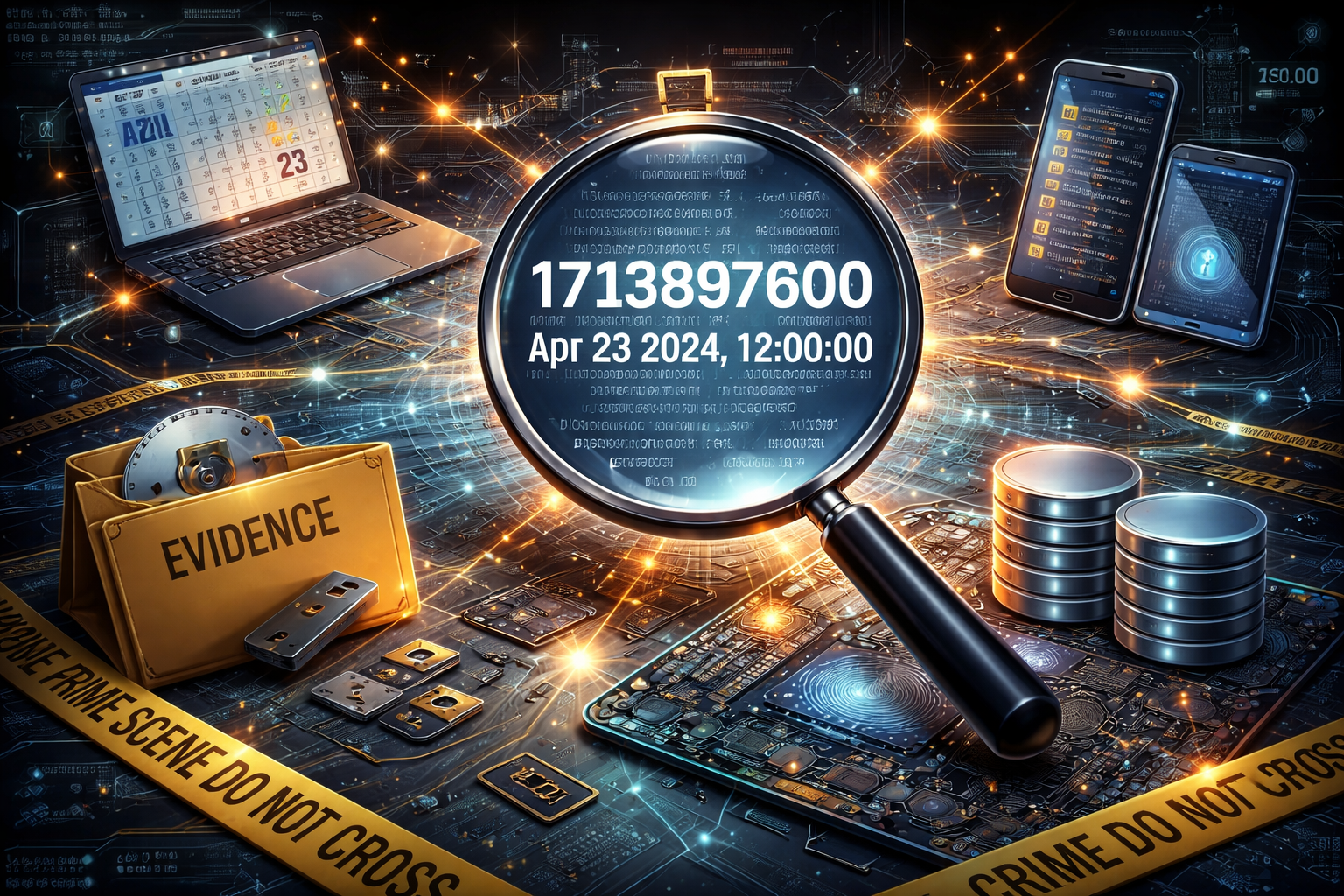
If you have ever examined Android logs, mobile extractions, or application databases, you have likely encountered long numbers such as 1708425600. At first glance, these numbers look confusing. However, they represent one of the most important time formats used in digital systems — the UNIX date, also known as UNIX timestamp.
In digital forensics, misunderstanding timestamps can lead to incorrect timelines, flawed conclusions, or even courtroom challenges. Therefore, understanding UNIX time is not optional; it is essential.
This article explains what UNIX date actually means, how it works in Android devices, and why it plays a critical role in forensic investigations.
What Is UNIX Date?
UNIX date (or UNIX timestamp) represents the number of seconds that have passed since January 1, 1970, 00:00:00 UTC. This starting point is called the Unix Epoch.
The concept originated from the operating system Unix, which introduced this standardized timekeeping method. Today, it is widely used in systems like Android, Linux, databases, web servers, and mobile applications.
Instead of storing time in a readable format like “21 February 2026, 10:30 AM,” the system stores it as a numeric value such as 1761042600. That number simply counts seconds from 1 January 1970 (UTC).
How UNIX Time Works in Android Devices
Android devices rely heavily on UNIX timestamps for internal operations. Since Android is built on the Linux kernel, which follows UNIX principles, it naturally uses this time format.
The system clock runs continuously and calculates the total number of seconds since the Unix Epoch. Applications then store this numeric value in logs and databases. Whenever required, the system converts it into a human-readable format for display.
During mobile forensic examinations, UNIX timestamps commonly appear in call logs, SMS databases, WhatsApp databases, app activity logs, system event logs, browser history, and SQLite databases.
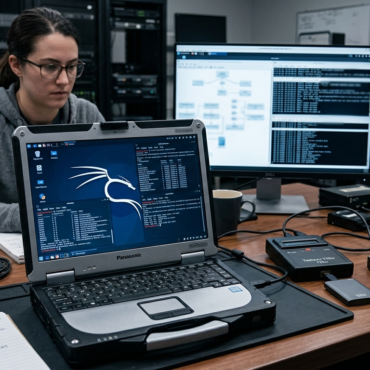
Tools such as Cellebrite UFED and Magnet AXIOM automatically convert these timestamps. However, a forensic examiner must understand the raw format instead of relying entirely on automated interpretations.
Why Does UNIX Date Matter in Digital Forensics?
Accurate timeline reconstruction is the foundation of any digital investigation. If you misinterpret a UNIX timestamp, especially when confusing seconds with milliseconds, you can shift events by years or even decades. For example, 1708425600 may represent seconds, whereas 1708425600000 may represent milliseconds. If you fail to divide milliseconds by 1000, the resulting date will be completely incorrect.
Time zone considerations also play a critical role. UNIX time is stored in UTC (Coordinated Universal Time). However, devices display time in local time zones. Therefore, investigators must correctly adjust timestamps to avoid inaccurate sequencing of events.
Moreover, UNIX time enables cross-platform correlation. Because it is standardized, investigators can match timestamps across server logs, mobile device data, cloud records, and firewall logs. This consistency strengthens forensic conclusions and improves analytical accuracy.
Finally, understanding UNIX time enhances courtroom reliability. When presenting digital evidence, an examiner must clearly explain how the time was stored, how it was converted, and whether time zone adjustments were applied. A strong grasp of UNIX timestamps increases professional credibility.
Seconds vs Milliseconds: A Common Source of Confusion
Many Android artifacts store timestamps either in seconds or in milliseconds. Typically, seconds appear as a 10-digit number, while milliseconds appear as a 13-digit number.
For instance, 1708425600 likely represents seconds, whereas 1708425600123 likely represents milliseconds. If milliseconds are mistakenly interpreted as seconds, the resulting date will be dramatically incorrect.
Therefore, always examine the length of the number, review the database schema, and verify how your forensic tool interprets the value. This simple step prevents significant analytical errors.
What Does UNIX Date Actually Mean?
To understand UNIX time in the simplest way, imagine a stopwatch that started on 1 January 1970 at 00:00:00 UTC and has never stopped running. UNIX timestamp simply answers one question: how many seconds have passed since that exact moment?
If a phone shows the value 1761042600, it means that 1,761,042,600 seconds have passed since 1 January 1970. The device then converts that number into a readable date and time for display.
In other words, the system does not store “21 February 2026.” Instead, it stores a continuously increasing count of seconds. This method is simple for computers, compact for storage, efficient for calculations, and consistent across platforms.
Why 1970?
The year 1970 was chosen when developers of Unix designed their timekeeping system. It became the standard reference point, known as the epoch, and the technology industry adopted it globally. Since then, nearly all modern operating systems and applications have relied on this same reference model.
Conclusion
UNIX date may initially appear to be a meaningless long number. However, in digital forensics, it forms the backbone of timeline reconstruction, log interpretation, and cross-device evidence correlation.
As a forensic examiner, you should never depend entirely on automated tool conversions. Instead, you must understand what the raw value represents and how it was calculated. In forensic science, technical clarity directly supports analytical credibility.



Post comments (0)