Introduction: The Ubiquity of WhatsApp in Digital Communication
Instant messaging applications have become a primary mode of communication in both personal and professional contexts. Among them, WhatsApp stands out due to its widespread adoption and end-to-end encryption. As a result, WhatsApp data is frequently encountered in legal disputes, corporate investigations, and criminal cases.
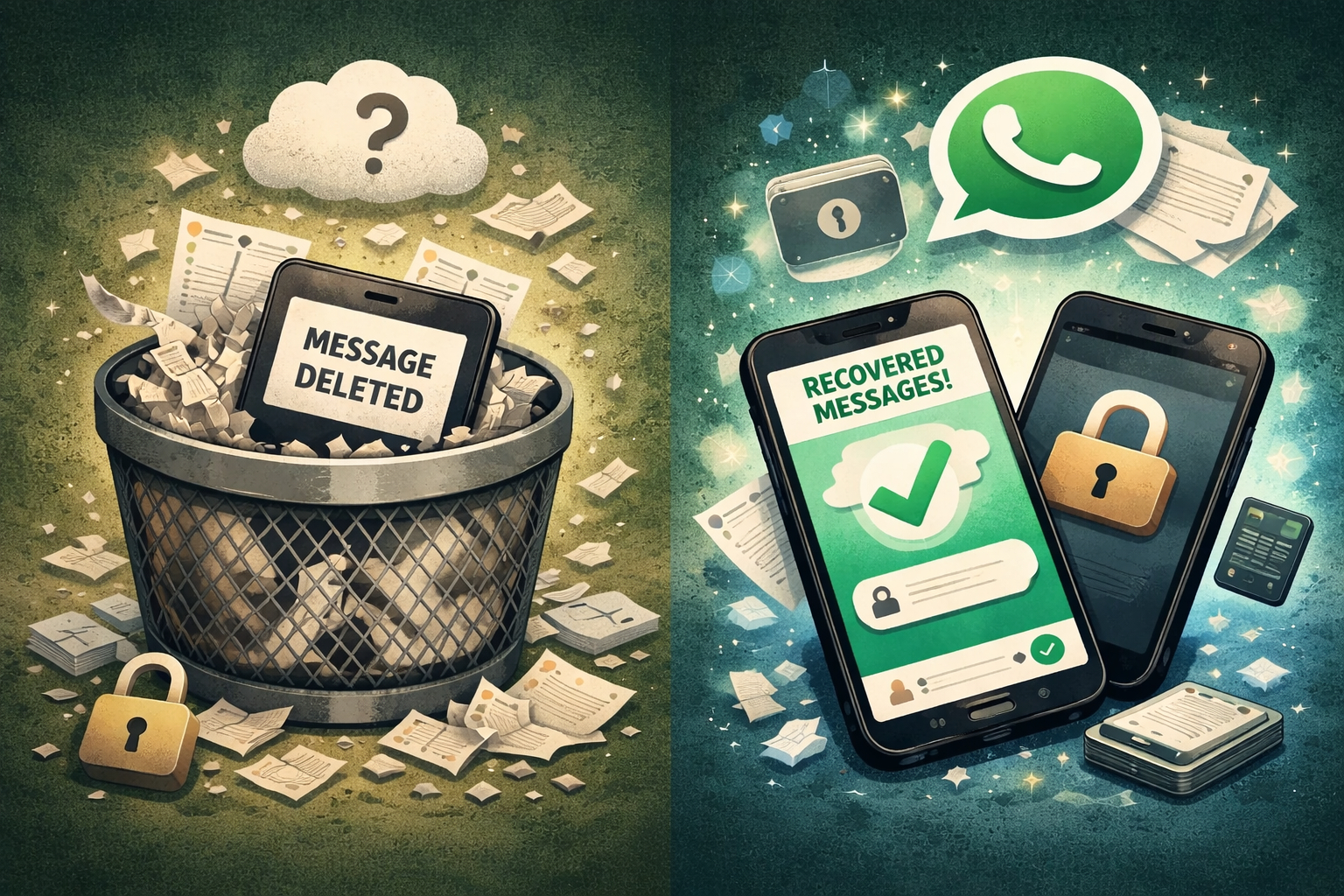
A common assumption persists that once WhatsApp messages are deleted, they can always be recovered using technical tools. This belief, often fuelled by misinformation and unrealistic portrayals of digital investigations, oversimplifies the realities of digital forensics. In practice, the recoverability of deleted WhatsApp messages depends on multiple technical and procedural factors. Therefore, it is essential to distinguish myth from reality using a forensic perspective.
Understanding How WhatsApp Stores Data
To assess whether deleted WhatsApp messages can be recovered, it is first necessary to understand how WhatsApp manages and stores data. WhatsApp primarily stores user data in two locations: local device storage and cloud-based backups.
On mobile devices, WhatsApp messages are stored in encrypted databases. In addition, the application may create periodic backups, either locally or in cloud services such as Google Drive or iCloud, depending on the operating system and user settings. These backups play a critical role in determining whether deleted messages remain accessible.
Importantly, WhatsApp does not store user messages on its own servers after delivery. Consequently, once messages are deleted and backups are overwritten or unavailable, recovery becomes significantly more challenging.
The Common Myth: Deleted WhatsApp Messages Are Always Recoverable
One of the most prevalent myths in digital investigations is the belief that deleted WhatsApp messages can always be retrieved. This assumption is often reinforced by consumer-grade recovery tools, misleading advertisements, and fictional representations of forensic capabilities.
In reality, digital forensics does not guarantee recovery. Unlike popular belief, forensic analysis does not “restore” deleted data at will. Instead, it identifies and analyses data remnants that may still exist under specific conditions. Therefore, the statement that deleted WhatsApp messages are always recoverable is fundamentally inaccurate.
The Reality: A Digital Forensic Perspective
From a forensic standpoint, the recovery of deleted WhatsApp messages is conditional rather than assured. Digital forensics operates on the principle of evidence persistence, which means that data can only be recovered if it still exists in some form.
When a message is deleted, it is typically removed from the user interface. However, remnants may still exist in backups or unallocated storage until they are overwritten. Consequently, the success of recovery depends on factors such as backup availability, time elapsed since deletion, and device usage patterns.
Therefore, investigators approach such cases by evaluating the likelihood of data existence rather than assuming recoverability.
Conditions Under Which Recovery May Be Possible
There are certain scenarios in which deleted WhatsApp messages may still be recoverable.
First, if a backup was created before the deletion occurred and has not been overwritten, messages may be restored from that backup. Second, if the device has not undergone significant data overwriting, remnants of deleted data may still exist in storage. Third, lawful access to cloud backups, where applicable, may provide additional sources of evidence.
However, even under these conditions, recovery is not guaranteed. Each case must be evaluated individually, based on device configuration, user behaviour, and forensic preservation practices.
When Recovery Is Not Possible
Equally important is understanding when recovery is unlikely or impossible. If no backups exist or if backups have been overwritten after deletion, the chances of recovery are minimal. Similarly, device resets, application reinstallation, or prolonged device usage can result in irreversible data loss.
Additionally, strong encryption mechanisms limit access to message content without proper credentials or lawful authorization. As a result, investigators must acknowledge these limitations rather than promise definitive outcomes.
Forensic Methodology vs Consumer Recovery Tools
A clear distinction must be made between forensic methodologies and consumer recovery tools. Digital forensic examinations follow validated procedures designed to preserve evidence integrity and maintain legal admissibility.
In contrast, many consumer-grade recovery tools operate without forensic safeguards. They may modify data, generate unreliable results, or compromise evidentiary value. Therefore, professional investigators rely on forensically sound acquisition and analysis techniques rather than trial-and-error recovery methods.
Legal and Ethical Considerations
The examination of WhatsApp data raises significant legal and ethical concerns. Accessing private communications requires proper authorization, consent, or legal mandates. Without these, any recovered data may be inadmissible in court.
Moreover, maintaining chain of custody and documentation is essential. Digital evidence must be collected, preserved, and analysed in a manner that ensures transparency and accountability throughout the investigation process.
Challenges in WhatsApp Forensic Analysis
Despite advances in digital forensics, several challenges persist in WhatsApp investigations.
Encryption remains a major obstacle, as it restricts direct access to message content. Data fragmentation across devices and cloud services further complicates analysis. Additionally, variations in operating systems, application versions, and backup configurations introduce complexity.
Consequently, investigators must continuously adapt their methodologies to address evolving technologies and security measures.
Best Practices for Investigators and Organisations
To manage expectations and improve investigative outcomes, best practices should be followed.
These include preserving devices promptly, preventing unnecessary usage after data deletion, and seeking expert forensic assistance early. Organisations should also develop clear policies regarding digital evidence handling and compliance.
Furthermore, educating stakeholders about the realistic capabilities and limitations of digital forensics helps prevent misconceptions and unsupported claims.
Conclusion: Separating Myth from Forensic Reality
The question of whether deleted WhatsApp messages can be recovered does not have a simple yes or no answer. Recovery is possible in certain scenarios, but it is never guaranteed. Digital forensics is a discipline grounded in scientific methodology, probability, and legal integrity—not certainty.
By understanding how WhatsApp stores data and recognising the limitations imposed by encryption and system design, investigators and the public alike can develop informed expectations. Ultimately, separating myth from reality strengthens both investigative credibility and the responsible use of digital forensic science.

Post comments (0)