What Is Write Blocking? A Complete Guide to Write Blockers in Digital Forensics
In digital forensics, preserving the original evidence is one of the most important responsibilities of a forensic investigator. When investigators examine a hard drive, USB drive, memory card, or other storage device, even a small change to the original data can affect the integrity of the investigation. This is where write blocking becomes essential.
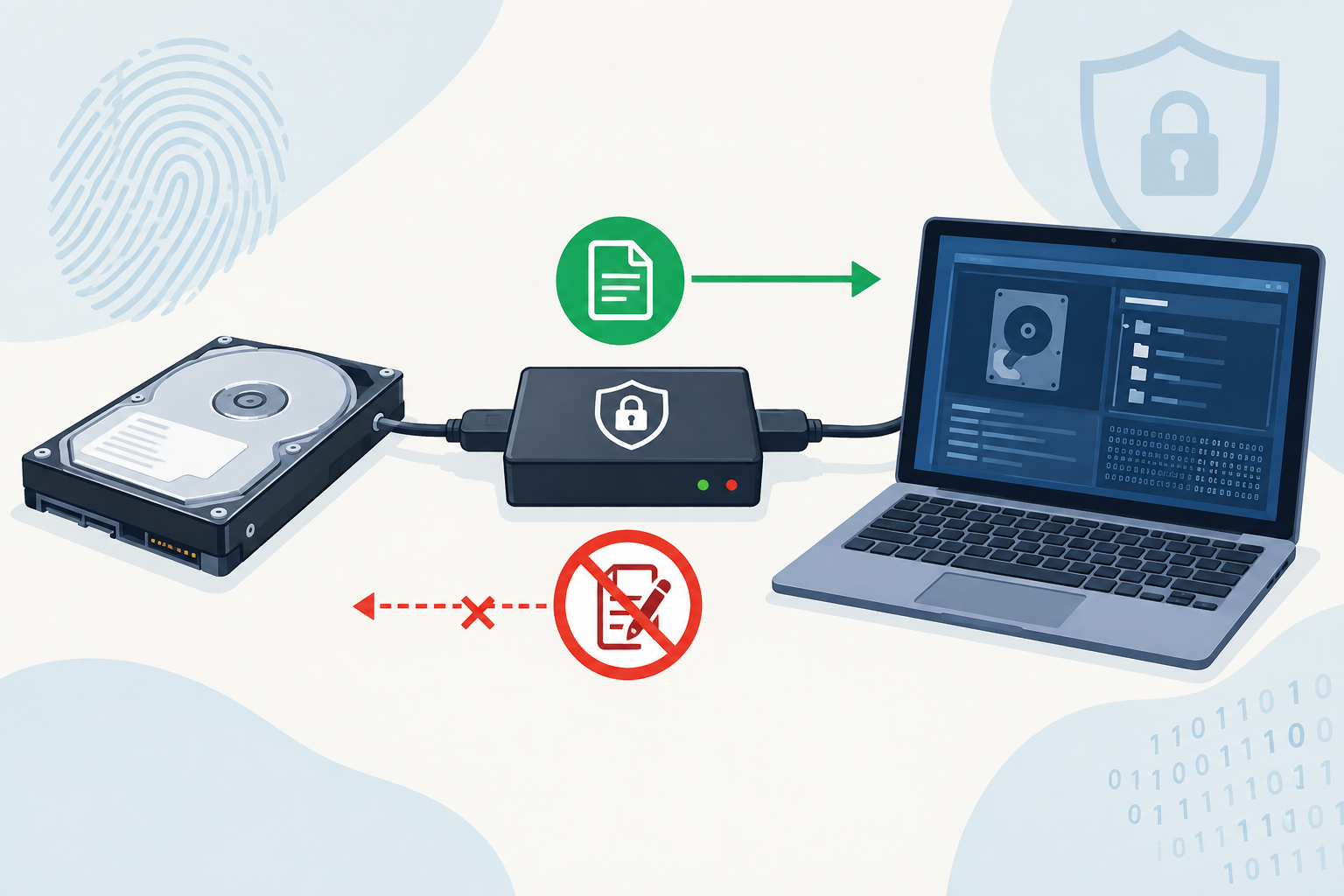
A write blocker is a hardware or software-based mechanism that prevents data from being written, modified, or deleted on a digital storage device while allowing investigators to read and acquire the existing data.
What Is Write Blocking?
Write blocking in digital forensics is a technique used to prevent accidental or intentional modification of digital evidence during forensic examination.
When a storage device is connected to a forensic workstation, the operating system may automatically attempt to perform certain write operations. For example, it may update file-system metadata, create system files, change timestamps, or modify other information on the device.
A forensic write blocker prevents these write commands from reaching the evidence drive. Investigators can therefore access and analyze the data while keeping the original storage media unchanged.
The basic principle is simple:
Read access: Allowed
Write access: Blocked
This makes write blocking a fundamental component of digital evidence preservation.
Why Is Write Blocking Important?
The primary purpose of write blocking is to maintain the integrity and authenticity of digital evidence.
Imagine that investigators seize a suspect’s hard drive and connect it directly to a computer for examination. If the operating system modifies the drive automatically, the evidence may no longer be exactly as it was when seized.
Even changes that appear insignificant can become important in forensic investigations. File timestamps, metadata, directory information, and other file-system structures can potentially provide evidence about how and when a device was used.
Using a write blocker minimizes this risk.
Write blocking also supports the principle of forensic evidence integrity, allowing investigators to demonstrate that their examination did not unnecessarily alter the original evidence.
Organizations such as the National Institute of Standards and Technology (NIST) publish guidance and research related to digital forensics and the handling of digital evidence.
How Does a Write Blocker Work?
A hardware write blocker is placed between the forensic workstation and the storage device.
The general setup looks like this:
Evidence Drive → Write Blocker → Forensic Workstation
The investigator can send read commands through the device to access the evidence. However, commands that would modify the storage media are blocked.
For example, if the forensic workstation attempts to send a write command to the evidence drive, the write blocker detects the command and prevents it from reaching the original media.
Hardware write blockers are commonly available for interfaces such as:
- SATA
- IDE/PATA
- USB
- FireWire
- SCSI
- Other storage interfaces
Modern forensic equipment may also provide support for newer storage technologies, depending on the specific device and implementation.
Hardware vs. Software Write Blocking
There are two major approaches to write protection in digital forensics: hardware and software.
Hardware Write Blocker
A hardware write blocker is a physical device positioned between the evidence media and forensic workstation.
Advantages include:
- Strong physical protection against write commands
- Widely used in professional forensic laboratories
- Independent of many operating-system-level configurations
- Useful during forensic acquisition and examination
Because the protection occurs at the hardware/interface level, hardware write blockers are generally preferred when the goal is to provide robust protection for original evidence.
Software Write Blocker
A software write blocker uses software or operating-system configurations to prevent writing to a storage device.
Software-based methods can be useful in certain forensic workflows, but they require careful configuration and validation. Investigators must ensure that the operating system and forensic software cannot modify the evidence.
For this reason, laboratories should validate their forensic write-blocking procedures and document how write protection was implemented.
Write Blocking During Forensic Imaging
One of the most common applications of write blocking is during forensic disk imaging.
A forensic investigator normally creates a bit-by-bit forensic image of the original storage device rather than performing an investigation directly on the original media.
The typical process is:
- Seize and document the storage device.
- Connect the evidence media through a write blocker.
- Create a forensic image.
- Calculate cryptographic hash values.
- Verify the acquired image.
- Conduct forensic analysis on a working copy.
Hash values such as SHA-256 can be used to help demonstrate that the acquired forensic image remains unchanged after acquisition.
Write blocking and hashing serve different purposes: write blocking protects the original media from modification, while hashing helps verify the integrity of acquired data.
Is Write Blocking Always Necessary?
Write blocking is a critical safeguard when accessing original digital evidence, but its exact use depends on the forensic workflow, technology, and laboratory procedures.
For example, some modern storage technologies and operating systems may require specialized acquisition methods. Investigators should understand the storage interface, device behavior, and acquisition tool being used rather than assuming that every storage device can be safely handled using the same method.
Professional forensic laboratories should maintain validated procedures for write protection, forensic acquisition, evidence handling, and verification.
The Scientific Working Group on Digital Evidence (SWGDE) also provides technical guidance and best-practice documents relevant to digital evidence examination.
Best Practices for Using a Write Blocker
For reliable digital forensic evidence handling, investigators should:
- Use a validated write blocker whenever appropriate.
- Confirm that the device is actually blocking write commands.
- Record the make, model, and serial number of the evidence media.
- Document the acquisition procedure.
- Calculate and record appropriate hash values.
- Never alter the original evidence unnecessarily.
- Perform forensic analysis primarily on verified forensic copies.
- Maintain a complete chain of custody.



Post comments (0)