
Forensic Science

38 Results / Page 2 of 5

Background

todayMay 29, 2026

close

Blog vanshika

History and Evolution of Fingerprint Analysis

Introduction  Fingerprint analysis is one of the oldest and most reliable methods of personal identification used in criminal investigations. Every individual possesses unique fingerprint patterns that remain unchanged throughout life, making fingerprints a powerful tool in forensic science. Over centuries, fingerprint analysis has evolved from simple observations of skin patterns ...

todayMay 27, 2026

close

Blog vanshika

Types of Evidence in Criminal Investigations

Introduction In every criminal investigation, evidence plays a crucial role in uncovering the truth, identifying suspects, and ensuring justice. Evidence helps investigators reconstruct events, establish links between victims and suspects, and present reliable facts in court. Without proper evidence, even the most serious crimes can remain unsolved. From fingerprints and ...

todayMay 25, 2026

close

Blog Neerav Jindal

Photomicrography vs Microphotography: What’s the Difference?

In forensic science, precision documentation plays a critical role in evidence examination and courtroom presentation. Two terms often confused in imaging science are photomicrography and microphotography. Although they sound similar, they refer to entirely different processes. Understanding the distinction is essential, especially in questioned document examination, trace evidence analysis, and ...

todayMay 19, 2026

close

General Forensics + Document Analysis Neerav Jindal

Counterfeit Currency Detection Techniques: How Experts Identify Fake Notes

Counterfeit currency remains one of the most persistent financial crimes worldwide. Fake banknotes not only cause economic losses but also undermine trust in national financial systems. To combat this, forensic experts, financial institutions, and law enforcement agencies use advanced counterfeit currency detection techniques to distinguish genuine notes from fraudulent ones. ...

todayMay 19, 2026

close

Blog + Mobile Forensic + Computer Forensics + Digital Forensics Neerav Jindal

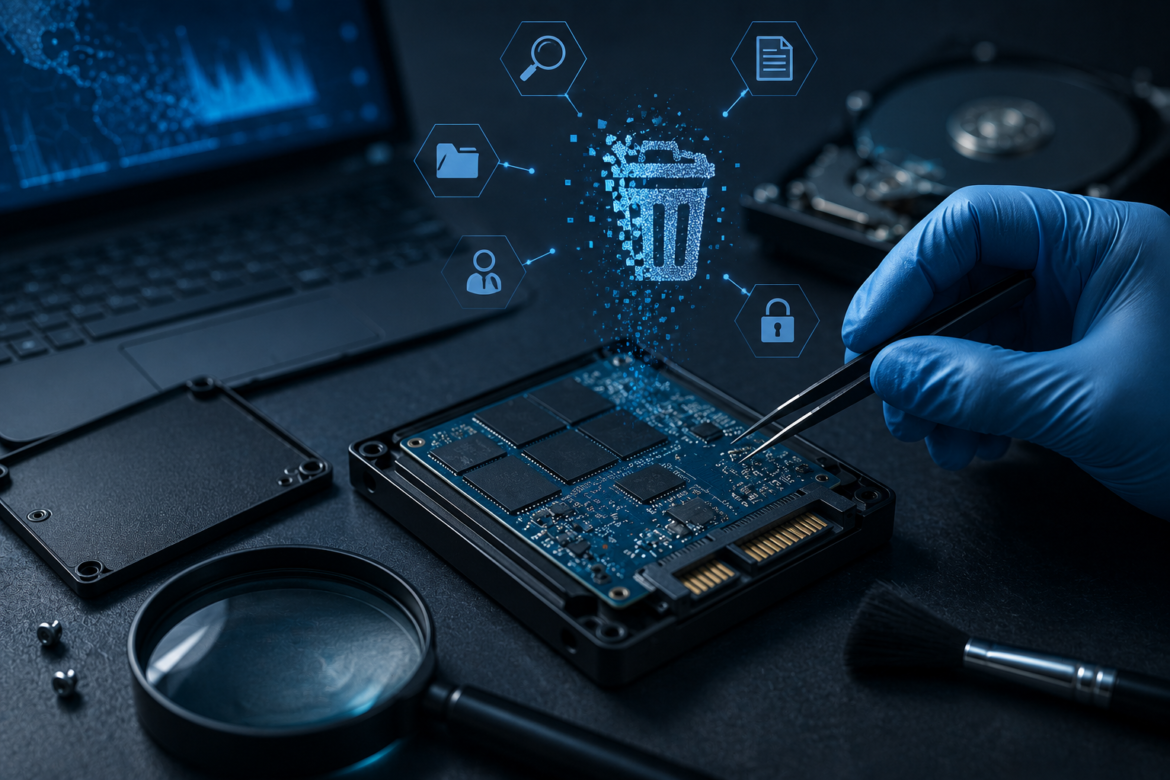
Anti-Forensics Techniques Criminals Use

In today’s digital world, criminals are becoming increasingly sophisticated in hiding their tracks. As forensic experts develop advanced tools to recover and analyze evidence, offenders respond with anti-forensics techniques—methods specifically designed to obstruct digital investigations. Anti-forensics is the practice of manipulating, concealing, or destroying digital evidence to make forensic analysis ...

todayMay 16, 2026

close

Blog Neerav Jindal

How Environmental Factors Affect Fingerprint Recovery

Fingerprints are among the most reliable forms of forensic evidence, often serving as silent witnesses at crime scenes. However, recovering usable fingerprints is not always straightforward. Environmental conditions can significantly affect the visibility, preservation, and recovery of latent fingerprints. Factors such as temperature, humidity, surface exposure, and contamination can either ...

todayMay 15, 2026

close

Blog Neerav Jindal

Printer and Toner Identification in Document Fraud Cases

Document fraud is becoming more sophisticated with easy access to high-quality printers and editing tools. Fraudsters can alter contracts, create fake certificates, forge financial records, and manipulate official documents with surprising precision. But even the most convincing printed document often carries hidden forensic evidence. Through printer and toner identification, forensic ...

todayMay 14, 2026

close

Fingerprint Examination + forensic fingerprint Neerav Jindal

Fingerprint Evidence in Court: Reliability and Challenges

Fingerprint evidence has long been regarded as one of the most trusted forms of forensic identification in criminal investigations. For more than a century, courts worldwide have accepted fingerprints as a powerful tool for linking suspects to crime scenes. The uniqueness and permanence of fingerprint ridge patterns make them a ...

todayMay 13, 2026

close

General Forensics + Document Analysis Neerav Jindal

The Role of Microscopy in Document Analysis

In the world of forensic science, where the smallest detail can determine the authenticity of a document, microscopy plays an indispensable role. From identifying forged signatures to examining ink strokes and paper fibers, microscopy allows forensic document examiners to uncover evidence invisible to the naked eye. Document analysis is not ...