Social Media Forensics: Evidence Collection and Legal Issues
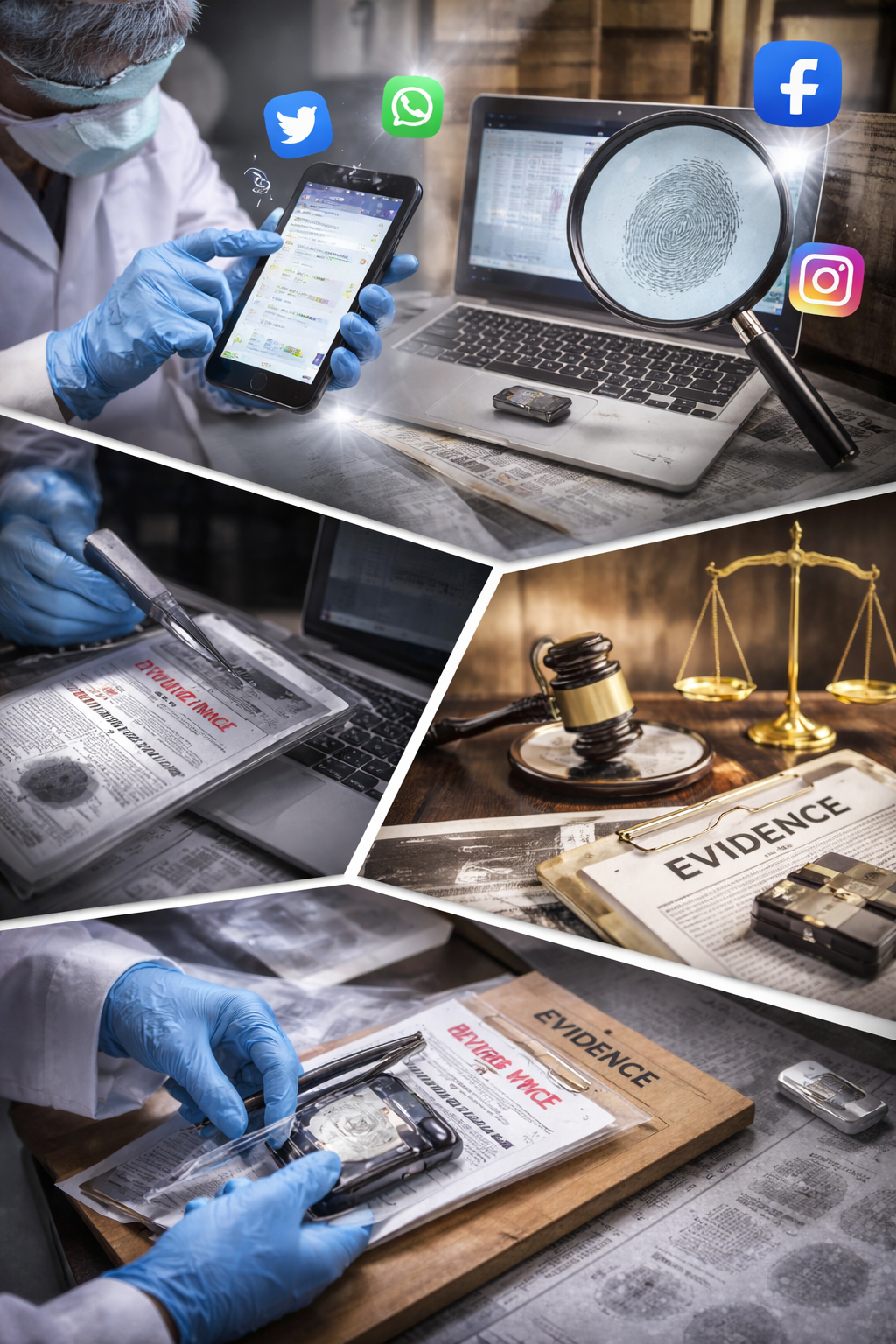
In today’s digital world, social media platforms have become an integral part of daily life. People use them to communicate, share opinions, upload photos, and conduct business. Consequently, social media now plays a significant role in criminal and civil investigations. As a result, social media forensics has emerged as an important branch of digital forensics that focuses on identifying, collecting, preserving, and analyzing evidence from social networking platforms in a legally acceptable manner.
Understanding Social Media Forensics
Social media forensics involves the examination of data generated on platforms such as Facebook, Instagram, X (Twitter), WhatsApp, and LinkedIn. This data may include text messages, posts, images, videos, comments, likes, shared links, and user metadata. Since such information can reveal intent, relationships, timelines, and location details, it often becomes crucial in investigations involving cybercrime, harassment, fraud, defamation, and even violent crimes.
However, because social media data is dynamic and easily altered, forensic experts must follow strict procedures to ensure evidence integrity.
Types of Evidence Found on Social Media
Social media platforms generate multiple forms of digital evidence. Forensic experts commonly encounter:
-
Profile information such as usernames, profile photos, and bio details
-
Posts, comments, and replies
-
Private messages and chat histories
-
Uploaded images, videos, and stories
-
Location tags and check-ins
-
Timestamps and activity logs
Moreover, metadata associated with these elements can provide additional insights, such as the device used, IP address, and time of creation. Therefore, both visible and hidden data hold forensic value.
Methods of Social Media Evidence Collection
Collecting social media evidence requires careful planning and technical knowledge. Since improper collection may lead to evidence rejection in court, investigators follow structured methods.
1. Manual Collection
Manual collection involves capturing screenshots, downloading content, and recording URLs. Although this method is simple, it has limitations. Screenshots alone may not always prove authenticity. Therefore, investigators must document date, time, and source details carefully.
2. Automated Forensic Tools
Specialized digital forensic tools allow investigators to collect social media data in a more structured and verifiable manner. These tools help preserve metadata and maintain data integrity. As a result, courts often consider such evidence more reliable than manual captures.
3. Open-Source Intelligence (OSINT)
OSINT techniques help investigators gather publicly available social media data. By analyzing posts, connections, and activity patterns, experts can build timelines and identify relationships. However, investigators must ensure that data collection remains lawful and ethical.
4. Legal Requests to Service Providers
In many cases, investigators obtain social media data directly from platform service providers through legal channels. Court orders, warrants, or subpoenas may be required. This method provides highly reliable evidence, although it can be time-consuming.
Preservation of Social Media Evidence
Once collected, preserving social media evidence becomes critical. Since online content can be deleted or modified easily, forensic experts must act quickly. Proper preservation includes:
Therefore, accurate documentation ensures that evidence remains unchanged and admissible in court.
Legal Issues in Social Media Forensics
Although social media evidence is powerful, it also raises several legal challenges. Courts carefully examine how evidence is collected, preserved, and presented.
1. Authenticity and Reliability
One major legal issue involves proving that the social media content is genuine. Fake profiles, edited posts, and impersonation can mislead investigations. Therefore, forensic experts must establish ownership, authorship, and originality of the content.
2. Privacy and Consent
Social media investigations often involve private communications. Accessing private messages without proper authorization may violate privacy laws. Consequently, investigators must follow legal procedures and obtain required permissions.
3. Jurisdictional Challenges
Social media platforms often store data on servers located in different countries. As a result, jurisdictional laws may complicate evidence access. International cooperation and legal assistance treaties may become necessary.
4. Admissibility in Court
Courts require proof that social media evidence was collected lawfully and preserved correctly. If investigators fail to follow proper procedures, courts may reject the evidence. Therefore, expert testimony often becomes essential to explain collection methods and technical findings.
Role of the Forensic Expert
Forensic experts play a crucial role in social media investigations. They not only collect and analyze evidence but also explain technical findings in simple language for courts. Their expert opinion helps judges understand the relevance, reliability, and limitations of social media evidence.
Moreover, experts must remain neutral and avoid assumptions. Their conclusions should be based strictly on forensic analysis and documented facts.
Conclusion
Social media forensics has become an indispensable part of modern digital investigations. From identifying suspects to establishing timelines and intent, social media evidence provides valuable insights. However, due to legal and technical complexities, investigators must follow proper forensic procedures during evidence collection and preservation.
In conclusion, understanding social media forensics and its legal issues is essential for forensic students, digital investigators, and legal professionals. When handled correctly, social media evidence can strongly support investigations and contribute to the pursuit of justice.


Post comments (0)