Metadata Analysis: The Silent Witness in Digital Evidence
In digital forensic investigations, evidence does not always speak loudly. Instead, it often whispers through hidden details that most users never notice. One such powerful yet overlooked element is metadata. Frequently described as data about data, metadata acts as a silent witness that records the history, origin, and handling of digital files. When investigators analyze metadata correctly, it can strengthen a case, expose manipulation, and reconstruct events with precision.
What Is Metadata?
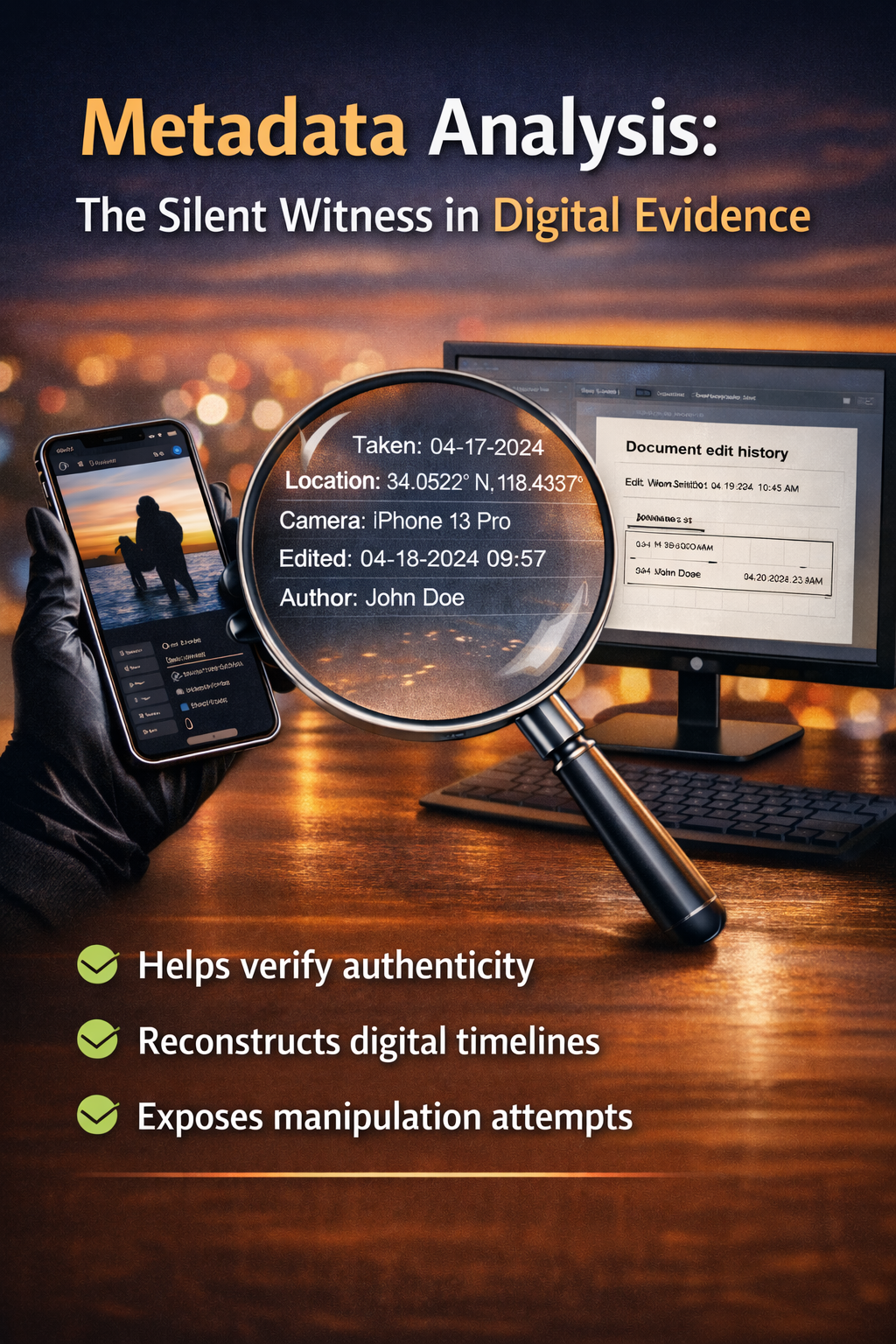
Metadata refers to the background information automatically generated and stored by digital devices and software. Whenever a user creates, modifies, copies, or transfers a file, the system records certain attributes. These attributes may include the file creation date, modification time, author name, device details, file size, and even GPS location.
For example, a photograph does not only contain visual content. It may also include metadata such as the camera model, date and time of capture, location coordinates, and editing history. Similarly, documents, emails, videos, and audio files all carry metadata that reflects their lifecycle.
Types of Metadata in Digital Forensics
Digital forensic experts generally categorize metadata into three main types. First, system metadata records technical details like file size, timestamps, and file paths. Operating systems generate this information automatically. Second, application metadata comes from software such as Microsoft Word, PDF readers, or image editors. This type may reveal author names, revision history, and embedded comments. Third, embedded metadata exists within the file itself, such as EXIF data in images or headers in emails.
Together, these metadata types help investigators understand not just what a file contains, but also how, when, and where it was handled.
Why Metadata Matters in Digital Evidence
Metadata plays a crucial role because it provides context. While the visible content of a file shows what is written or recorded, metadata explains the circumstances surrounding it. For instance, metadata can confirm whether a document was created before or after a specific incident. It can also reveal whether someone edited a file to alter facts or mislead investigators.
Moreover, metadata assists in verifying authenticity and integrity. If timestamps or author details conflict with a suspect’s statement, metadata can challenge false claims. In many cases, courts rely on metadata to establish timelines and corroborate digital activities.
Metadata as a Timeline Builder
One of the most valuable uses of metadata is timeline reconstruction. By analyzing creation, access, and modification times across multiple files, investigators can recreate a sequence of events. For example, metadata may show that a file was edited minutes before being sent via email or uploaded to cloud storage.
Additionally, when combined with logs, browser history, and system artifacts, metadata strengthens the overall timeline. As a result, investigators can connect actions to specific users and devices with greater confidence.
Common Applications in Investigations
Metadata analysis supports various types of digital investigations. In cybercrime cases, metadata helps trace file origins and unauthorized access. In questioned document cases, it can reveal document fabrication or backdating. In mobile forensics, metadata from photos and videos may place a suspect at a crime scene. Even in corporate investigations, metadata assists in detecting data leaks and policy violations.
Therefore, metadata does not work in isolation. Instead, it complements other forensic techniques to provide a complete investigative picture.
Limitations and Challenges
Despite its value, metadata analysis has limitations. Skilled users may intentionally alter or strip metadata using editing tools. File transfers between devices or platforms may also modify timestamps automatically. Additionally, different operating systems record time differently, which can create inconsistencies.
However, trained forensic experts recognize these challenges. They validate metadata using multiple sources, cross-check artifacts, and maintain proper documentation. When handled correctly, metadata remains reliable and admissible.
Legal Importance of Metadata
From a legal perspective, metadata often determines whether digital evidence can withstand courtroom scrutiny. Courts expect forensic experts to explain metadata clearly and demonstrate that evidence remains unaltered. Proper acquisition, hashing, and documentation ensure that metadata retains its evidentiary value.
If investigators ignore metadata or fail to preserve it during collection, they risk compromising the entire case. Thus, understanding metadata is not optional—it is essential.
Conclusion
Metadata analysis truly acts as the silent witness in digital evidence. Although users rarely notice it, metadata continuously records digital actions with remarkable accuracy. When forensic professionals analyze it carefully, metadata reveals timelines, verifies authenticity, and exposes manipulation.
In the evolving landscape of digital crime, metadata remains one of the most powerful tools available to investigators. Ultimately, evidence does not always need to speak loudly—sometimes, the quietest data tells the strongest truth.



Post comments (0)