How Emojis and Stickers Become Digital Evidence
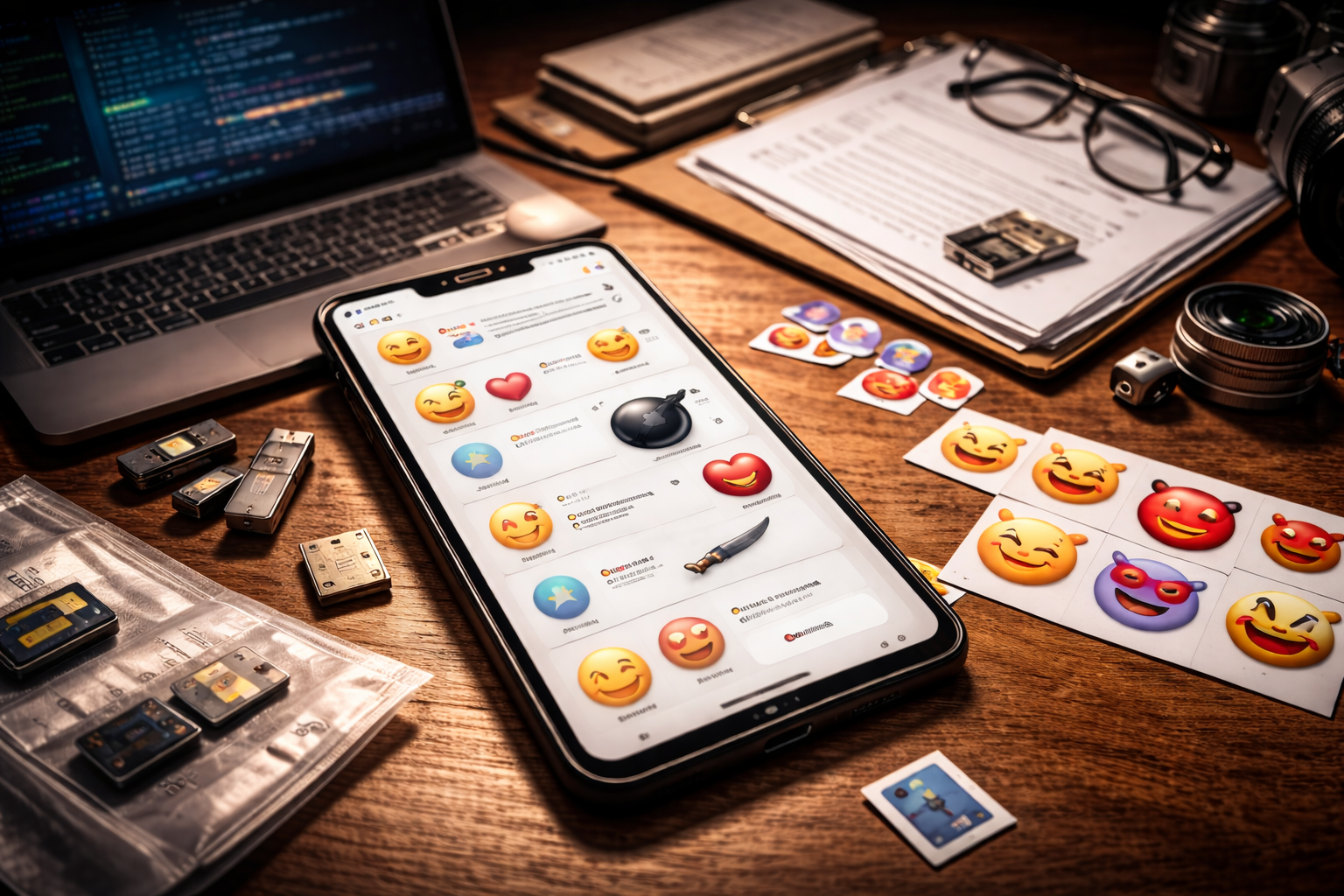
In today’s digital world, communication has moved far beyond plain text. Emojis, stickers, GIFs, and reaction icons now form an integral part of everyday conversations. While many people view them as casual or harmless expressions, digital forensic investigations often treat emojis and stickers as valuable pieces of evidence. In fact, these visual elements can reveal intent, emotion, timing, and even user behavior—making them surprisingly powerful in legal and criminal cases.
The Evolution of Digital Communication
Initially, digital communication relied heavily on text-based messages such as emails and SMS. However, messaging platforms gradually introduced emojis and stickers to convey emotions more effectively. As a result, users began expressing sarcasm, threats, affection, or consent using symbols rather than words.
Consequently, modern investigations must analyze not just what was said, but how it was said. Emojis and stickers now carry contextual meaning that can significantly influence the interpretation of a digital conversation.
Why Emojis and Stickers Matter in Investigations
At first glance, emojis may appear informal or irrelevant. However, in forensic terms, context is everything. Emojis and stickers often clarify or completely alter the meaning of a message. For example, a simple sentence followed by a laughing emoji may indicate sarcasm, while the same sentence with an angry or weapon-related emoji may suggest hostility or threat.
Therefore, investigators increasingly consider emojis and stickers as supporting digital evidence, especially in cases involving:
Emojis as Indicators of Intent and Emotion
Intent plays a crucial role in legal proceedings. Emojis frequently help establish the sender’s mental state at the time of communication. For instance:
-
A knife, gun, or bomb emoji may strengthen allegations of intimidation
-
Heart or kiss emojis may indicate romantic or consensual intent
-
Repeated angry or aggressive emojis can support claims of harassment
Moreover, when messages lack explicit wording, emojis often fill the gap by providing emotional cues. Thus, forensic experts analyze emojis in combination with text rather than in isolation.
Stickers and Their Forensic Significance
Unlike emojis, stickers are often platform-specific and visually detailed. Many stickers include exaggerated facial expressions, gestures, or symbolic imagery. Because of this, stickers can convey stronger emotional messages than text alone.
From a forensic standpoint, stickers can:
-
Demonstrate tone and intent
-
Reveal behavioral patterns in communication
-
Help reconstruct conversation dynamics
-
Support or contradict written statements
Additionally, certain stickers may imply threats, mockery, dominance, or manipulation. Therefore, forensic analysts treat stickers as contextual evidence that supports the overall narrative of a case.
Metadata and Technical Evidence Behind Emojis and Stickers
Beyond their visual meaning, emojis and stickers also generate technical data. Digital forensic analysis does not focus only on what appears on the screen; it also examines the underlying metadata.
This may include:
-
Time and date of transmission
-
Sender and receiver details
-
Platform and application used
-
Device identifiers
-
Message sequence and order
Furthermore, even deleted messages containing emojis or stickers may remain recoverable from device storage, backups, or server logs. Consequently, investigators can often reconstruct conversations long after users believe they have disappeared.
Emojis in Deleted and Edited Messages
Many users assume that deleting or editing a message removes all traces of it. However, this assumption is often incorrect. In several cases, forensic tools recover deleted chat fragments, including emojis and stickers.
Edited messages also raise forensic red flags. For example, a user may remove a threatening emoji while leaving the text unchanged. In such situations, recovered versions of the message can reveal the original intent and strengthen evidentiary value.
Legal Interpretation of Emojis and Stickers
Courts increasingly acknowledge emojis and stickers as part of digital communication. However, interpretation remains context-dependent. Judges and legal professionals rely on forensic experts to explain:
-
Cultural or contextual meaning
-
Sequence of communication
-
Relationship between parties
-
Consistency with other evidence
Importantly, a single emoji rarely decides a case on its own. Instead, it functions as corroborative evidence, supporting or weakening claims made by either party.
Challenges in Emoji and Sticker Analysis
Despite their value, emojis and stickers present several challenges. Their meanings can vary depending on culture, platform design, and personal usage. Additionally, different operating systems may display the same emoji differently, potentially altering perception.
Therefore, forensic experts must exercise caution. They must analyze emojis and stickers within the broader context of conversation history, user behavior, and technical data.
Conclusion
In conclusion, emojis and stickers are far more than decorative elements in digital communication. In forensic investigations, they act as silent witnesses—revealing emotions, intent, and context that plain text may fail to capture. As digital communication continues to evolve, forensic science must adapt accordingly. Understanding how emojis and stickers become digital evidence is no longer optional; it is essential for modern investigations, legal professionals, and forensic experts alike.


Post comments (0)