In forensic document examination, not all evidence is visible to the naked eye. Sometimes, the most critical information is hidden beneath the surface of a page. This is where the Electrostatic Detection Apparatus, commonly known as ESDA, becomes a powerful investigative tool.
ESDA helps forensic experts recover indented writing impressions left on paper. These impressions are often invisible but can reveal what was written on a previous page. In many fraud, extortion, threat, and forgery cases, such hidden writing can become crucial evidence.
What Is ESDA?
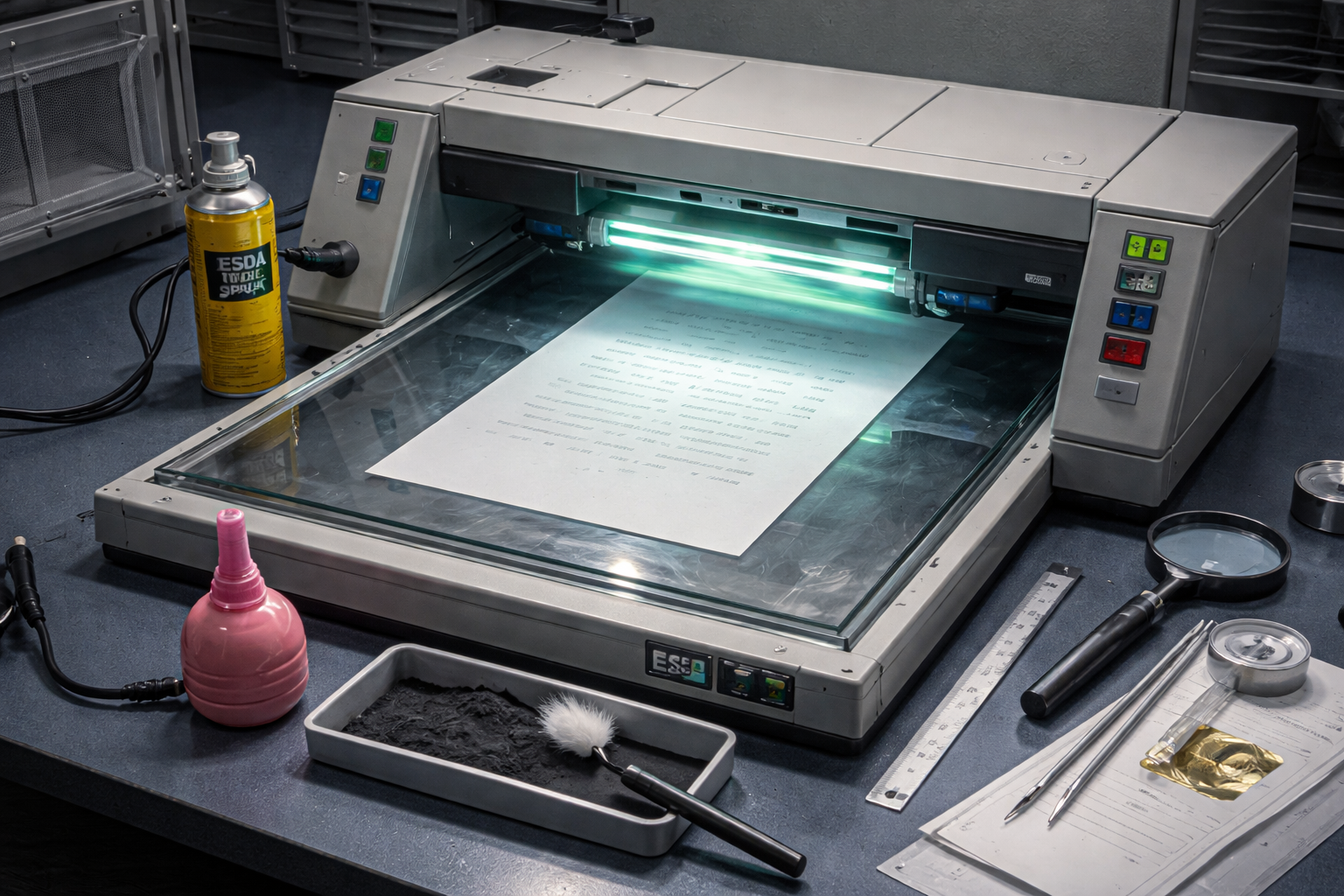
The Electrostatic Detection Apparatus (ESDA) is a specialized forensic instrument designed to detect and visualize indented impressions on paper. When someone writes on a sheet of paper, the pressure from the pen or pencil transfers impressions onto the pages underneath. Even after the top sheet is removed, the indentations remain.
Although these indentations may not be visible under normal lighting, ESDA can make them appear clearly without damaging the document.
How Does ESDA Work?
The working principle of ESDA is based on electrostatic charge and toner attraction. The process generally involves the following steps:
First, the document is placed inside the ESDA unit on a porous surface. A thin plastic film is carefully laid over the document. Then, an electrostatic charge is applied across the surface.
The charge accumulates differently in areas where indentations are present. After this, a fine black toner powder is cascaded over the film. The toner adheres more strongly to the charged areas corresponding to the indentations, making the hidden writing visible.
Finally, the developed image can be preserved by lifting it onto a transparent adhesive sheet for documentation and courtroom presentation.
Why Is ESDA Important in Forensic Investigations?
ESDA plays a significant role in questioned document cases for several reasons.
It can reveal the content of missing or destroyed pages. If a suspect tears out a page from a notepad, the impressions on the underlying sheets may still exist. ESDA can recover that information.
It helps link documents together. For example, if a ransom note was written from a notepad, ESDA may reveal impressions of practice drafts or related notes.
It preserves fragile documents. Unlike chemical methods, ESDA is non-destructive when properly used, making it suitable for valuable or sensitive evidence.
It strengthens court testimony. The ability to visually demonstrate hidden writing can provide compelling evidence during legal proceedings.
Common Cases Where ESDA Is Used
ESDA is frequently used in cases involving forged documents, anonymous letters, suicide notes, financial fraud, contract disputes, and threatening communications. In many investigations, the recovered indentations provide context, confirm intent, or expose fabrication.
For example, in a suspected forged agreement, ESDA may reveal earlier drafts or different figures that were previously written on the same pad of paper. This can help investigators determine whether alterations were intentional.
Limitations of ESDA
Although ESDA is highly effective, it does have limitations. It works best on paper-based documents and may not produce results if the indentations are too light or if the document has been heavily handled, folded, or exposed to moisture.
Additionally, proper handling is critical. Excessive pressure, humidity, or contamination can affect results. Therefore, trained forensic document examiners must conduct the analysis under controlled laboratory conditions.
ESDA vs Visual Examination
Traditional visual examination methods such as oblique lighting may reveal some indentations. However, ESDA significantly enhances sensitivity and clarity. It allows experts to recover impressions that are otherwise impossible to detect with the naked eye.
Thus, ESDA is considered one of the most valuable tools in forensic document laboratories worldwide.
Conclusion
The Electrostatic Detection Apparatus demonstrates how forensic science can uncover information that appears completely hidden. By revealing indented writing impressions, ESDA often exposes deleted notes, previous drafts, and concealed communications.
In questioned document examination, even the pressure of a pen can leave a lasting trace. With the help of ESDA, those traces can speak in court and help uncover the truth.



Post comments (0)