Introduction
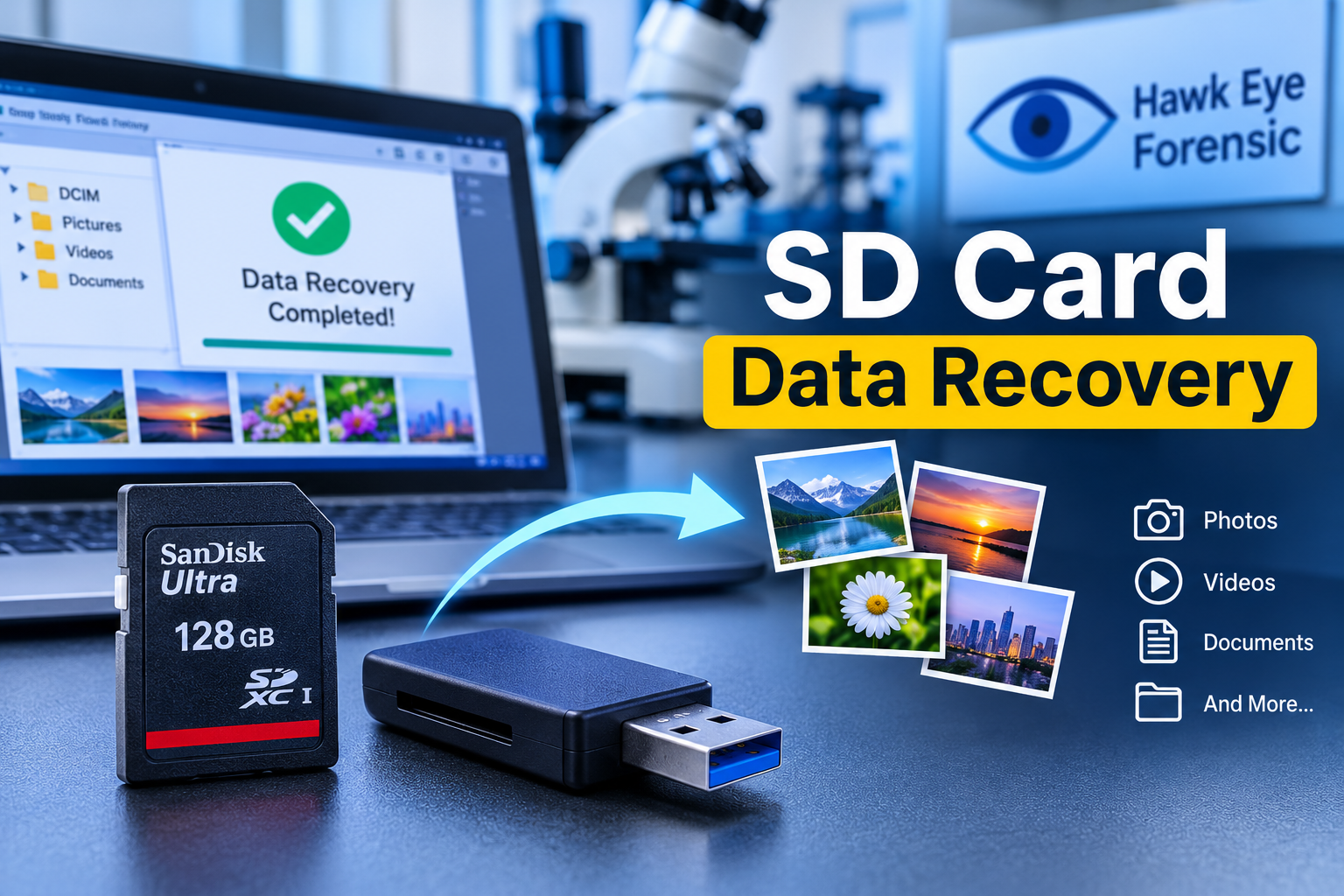
SD cards are widely used to store digital information in cameras, smartphones, CCTV systems, drones, tablets, and other electronic devices. From personal photographs and videos to important business records and surveillance footage, SD cards often contain valuable data. However, accidental deletion, formatting, physical damage, file-system corruption, or improper removal can result in sudden data loss.
Losing important files can be stressful, particularly when the information is required for professional, personal, or legal purposes. Fortunately, SD card data recovery may be possible depending on the cause of data loss, the condition of the memory card, and whether the lost data has been overwritten.
In this blog, we will explore how SD card data recovery works, common causes of data loss, professional recovery methods, and the precautions users should take when an SD card becomes inaccessible.
1. What Causes Data Loss in SD Cards?
SD card data loss can occur due to several technical and human-related reasons. Some of the most common causes include:
-
Accidental deletion: Photos, videos, and documents may be deleted unintentionally.
-
Formatting: Formatting an SD card without creating a backup can remove access to stored files.
-
File system corruption: Improper ejection, sudden power failure, or interrupted file transfers can damage the file system.
-
Physical damage: Broken connectors, damaged circuits, or exposure to moisture can make an SD card inaccessible.
-
Virus or malware attacks: Malicious software may hide, modify, or delete stored information.
-
Unsupported file systems: A computer or device may fail to recognise an SD card because of file-system compatibility issues.
-
Overwriting: Saving new files after data loss can overwrite previously stored information, reducing recovery possibilities.
Understanding the cause of data loss is the first step towards selecting an appropriate recovery procedure.
2. Is It Possible to Recover Deleted Data from an SD Card?
Yes, deleted data can sometimes be recovered from an SD card.
When a file is deleted, the storage system may simply mark the space occupied by that file as available for reuse. The actual data may remain on the memory card until new information overwrites it.
However, recovery is not always guaranteed. Modern SD cards use flash memory technology, and features such as TRIM-like discard operations, garbage collection, wear levelling, and controller-level management can affect the possibility of recovering deleted information.
The chances of recovery generally depend on:
-
Whether new data has been written after deletion.
-
Whether the SD card has been formatted.
-
The type of formatting performed.
-
The physical and electronic condition of the card.
-
The SD card’s controller and memory architecture.
Important: Stop using the SD card immediately after noticing data loss. Avoid capturing new photographs, recording videos, or saving files to it.
3. How Does Professional SD Card Data Recovery Work?
Professional SD card data recovery involves a systematic process to identify, preserve, examine, and retrieve accessible information.
Step 1: Preliminary Examination
The SD card is initially examined to identify its physical condition, storage capacity, accessibility, and possible reasons for data loss.
This helps determine whether the issue is logical, electronic, or physical.
Step 2: Creating a Forensic Image
Where technically possible, a bit-by-bit forensic image of the SD card is created before conducting detailed recovery procedures.
This allows examination of the acquired image without repeatedly accessing the original storage device.
Step 3: File System Analysis
The file system is examined to identify directory structures, file allocation information, metadata, and potentially recoverable deleted entries.
Common file systems used in memory cards include:
Step 4: Data Recovery and File Carving
Specialised forensic tools may be used to identify recoverable files, including photographs, videos, documents, and other digital content.
File carving techniques can sometimes recover files even when directory structures or file-system metadata are damaged.
Step 5: Verification and Reporting
Recovered files are checked for accessibility, integrity, and usability. Depending on the case requirements, a recovery report may also be prepared.
In forensic investigations, maintaining proper documentation, evidence integrity, and hash verification is particularly important.
4. Can Data Be Recovered from a Formatted SD Card?
Recovery from a formatted SD card depends on the formatting method and subsequent usage.
A quick format may remove file-system references without immediately overwriting every stored data block. In certain cases, recovery software or professional forensic tools may identify remnants of previously stored files.
However, a full format, secure erase, repeated use, or controller-level garbage collection may significantly reduce recovery possibilities.
It is therefore important not to assume that every formatted SD card can be recovered.
5. Common Mistakes to Avoid After SD Card Data Loss
Users sometimes unintentionally reduce their chances of successful recovery by taking incorrect steps.
Avoid the following:
-
Do not format the SD card again.
-
Do not save new files to the affected card.
-
Do not repeatedly insert and remove a physically damaged card.
-
Avoid using multiple recovery applications without understanding their operations.
-
Do not attempt DIY repairs on physically damaged memory cards.
-
Do not save recovered files back onto the same SD card.
For important or legally relevant data, professional examination is recommended before attempting recovery.
6. SD Card Data Recovery in Digital Forensics
SD cards can contain important digital evidence in criminal investigations, corporate disputes, insurance matters, and other legal proceedings.
Forensic examination may involve recovering photographs, video recordings, documents, timestamps, file-system information, and other relevant digital artefacts.
Unlike ordinary data recovery, forensic data recovery also focuses on evidence preservation, documentation, integrity verification, and maintaining the chain of custody.
This is particularly important when recovered information may be presented before a court or used during an investigation.
7. How to Prevent SD Card Data Loss
Prevention is always better than recovery. Follow these basic practices:
-
Regularly back up important photographs and documents.
-
Use reliable memory cards from trusted manufacturers.
-
Safely eject SD cards before removing them.
-
Avoid interrupting file transfers.
-
Protect memory cards from moisture, heat, and physical damage.
-
Periodically check the health and performance of storage devices.
-
Maintain multiple copies of critical digital information.
Conclusion
SD card data loss does not always mean that your information is permanently gone. Depending on the circumstances, deleted, formatted, corrupted, or inaccessible data may still be recoverable through specialised techniques.
However, every data-loss situation is different. The recovery possibilities depend on the storage technology, extent of damage, and actions taken after data loss.
At Hawk Eye Forensic, we understand the importance of digital information and the role of professional forensic examination in handling digital evidence. Proper assessment and the use of appropriate recovery techniques can help determine whether valuable information can be retrieved.
If your SD card contains important lost data, avoid further use and seek professional assistance for an initial


Post comments (0)