3 Things We Never Do During Digital Evidence Acquisition
Digital devices such as smartphones, computers, hard drives, USB drives, and memory cards can contain valuable evidence. However, collecting this evidence requires careful handling. A small mistake during digital evidence acquisition can alter data, destroy important information, or affect the integrity of an investigation.
In digital forensics, the objective is not simply to obtain data. The evidence must be acquired and preserved in a manner that allows its authenticity and integrity to be demonstrated later.
Here are 3 things forensic professionals never do during digital evidence acquisition.
1. We Never Work Directly on the Original Evidence
One of the most important principles of digital forensic investigation is to protect the original device.
A forensic examiner should avoid unnecessarily accessing, modifying, or analyzing the original storage media. Even seemingly harmless actions—such as opening files, changing settings, or allowing a computer to automatically modify data—can potentially change information stored on the device.
Instead, forensic professionals generally create a forensic image or another appropriate forensic acquisition of the evidence. The working copy can then be examined using specialized forensic tools, while the original evidence is preserved.
For example, when investigating a hard drive, an examiner may create a bit-by-bit forensic image and perform the analysis on that image rather than repeatedly working on the original drive.
This approach helps maintain the integrity of digital evidence throughout the investigation.
Organizations such as the National Institute of Standards and Technology (NIST) publish guidance and research related to digital forensics and handling digital evidence.
Why does this matter?
Digital evidence can be extremely fragile. A simple change to timestamps, file metadata, system logs, or other artifacts may become important during a forensic examination.
The basic principle is simple:
Preserve the original. Analyze the forensic copy.
2. We Never Connect Storage Media Without Considering Write Protection
Another important rule in computer forensics is preventing unintended changes to the source media.
When a storage device is connected to a computer, the operating system may attempt to read from or write to the device. Depending on the circumstances, this could result in changes to the evidence.
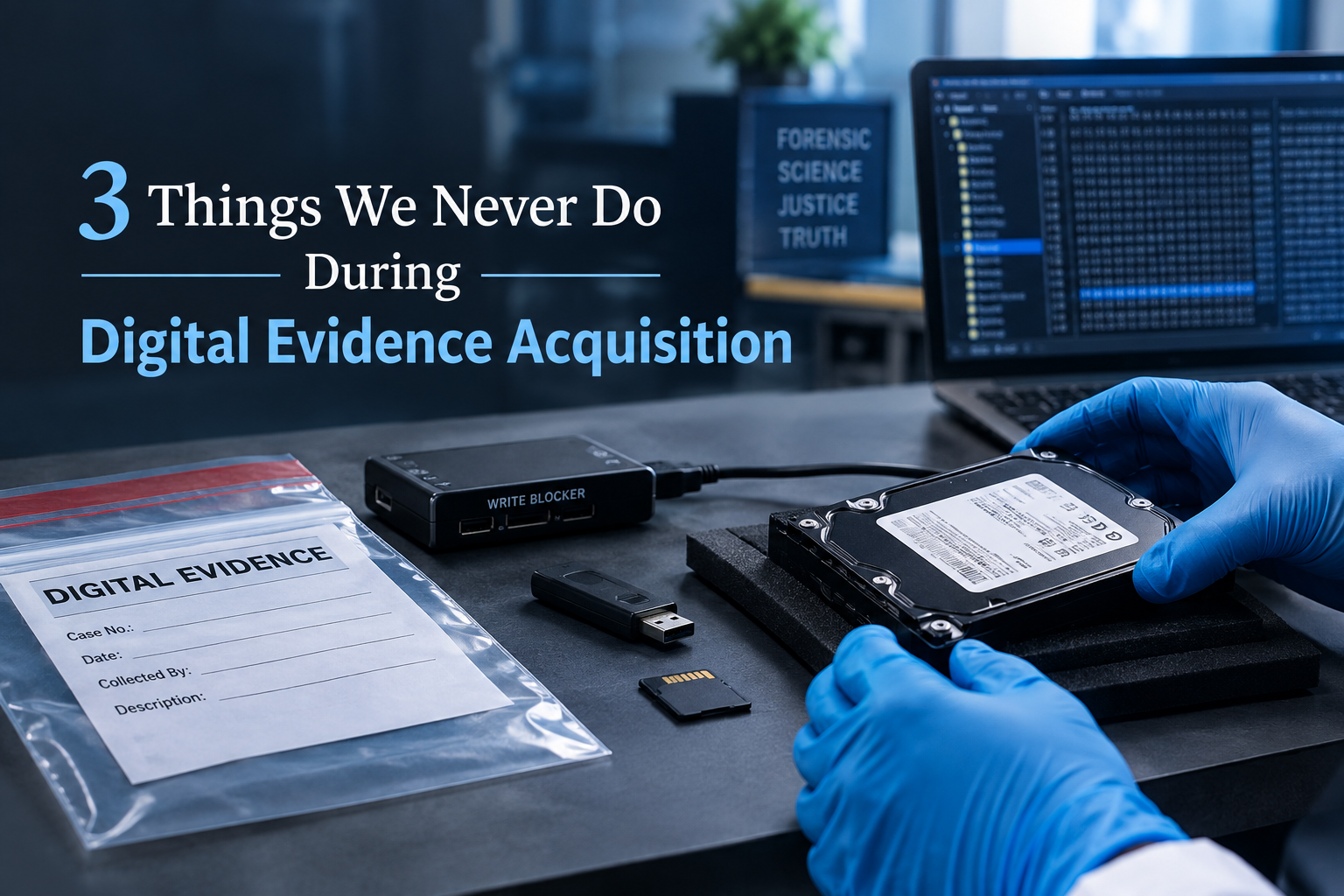
Forensic examiners therefore use appropriate safeguards, such as write blockers, when acquiring data from supported storage media.
A write blocker is designed to allow an examiner to access data from a storage device while preventing write operations from reaching the original evidence.
For example, during the examination of a hard disk or USB drive, a forensic hardware or software write-blocking mechanism may be used before acquisition.
This is particularly important when creating a forensic image because the examiner wants to capture the evidence without unintentionally modifying the source.
Why is write protection important?
Imagine investigating a storage device containing potentially important evidence. If the device is connected to a normal computer and the system modifies something automatically, the examiner could later face questions about whether the evidence was changed during the examination.
Using appropriate acquisition procedures helps reduce this risk and supports the forensic integrity of digital evidence.
The National Institute of Justice (NIJ) also provides resources discussing digital evidence and its handling in forensic investigations.
3. We Never Skip Documentation and Integrity Verification
Digital evidence acquisition is not simply a technical process. Documentation and evidence integrity are equally important.
A forensic examiner should maintain appropriate records about the evidence, including details such as:
- When and how the evidence was received
- Identification of the device or media
- Condition of the evidence
- Acquisition method used
- Tools and versions involved
- Relevant examination procedures
- Hash values or other integrity-verification information
- Storage and handling of acquired evidence
One important technique used in digital forensic examination is cryptographic hashing.
A hash value can be generated for acquired data to provide a reference for verifying whether the data has remained unchanged. If the same data produces the expected hash value during verification, it provides useful evidence that the acquired copy has not been altered.
Forensic investigators may use hashing throughout different stages of the investigation, depending on the acquisition and examination methodology.
Why is documentation important?
Imagine that an examiner discovers an important deleted file. The finding itself is valuable, but an investigation also needs to establish where the evidence came from, how it was acquired, and whether its integrity was maintained.
Good documentation creates a traceable record of the examination process.
Digital Evidence Acquisition Requires Discipline
Digital forensic acquisition is much more than connecting a device to a computer and copying files.
A professional digital forensic investigation follows controlled procedures designed to preserve the original evidence, minimize the possibility of alteration, and maintain a clear record of what was done.
The three principles discussed above can be summarized simply:
1. Don’t unnecessarily work on the original evidence.
2. Don’t allow uncontrolled write operations to the source media.
3. Don’t skip documentation and integrity verification.
Whether the evidence comes from a smartphone, computer, hard drive, USB device, memory card, or another digital source, proper acquisition is the foundation of a reliable digital forensic examination.
When digital evidence may become part of an investigation or legal proceeding, careful evidence handling becomes even more important. The technical process and the documentation supporting that process should work together to demonstrate the reliability and integrity of the examination.
Digital evidence can tell a story—but only when it is acquired, preserved, and examined properly.

Post comments (0)