In today’s digital world, people have dozens of online accounts, each requiring a strong and unique password. Remembering all these passwords can be difficult, which is why password managers have become increasingly popular. But one important question remains: Are password managers safe?
The short answer is yes—a reputable password manager can significantly improve your overall password security. However, like any cybersecurity tool, password managers are not completely risk-free. Understanding how they work, what threats they protect against, and where their vulnerabilities lie is essential.
What Is a Password Manager?
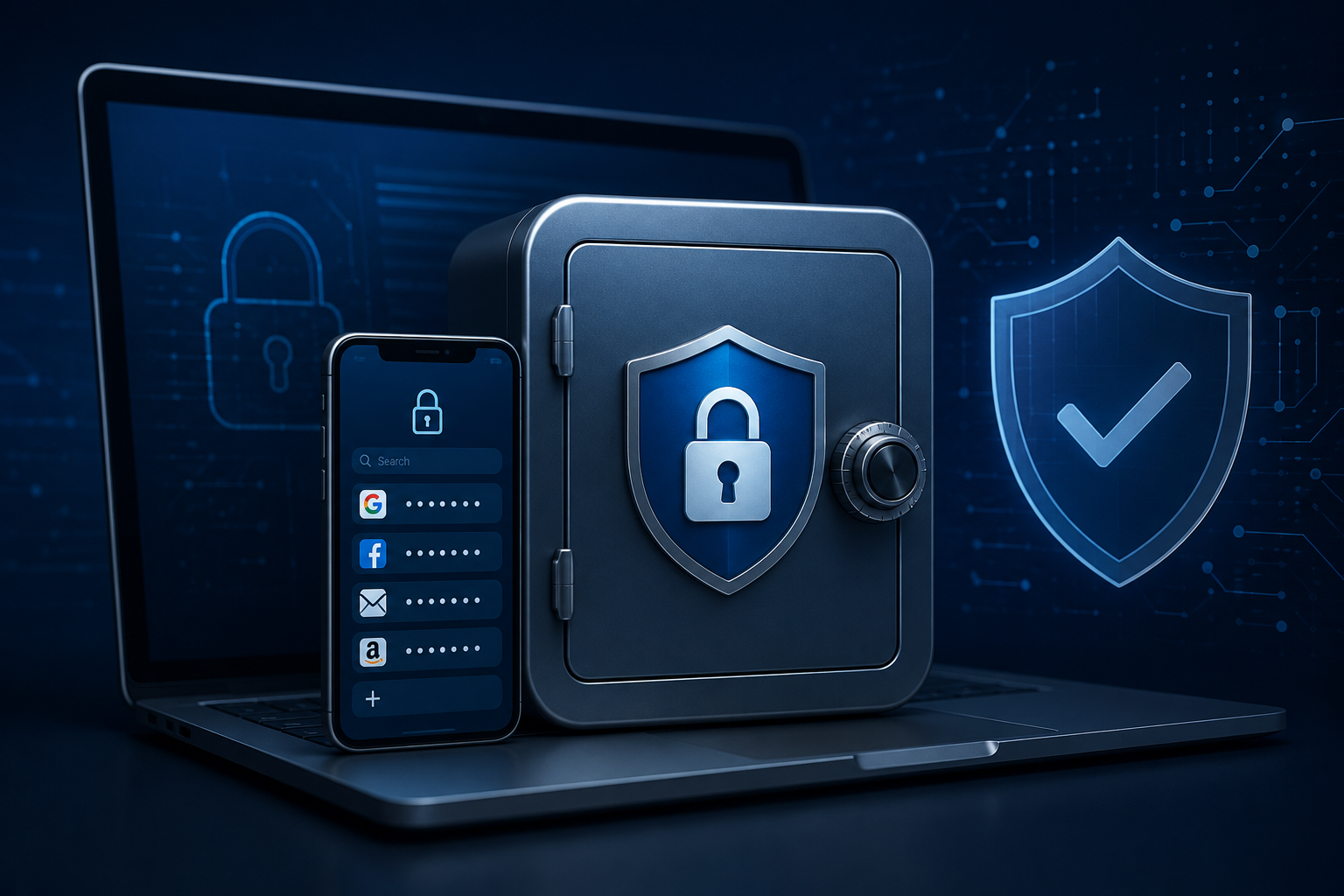
A password manager is a software application designed to securely store and manage passwords, login credentials, and sometimes other sensitive information such as credit-card details and secure notes.
Instead of remembering dozens of passwords, users generally need to remember only one master password. The password manager then automatically fills in the appropriate credentials when logging into websites or applications.
Most modern password managers use encryption to protect stored credentials. Some also provide features such as password generation, multi-factor authentication (MFA), breach monitoring, and synchronization across multiple devices.
If you want to understand how attackers obtain credentials, you can also read our internal article on How Attackers Hide Malware and How Forensic Investigators Detect Them.
How Secure Are Password Managers?
The security of a password manager depends heavily on how it is designed and implemented. Reputable password managers typically use strong encryption and security architectures intended to prevent unauthorized access to stored credentials.
Many services use a zero-knowledge architecture, meaning the provider is designed so that it cannot access your stored passwords in their decrypted form. Your vault is encrypted, and the master password is used as part of the process for unlocking it.
This provides an important security advantage. Even if an attacker compromises a company’s servers and obtains encrypted vault data, they would still need to overcome the encryption and protect against attempts to guess or crack the master password.
However, this does not mean a password manager is impossible to compromise.
What Happens If a Password Manager Is Hacked?
One of the biggest concerns surrounding password managers is the possibility of a data breach.
If a password manager company experiences a security incident, attackers may potentially obtain information such as encrypted password vaults, account information, or other metadata. The actual risk depends on what information was exposed and how securely the vaults were encrypted.
Strong encryption makes stolen vault data significantly harder to exploit. However, if a user’s master password is weak, reused, or compromised through phishing, the protection provided by encryption can be undermined.
This is why your master password should be long, unique, and difficult to guess.
For more information about how deleted information can remain recoverable, check our internal blog Deleted Files: Where Do They Go?.
Major Risks Associated With Password Managers
Although password managers provide substantial security benefits, users should be aware of several potential risks.
1. A Weak Master Password
Your master password is effectively the key to your password vault. If it is short or predictable, attackers may have a much easier time attempting to gain access.
2. Phishing Attacks
A password manager cannot completely protect users from phishing. If you manually enter your master password on a fraudulent website or disclose it to an attacker, the password manager itself cannot prevent that mistake.
3. Malicious Extensions or Applications
Browser extensions and applications can introduce additional attack surfaces. A compromised device could potentially expose credentials after they have been decrypted for use.
4. Device Compromise
If your computer or smartphone is infected with malware, attackers may be able to monitor activity while credentials are being accessed or used.
This is where digital forensics becomes important. Investigators can examine compromised devices, browser artifacts, malware traces, authentication records, and other digital evidence to determine how credentials may have been accessed.
You can learn more about this area in our article Digital Forensics: How Investigators Recover Digital Evidence.
Benefits of Using a Password Manager
Despite these risks, password managers offer several significant security advantages.
Unique passwords: A password manager makes it practical to use a different password for every account.
Strong password generation: Most password managers can automatically generate complex passwords that are difficult to guess.
Reduced password reuse: Users are less likely to reuse the same password across multiple websites.
Convenience: Credentials can be securely synchronized across supported devices.
Security alerts: Some services can notify users about compromised credentials or known data breaches.
According to the National Institute of Standards and Technology (NIST), using strong authentication practices and avoiding easily compromised passwords are important components of effective cybersecurity.
How to Use a Password Manager Safely
Choosing a reputable password manager is only the first step. Users should also follow basic security practices:
- Create a long and unique master password.
- Enable multi-factor authentication (MFA) whenever available.
- Keep the password manager and operating system updated.
- Download applications and browser extensions only from trusted sources.
- Avoid entering your master password into suspicious websites.
- Secure your primary email account because it may be used for account recovery.
- Regularly review security alerts and login activity.
- Avoid using password managers on devices that you suspect are infected with malware.
For additional information about protecting devices from malicious software, see our internal article Is Antivirus Enough?.
Are Password Managers Safer Than Remembering Passwords?
For most users, yes.
Without a password manager, people often resort to predictable passwords, password reuse, or storing passwords in insecure locations. These behaviors can create serious security weaknesses.
A reputable password manager encourages better password hygiene by making unique, complex passwords easier to create and use.
The key point is that a password manager should not be viewed as a magic security solution. It is one layer in a broader cybersecurity strategy that should also include MFA, software updates, secure devices, phishing awareness, and good account-recovery practices.
Final Verdict: Are Password Managers Safe?
Password managers are generally safe when users choose reputable products and configure them correctly. Their encryption, password-generation capabilities, and ability to prevent password reuse can provide substantial security benefits.
However, the master password, user device, browser, and authentication process remain important security considerations.
From a digital-forensics perspective, even encrypted credentials can become relevant during an investigation when evidence exists on a compromised device, browser, operating system, or network. Understanding how password managers work therefore matters not only to everyday users but also to cybersecurity professionals and forensic investigators.
In cybersecurity, no single tool provides complete protection. A password manager is best viewed as one strong layer of defense within a larger security strategy.


Post comments (0)