Introduction
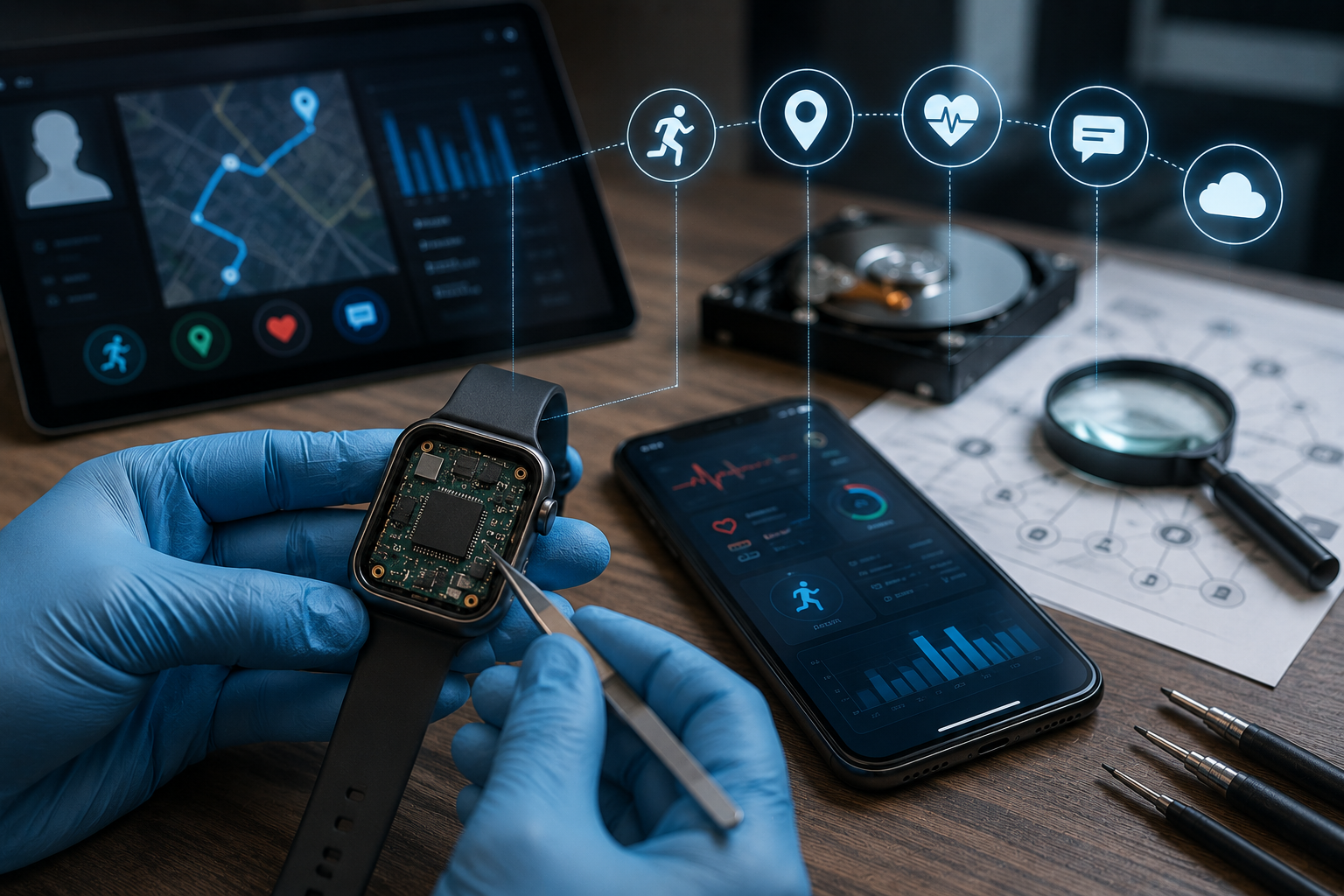
Smartwatch Forensics has become an important area of digital investigations as wearable technology continues to grow in popularity. Modern smartwatches do much more than tell time—they record health data, GPS locations, messages, calls, notifications, and daily activities. This information can serve as valuable digital evidence in criminal, civil, and corporate investigations.
Digital forensic experts use Smartwatch Forensics to extract, preserve, and analyze data stored on wearable devices. Whether investigating a cybercrime, accident, missing person case, or legal dispute, smartwatches often provide critical information that helps reconstruct events and verify timelines.
This article explains what Smartwatch Forensics is, the types of evidence that can be recovered, common investigative techniques, challenges, and best practices.
What Is Smartwatch Forensics?
Smartwatch Forensics is the process of identifying, collecting, preserving, and analyzing digital evidence stored on wearable devices such as smartwatches and fitness trackers.
These devices continuously collect data from sensors and synchronize information with smartphones and cloud services, creating multiple sources of digital evidence.
Why Smartwatch Forensics Matters
Smartwatches are commonly worn throughout the day, making them a rich source of digital evidence. They automatically record user activity, location, and interactions without requiring manual input.
Smartwatch Forensics helps investigators:
- Reconstruct user activity
- Verify timelines
- Determine device locations
- Recover health and fitness data
- Analyze communication records
- Support criminal investigations
- Assist civil and insurance cases
- Validate digital evidence
Types of Evidence Recovered in Smartwatch Forensics
Digital forensic investigators can recover a variety of artifacts from wearable devices, including:
GPS and Location Data
Smartwatches often store:
- GPS routes
- Travel history
- Visited locations
- Distance traveled
Location information can help investigators determine where a person was at a specific time.
Health and Fitness Records
Wearable devices continuously monitor:
- Heart rate
- Blood oxygen levels
- Sleep patterns
- Step count
- Calories burned
- Workout history
These records may support investigations involving accidents, medical emergencies, or disputed timelines.
Messages and Notifications
Many smartwatches synchronize with smartphones and display:
- SMS messages
- Email notifications
- Instant messages
- Calendar alerts
- Social media notifications
Even if messages are deleted from a phone, related notification artifacts may still exist.
Call Logs
Depending on the device, investigators may recover:
- Incoming calls
- Outgoing calls
- Missed calls
- Contact information
- Call timestamps
Application Data
Smartwatches often contain data from applications such as:
- Navigation apps
- Payment apps
- Fitness applications
- Music streaming services
- Weather applications
These artifacts help reconstruct user activity.
Device Configuration
Investigators may also recover:
- Device identifiers
- Wi-Fi history
- Bluetooth pairings
- Firmware versions
- Synchronization history
- User account information
How Smartwatch Forensics Investigations Are Conducted
Device Identification
The investigation begins by identifying:
- Smartwatch manufacturer
- Model
- Operating system
- Connected smartphone
- Cloud account
Proper identification determines the appropriate forensic approach.
Evidence Preservation
Before analysis, investigators:
- Photograph the device
- Document its condition
- Record serial numbers
- Maintain chain of custody
- Prevent data alteration
Evidence preservation ensures legal admissibility.
Data Acquisition
Depending on the device, investigators may perform:
- Logical acquisition
- File system acquisition
- Cloud acquisition
- Companion smartphone analysis
Each method may reveal different types of evidence.
Companion Phone Analysis
Many smartwatch artifacts are stored on the paired smartphone.
Investigators examine:
- Synchronization records
- Health databases
- Application data
- Backup files
- Notification history
Cloud Analysis
Some wearable devices synchronize data with cloud services.
Cloud evidence may include:
- Activity history
- Device backups
- Account information
- Location history
- Health records
Challenges in Smartwatch Forensics
Investigators frequently encounter challenges such as:
Encryption
Many wearable devices encrypt stored information.
Cloud Dependency
Some evidence exists only in cloud accounts.
Limited Storage
Older data may be overwritten because of limited device storage.
Proprietary File Formats
Manufacturers use unique data structures that require specialized forensic tools.
Battery and Power Issues
A discharged device may complicate evidence acquisition.
Tools Used in Smartwatch Forensics
Digital forensic experts use specialized tools such as:
- Cellebrite UFED
- Magnet AXIOM
- Oxygen Forensic Detective
- Belkasoft X
- MOBILedit Forensic
- FTK Imager
- Autopsy
- Vendor-specific acquisition tools
The appropriate tool depends on the smartwatch model and operating system.
Best Practices for Smartwatch Forensics
To ensure reliable results, investigators should:
- Preserve the original device.
- Maintain a documented chain of custody.
- Prevent unnecessary synchronization.
- Analyze both the smartwatch and paired smartphone.
- Examine cloud backups when legally authorized.
- Verify timestamps across multiple evidence sources.
- Document every investigative step.
Following these practices helps produce accurate and legally defensible findings.
Future of Smartwatch Forensics
As wearable technology advances, Smartwatch Forensics will continue to evolve.
Future developments include:
- AI-assisted forensic analysis
- Improved cloud evidence acquisition
- Advanced health data analysis
- Better support for encrypted devices
- Automated timeline reconstruction
- Integration with IoT forensic investigations
These innovations will enhance the efficiency and accuracy of digital investigations.
Conclusion
Smartwatches have become valuable sources of digital evidence because they continuously record health data, location information, communications, and user activity. Smartwatch Forensics enables investigators to recover this information while maintaining the integrity of digital evidence.
As wearable technology becomes increasingly common, Smartwatch Forensics will play a vital role in criminal investigations, civil litigation, cybersecurity incidents, and insurance claims. Proper forensic examination of wearable devices can provide critical insights that help investigators establish timelines, verify events, and support legal proceedings.

Post comments (0)