Introduction
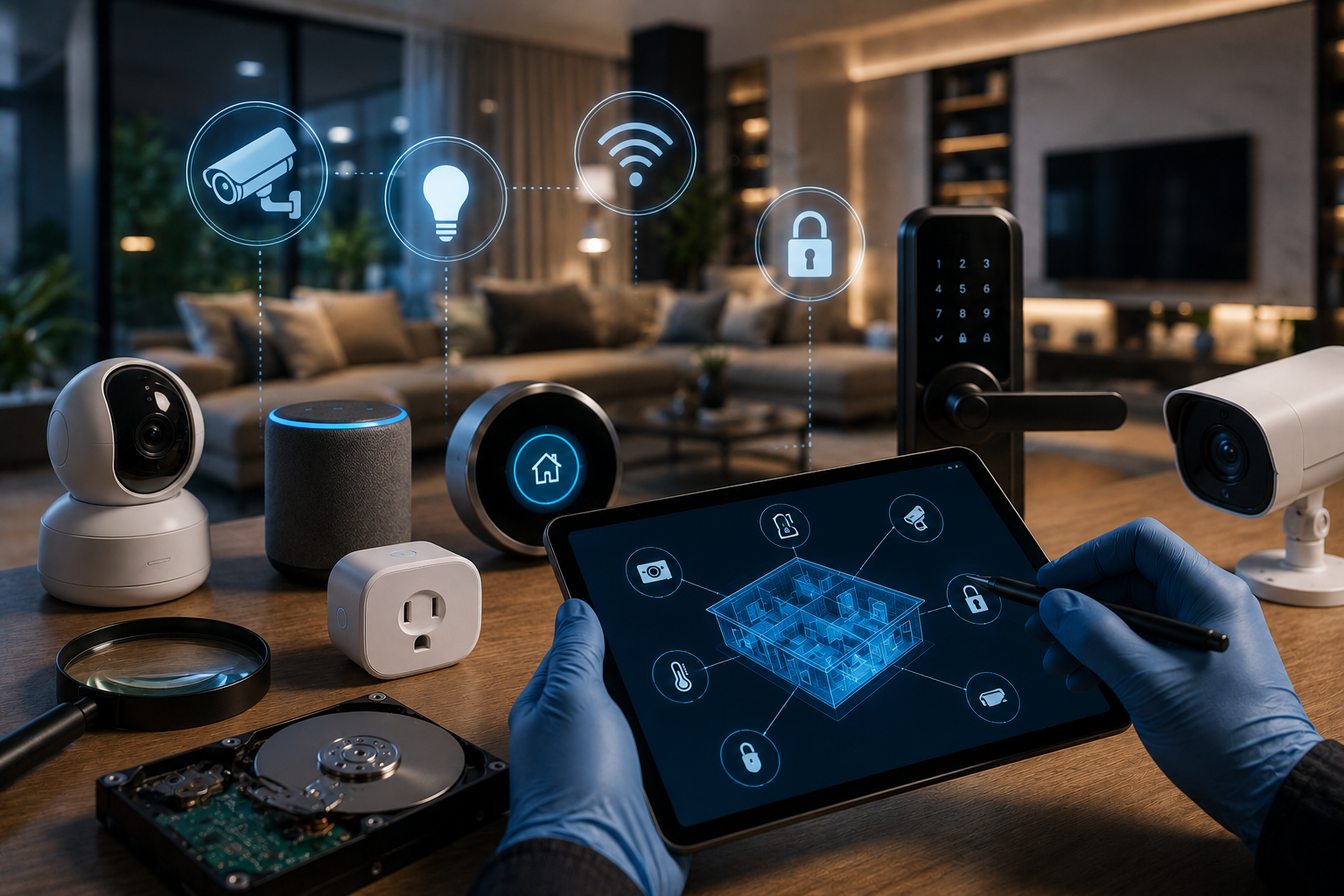
Smart Home Forensics is becoming an essential discipline in digital investigations as smart speakers, security cameras, smart locks, and other IoT devices become common in homes. Smart Home Forensics enables investigators to recover digital evidence from connected devices, reconstruct events, and support criminal, civil, and cybersecurity investigations. As the number of Internet of Things (IoT) devices continues to grow, understanding Smart Home Forensics is increasingly important for digital forensic professionals.
Smart Home Forensics is a specialized branch of IoT Forensics that focuses on identifying, collecting, preserving, and analyzing digital evidence from connected home devices. From determining when a smart lock was unlocked to recovering footage from a smart doorbell camera, investigators can reconstruct events with remarkable accuracy.
This article explores the role of Smart Home Forensics, the types of evidence investigators recover, common challenges, and best practices for conducting forensic examinations.
What Is Smart Home Forensics?
Smart Home Forensics is the process of recovering and analyzing digital evidence from Internet of Things (IoT) devices installed within residential environments.
These investigations involve collecting evidence from:
- Smart speakers
- Smart doorbells
- Smart security cameras
- Smart locks
- Smart lighting systems
- Smart TVs
- Smart thermostats
- Home automation hubs
- Smart appliances
- Wearable devices connected to the home network
The objective is to identify digital evidence while maintaining its integrity for legal and investigative purposes.
Why Is Smart Home Forensics Important?
Every smart device continuously records logs, events, timestamps, and user interactions. This information helps investigators establish what happened before, during, and after an incident.
Smart Home Forensics is valuable in:
- Criminal investigations
- Burglary cases
- Homicide investigations
- Domestic violence cases
- Insurance fraud investigations
- Missing person investigations
- Cybersecurity incidents
- Corporate investigations involving remote workers
Even devices that appear unrelated may contain digital evidence that supports an investigation.
Common Smart Home Devices That Store Digital Evidence
Modern homes contain numerous IoT devices capable of generating forensic artifacts.
Smart Speakers
Devices such as Amazon Alexa and Google Nest record voice commands, interaction history, and device activity.
Possible evidence includes:
- Voice recordings
- Command history
- Device usage logs
- Linked user accounts
Smart Doorbell Cameras
Smart doorbells capture:
- Video footage
- Motion detection events
- Visitor timestamps
- Audio recordings
These devices frequently provide critical evidence during theft and burglary investigations.
Smart Security Cameras
Connected surveillance cameras store:
- Video recordings
- Motion alerts
- Cloud storage logs
- Event timestamps
Investigators can reconstruct activities occurring around a property.
Smart Locks
Digital door locks record:
- Lock and unlock events
- User access logs
- Remote access history
- Authentication attempts
These logs help determine who entered or exited a property.
Smart Thermostats
Although often overlooked, smart thermostats record:
- Temperature changes
- Occupancy schedules
- User interactions
- Device configuration history
Such information may help establish occupancy during specific time periods.
Smart Lighting Systems
Connected lighting systems generate:
- On/off schedules
- Automation routines
- Remote control activity
- Motion-triggered events
These records contribute to timeline reconstruction.
Types of Digital Evidence Recovered
During Smart Home Forensics, investigators may recover:
- Device event logs
- User activity history
- Video recordings
- Audio recordings
- Voice assistant commands
- Motion detection events
- Access logs
- Cloud synchronization records
- Mobile application data
- Device configuration files
- Wi-Fi connection history
- GPS information (where applicable)
- Metadata
- System timestamps
These artifacts help establish user behavior and device interactions.
How Smart Home Forensics Investigations Are Conducted
1. Identifying IoT Devices
Investigators first identify every connected device within the environment.
This includes:
- Wireless devices
- Bluetooth devices
- Zigbee devices
- Smart hubs
- Mobile applications
- Cloud-connected services
A complete inventory ensures that potential evidence is not overlooked.
2. Evidence Preservation
Before analysis, investigators preserve evidence by:
- Documenting device conditions
- Photographing device placement
- Isolating devices from networks when appropriate
- Creating forensic copies where possible
- Recording chain of custody
Preserving evidence integrity is essential for legal admissibility.
3. Collecting Device Logs
Many IoT devices generate detailed logs, including:
- Login history
- Configuration changes
- Firmware updates
- Device communication
- User interactions
These logs often reveal critical investigative information.
4. Cloud Data Acquisition
Many smart home devices synchronize data with cloud services.
Investigators may examine:
- Account activity
- Cloud backups
- Device synchronization
- User profiles
- Stored recordings
Cloud-based evidence frequently complements data stored on the physical device.
5. Mobile Device Analysis
Most smart home devices are controlled using smartphones.
Digital forensic experts analyze companion applications to recover:
- Login credentials
- Device settings
- Notifications
- Access history
- User activity
The smartphone often contains additional evidence unavailable on the IoT device itself.
6. Timeline Reconstruction
The final stage involves correlating evidence from multiple devices to build a timeline.
Investigators combine:
- Camera footage
- Smart lock logs
- Voice assistant activity
- Mobile application records
- Network logs
Timeline analysis helps reconstruct the sequence of events.
Challenges in Smart Home Forensics
Investigating IoT environments presents unique challenges.
Device Diversity
Different manufacturers use different operating systems, storage formats, and communication protocols.
Cloud Dependency
Many devices store evidence primarily in cloud services rather than locally.
Obtaining cloud evidence may require legal authorization.
Encryption
Modern IoT devices often encrypt stored and transmitted data, making forensic analysis more complex.
Data Volatility
Some devices automatically overwrite logs after a short period.
Delayed investigations may result in permanent evidence loss.
Proprietary Systems
Manufacturers often use proprietary firmware and storage formats that require specialized forensic techniques.
Tools Used in Smart Home Forensics
Digital forensic professionals use various tools depending on the device being examined.
Common tools include:
- Magnet AXIOM
- Cellebrite Inseyets
- Oxygen Forensic Detective
- Belkasoft X
- Autopsy
- Wireshark
- FTK Imager
- EnCase Forensic
- Volatility Framework (for memory analysis)
- Network packet analyzers
Investigators may also use vendor-specific extraction techniques for certain IoT devices.
Best Practices for Smart Home Forensics
To ensure reliable results, investigators should:
- Preserve the original evidence.
- Maintain a documented chain of custody.
- Photograph the scene before handling devices.
- Identify every connected IoT device.
- Analyze both local and cloud data.
- Verify timestamps across multiple devices.
- Correlate evidence from different sources.
- Use validated forensic tools.
- Document every investigative step.
Following these practices improves the accuracy and legal reliability of forensic findings.
Future of Smart Home Forensics
As smart homes continue to evolve, forensic investigations will increasingly rely on:
- Artificial Intelligence-assisted analysis
- Automated IoT evidence collection
- Cloud-native forensic techniques
- Edge device analysis
- IoT threat intelligence
- Machine learning for anomaly detection
- Standardized IoT forensic frameworks
These advancements will help investigators process growing volumes of digital evidence more efficiently.
Conclusion
The rapid adoption of smart home technology has created new opportunities and challenges for digital investigators. Every connected device—from smart speakers and security cameras to smart locks and thermostats—can generate valuable digital evidence that helps reconstruct events and support investigations.
Smart Home Forensics enables investigators to recover and analyze data from IoT devices while maintaining the integrity of digital evidence. As connected homes become more common, expertise in Smart Home Forensics will play an increasingly important role in criminal investigations, cybersecurity incidents, insurance claims, and legal proceedings.
Organizations, investigators, and homeowners should understand the forensic value of IoT devices and ensure that digital evidence is preserved correctly whenever an incident occurs.

Post comments (0)