O.J. Simpson Case Study: Forensic Evidence and Trial Analysis
The O.J. Simpson Case Study is one of the most significant criminal cases in modern history. This case changed how courts evaluate forensic evidence and how investigators handle criminal investigations. The O. J. Simpson trial involved complex forensic analysis, legal arguments, and intense media coverage. By examining this case, students of Forensic Science can understand how evidence, investigation procedures, and courtroom strategies influence trial outcomes.
Background of the O.J. Simpson Case Study
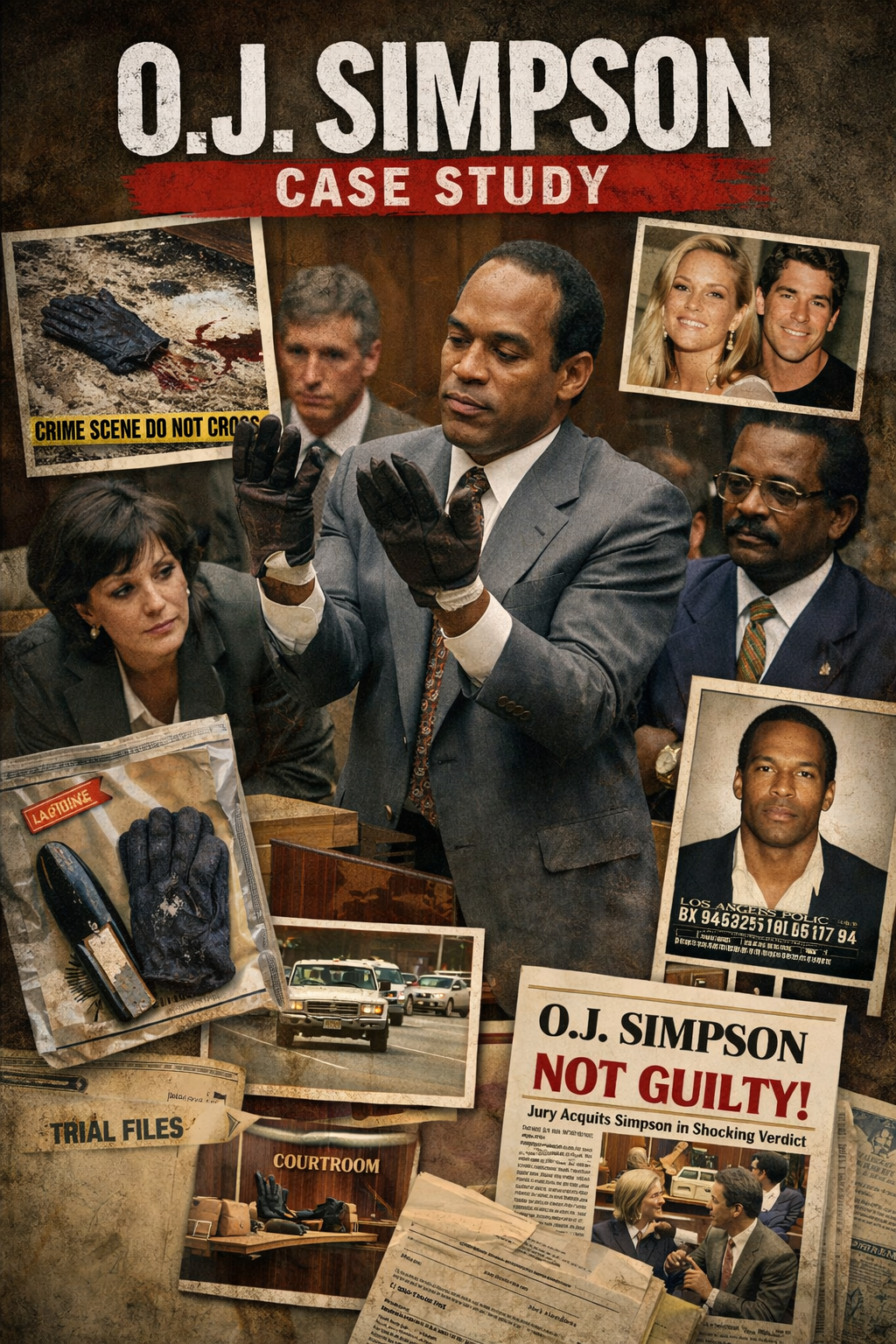
The O.J. Simpson Case Study began in 1994 when Nicole Brown Simpson and Ron Goldman were found murdered in Los Angeles. Police quickly identified O. J. Simpson as the primary suspect.
The case gained worldwide attention during the famous police chase involving a white Ford Bronco. Millions of viewers watched the event live, making it one of the most widely covered criminal investigations in history.
Forensic Evidence in the O.J. Simpson Case Study
Forensic evidence played a crucial role in the O.J. Simpson Case Study. Investigators collected blood samples, DNA evidence, and physical materials from the crime scene.
At that time, DNA testing was still developing, but it was considered a strong scientific method. The prosecution used DNA evidence to link Simpson to the crime scene. However, the defense challenged the handling of this evidence.
Experts argued that improper procedures could have contaminated the samples. This argument raised serious concerns about evidence handling and chain of custody in forensic investigations.
The Glove Evidence in the O.J. Simpson Case Study
One of the most critical moments in the O.J. Simpson Case Study involved the glove evidence. Investigators found gloves at the crime scene and at Simpson’s residence.
During the trial, Simpson tried on the gloves in court, but they appeared too small. This moment created doubt among jurors and became a key turning point.
The defense used this demonstration to question the reliability of the evidence. As a result, the prosecution’s case weakened significantly.
Legal Strategy and Reasonable Doubt
The defense team in the O.J. Simpson Case Study focused on creating reasonable doubt. Instead of proving innocence, they challenged the credibility of the investigation.
They questioned police procedures, evidence handling, and possible bias. By raising doubts about the investigation process, they influenced the jury’s perception of the case.
This strategy proved successful, leading to Simpson’s acquittal in the criminal trial.
Media Influence in the O.J. Simpson Case Study
The O.J. Simpson Case Study became a major media event. Television networks broadcasted the trial live, allowing millions of viewers to follow every detail.
This level of media coverage influenced public opinion and raised concerns about the fairness of high-profile trials. It also showed how media attention can impact the legal process.
Impact of the O.J. Simpson Case Study on Forensic Science
The O.J. Simpson Case Study had a lasting impact on forensic science and criminal investigations. It highlighted the importance of proper evidence collection, documentation, and storage.
After the trial, law enforcement agencies improved their forensic procedures. Organizations such as the Federal Bureau of Investigation and National Institute of Justice developed stricter guidelines for evidence handling.
The case also increased public awareness of DNA evidence and its role in criminal justice.
Lessons from the O.J. Simpson Case Study
The O.J. Simpson Case Study provides important lessons for investigators and legal professionals.
First, proper evidence handling is essential for maintaining credibility. Second, clear presentation of forensic evidence is necessary in court. Third, legal strategies can significantly influence trial outcomes.
These lessons continue to shape modern forensic practices and criminal investigations.
Conclusion
The O.J. Simpson Case Study remains a landmark example of how forensic evidence, legal strategy, and media influence interact in criminal trials. It demonstrated both the strengths and limitations of forensic science in the courtroom.
Even today, this case serves as an important study for students and professionals in forensic science, law, and criminal justice.



Post comments (0)