Questioned Documents in Forensic Science
Documents play an important role in legal, financial, and personal matters. In everyday life, people rely on documents to prove identity, ownership, and agreements. However, when doubts arise about a document’s authenticity or origin, forensic science becomes necessary. In such situations, Questioned Document Examination (QDE) helps investigators find the truth. Specifically, this branch of forensic science focuses on examining documents that may have been forged, altered, or created fraudulently. As a result, questioned document examination supports the justice system.
What Are Questioned Documents in Forensic Science?
In forensic science, questioned documents are documents whose genuineness, authorship, or integrity is doubtful. In other words, these documents require scientific examination. There are several reasons why a document may become questionable. For example, forgery, impersonation, alteration, page substitution, or fabrication can raise suspicion.
Therefore, the examination of questioned documents aims to answer important questions such as:
-
Is the document genuine or forged?
-
Was the document altered after preparation?
-
Who wrote or signed the document?
-
What materials and methods were used to create it?
Commonly, questioned documents include wills, contracts, cheques, suicide notes, property deeds, passports, bank records, certificates, and digital files such as emails and PDFs. In many cases, these documents act as key evidence. Hence, accurate examination becomes essential for justice.
Scope and Importance of Questioned Document Examination
Scope of Questioned Document Examination
The scope of questioned document examination is wide. Moreover, it continues to expand because of technological advancement. Generally, this field includes the examination of:
-
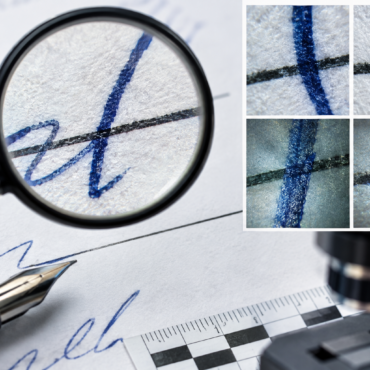
Handwriting and signatures to identify authorship or detect forgery
-
Alterations such as erasures, overwriting, and additions
-
Ink and paper to determine type, age, and composition
-
Printed and typewritten documents, including printer identification
-
Indented writing that may reveal hidden text
-
Digital documents such as electronic records and metadata
Additionally, the growing use of digital technology has extended this field beyond paper documents. Consequently, forensic experts now examine both physical and electronic records.
Importance of Questioned Document Examination
The importance of questioned document examination lies in its ability to uncover fraud. Without proper examination, forged documents may cause serious harm. For instance, financial loss, property disputes, identity theft, and wrongful convictions may occur.
Therefore, this field is important because it:
-
Helps detect and prevent document-related fraud
-
Assists courts by providing scientific and unbiased opinions
-
Protects individuals, organizations, and governments
-
Ensures the authenticity of legal and financial records
-
Strengthens trust in documentary evidence
As a result, forensic document examination plays a key role in maintaining justice.
Types of Questioned Documents
Questioned documents can be classified based on how they are created and stored. Generally, they fall into three main categories.
1. Handwritten Documents
Handwritten documents are written manually using pens or pencils. For example, letters, wills, diaries, signatures, and suicide notes fall into this category. Importantly, handwriting examination is based on the principle that every person develops unique writing habits.
Therefore, examiners study letter formation, spacing, alignment, pressure, and natural variation. Because of this, handwriting examination remains one of the most significant areas of questioned document analysis.
2. Printed Documents
Printed documents are produced using machines such as printers or typewriters. Common examples include contracts, certificates, cheques, and official forms.
During examination, experts may:
-
Identify the type of printer or typewriter
-
Compare ink or toner patterns
-
Detect substituted pages
-
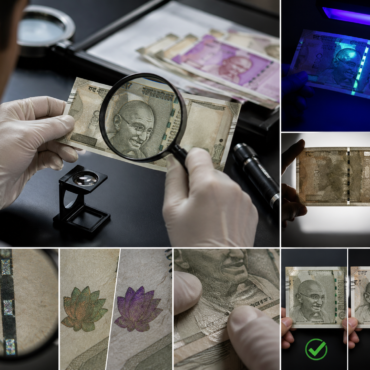
Identify counterfeit documents
Consequently, printed document examination is especially important in fraud cases.
3. Digital Documents
Today, many questioned documents exist in digital form. For instance, emails, PDFs, scanned files, and electronic contracts are common.
In such cases, digital document examination focuses on:
-
Metadata analysis
-
Detection of digital manipulation
-
Printer and scanner linkage
-
Verification of digital signatures
Therefore, this type of examination is essential in cybercrime investigations.
Role of a Questioned Document Examiner
A Questioned Document Examiner (QDE) is a trained forensic expert. Primarily, the examiner applies scientific methods to analyze disputed documents. Most importantly, the examiner provides an objective and unbiased opinion.
Key Responsibilities
-
Examine questioned and known documents
-
Identify forged or disguised handwriting
-
Detect alterations and erasures
-
Analyze ink, paper, and printing methods
-
Use tools such as microscopes, VSC, and ESDA
-
Prepare clear forensic reports
-
Present expert testimony in court
Thus, the examiner supports the legal system with reliable scientific evidence.
Conclusion
In conclusion, questioned document examination is a vital branch of forensic science. Overall, it helps protect document authenticity and supports justice. From handwritten notes to digital records, careful scientific analysis helps uncover fraud and resolve disputes. As technology continues to advance, this field will become even more important in the future


Post comments (0)