In the digital era, smartphones have become an inseparable part of our daily lives — from communication and banking to entertainment and business. Each tap, message, and transaction leaves behind a trail of data, which can become vital evidence in a forensic investigation. Mobile apps, in particular, are treasure troves of information. Understanding how mobile apps store and manage data is crucial for forensic experts to extract and interpret digital evidence accurately.
1. The Role of Mobile Apps in Digital Forensics
When investigating a crime involving smartphones, mobile applications often serve as key sources of digital evidence. From messaging apps like WhatsApp, Telegram, and Signal, to financial apps, ride-sharing platforms, and even fitness trackers — each stores a variety of user data that can reveal critical insights into the suspect’s activities, intent, and connections.
Forensic investigators aim to retrieve this evidence in a forensically sound manner, ensuring that the integrity of the data remains intact and legally admissible in court.
2. How Mobile Apps Store Data
Every mobile app uses different methods and structures to store information, depending on its purpose and platform (Android or iOS). Below are the main types of data storage locations forensic experts examine:
a. Internal Storage
This is the most common data storage area. Apps store user data in directories specific to each app, usually under the /data/data/ directory on Android or in the App Sandbox on iOS.
Here, investigators can find:
-
Databases (SQLite files): Contain structured information such as messages, contacts, and call logs.
-
Shared Preferences (XML files): Store configuration data, user settings, or login tokens.
-
Cache files: Temporary data used for faster app performance, which can still contain images, messages, or even session logs.
b. External Storage
Some apps, especially on Android, save data on external or removable storage like an SD card. This may include downloaded files, media (photos, videos, voice notes), and backups.
Even deleted files can sometimes be recovered using forensic techniques like data carving or file signature analysis.
c. Cloud Storage
Modern apps frequently synchronize data with cloud servers (e.g., Google Drive, iCloud, or proprietary servers). This enables forensic experts to retrieve cloud backups, chat histories, and media when authorized access or legal warrants are available.
Cloud synchronization logs can also confirm timelines and device interactions.
d. Encrypted Containers
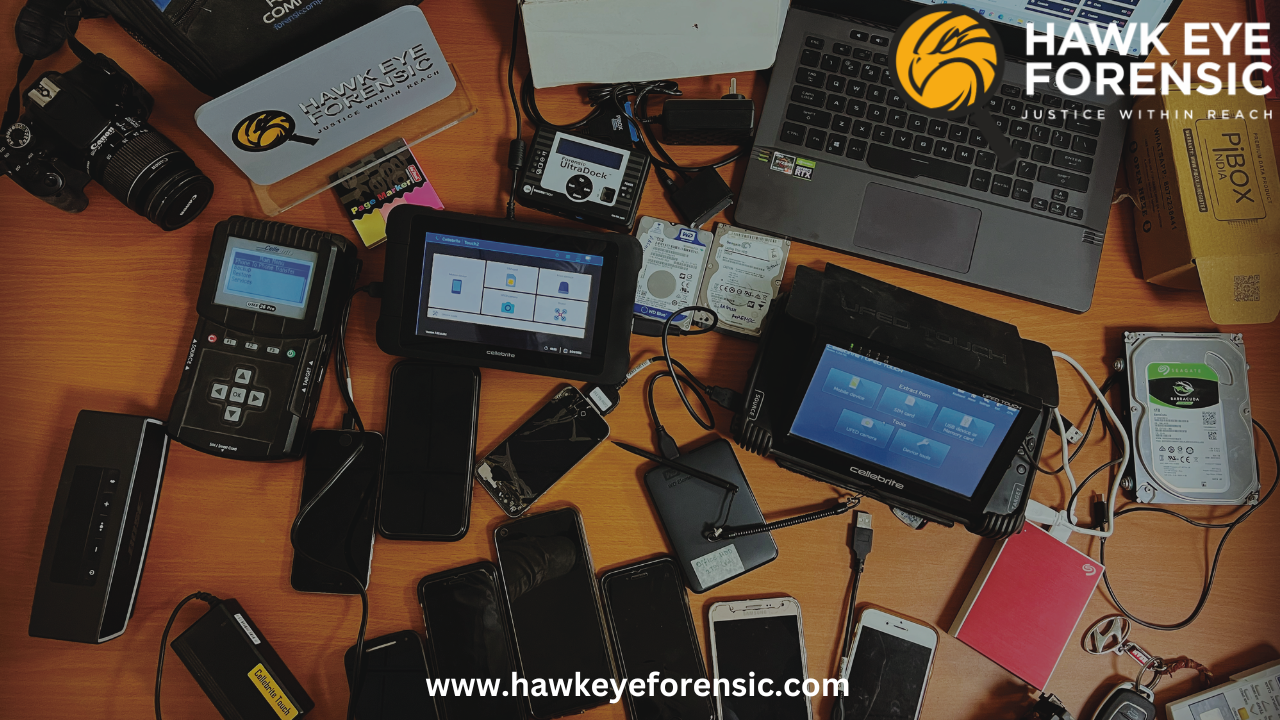
To enhance privacy, many apps encrypt their stored data. For example, Signal and WhatsApp use encryption keys stored within the device or the system’s keystore. Forensic analysts use specialized tools (like Cellebrite UFED, Oxygen Forensic Detective, or Magnet AXIOM) to extract and decrypt this data under lawful conditions.
3. Common Data Artifacts Found in Mobile Apps
Each application generates a unique set of data artifacts, depending on its function. Below are some examples of what forensic investigators look for:
| App Type |
Potential Evidence Artifacts |
| Messaging (WhatsApp, Telegram, Signal) |
Chat logs, timestamps, contact lists, media attachments, deleted messages |
| Social Media (Facebook, Instagram, Twitter, LinkedIn) |
Posts, likes, direct messages, geolocation data, activity history |
| Email Clients (Gmail, Outlook) |
Email bodies, attachments, metadata, IP logs |
| Banking/Finance Apps |
Transaction records, account numbers, login times |
| Fitness/Health Apps |
GPS trails, step counts, timestamps showing movement patterns |
| Ride-sharing (Uber, Ola) |
Trip history, pickup/drop-off locations, payment records |
Each artifact plays a vital role in reconstructing digital timelines, confirming alibis, or exposing fraudulent or criminal activities.
4. Extraction Techniques Used in Mobile App Forensics
The process of acquiring mobile app data varies based on the device type, OS version, and app’s security protocols. Common forensic acquisition methods include:
a. Logical Extraction
This retrieves data that the operating system makes accessible through standard APIs. It’s non-invasive but might miss deleted or hidden data.
b. File System Extraction
This method gives access to the entire file system, including app directories and configuration files. Investigators can analyze app databases and cache files for deeper insights.
c. Physical Extraction
A complete copy of the device’s storage is created, including deleted and hidden data. This method is often used when the case demands recovery of deleted messages or encrypted files.
d. Cloud-Based Extraction
If the app data is synchronized to the cloud, forensic tools can legally access cloud backups using tokens or credentials, enabling the recovery of historical app data.
5. Legal and Ethical Considerations
Mobile app forensics must always adhere to legal boundaries and privacy regulations. Investigators must ensure:
-
Proper authorization or warrants are obtained before accessing cloud or encrypted data.
-
Chain of custody is maintained throughout the investigation.
-
Data integrity is ensured using hashing techniques (e.g., MD5, SHA-256).
-
Reporting is detailed, explaining how the evidence was acquired, analyzed, and interpreted.
Failure to follow these protocols can lead to evidence being ruled inadmissible in court.
6. Challenges in Mobile App Forensics
As mobile app technology evolves, forensic challenges also increase:
-
End-to-end encryption: Makes message recovery complex.
-
App updates and frequent version changes: Alter data structures.
-
Cloud dependency: Inaccessible without legal access or credentials.
-
Data volatility: Cache and temporary data can be overwritten easily.
-
Privacy protections in iOS and Android: Sandbox isolation limits extraction options.
To overcome these issues, forensic experts must stay updated with the latest mobile forensic tools, OS security models, and decryption methodologies.
7. Tools Commonly Used in Mobile App Evidence Extraction
Some of the industry’s leading forensic tools that help extract and analyze app data include:
-
Cellebrite UFED & Physical Analyzer
-
Magnet AXIOM Mobile
-
Oxygen Forensic Detective
-
Elcomsoft Mobile Forensic Bundle
-
Belkasoft Evidence Center
-
XRY by MSAB
These tools enable investigators to extract, decrypt, and visualize data from a wide range of apps, making analysis faster and more efficient.
8. Conclusion
Mobile apps hold a vast amount of personal and behavioral data, making them one of the richest sources of digital evidence in modern investigations. Understanding how these apps store and manage data allows forensic experts to uncover crucial leads, validate timelines, and ensure justice through scientifically sound evidence.
At Hawk Eye Forensic, our team of experienced analysts leverages advanced tools and global expertise to extract and interpret data from mobile apps in a legally admissible and forensically sound manner. Whether it’s a cybercrime case, fraud investigation, or legal dispute, our goal remains the same — to uncover the truth hidden within digital devices.

Post comments (0)