Introduction
In today’s digital world, cybercrimes are increasing rapidly, making digital forensics an essential part of modern investigations. From smartphones to cloud servers, digital evidence is everywhere.
Understanding the types of digital forensics helps investigators analyze, recover, and preserve crucial data that can solve crimes, prevent fraud, and support legal cases.
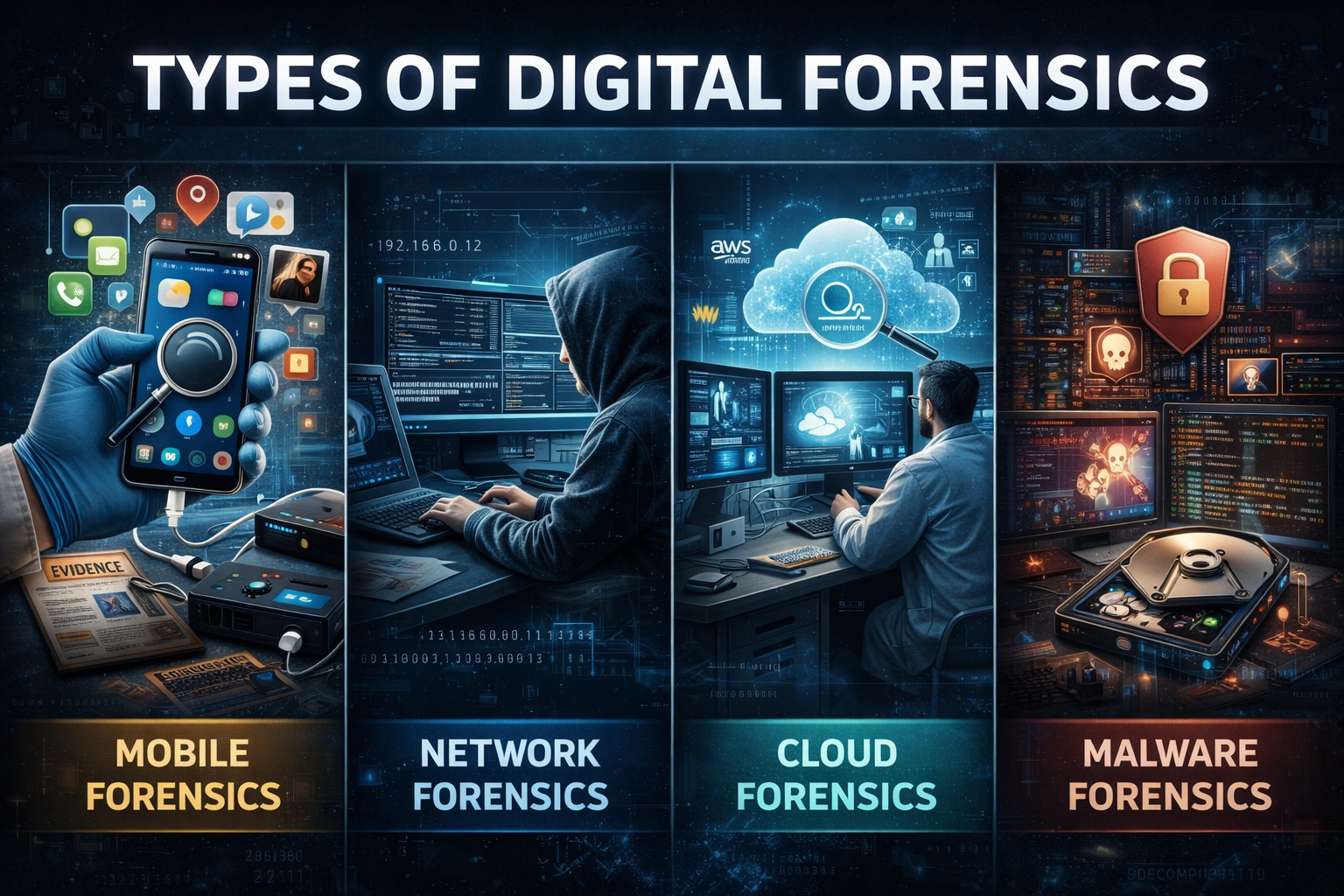
In this blog, we will explore four major branches: mobile forensics, network forensics, cloud forensics, and malware forensics.
What is digital forensics?
Digital forensics is the process of identifying, collecting, analyzing, and presenting digital evidence in a legally acceptable manner. It is widely used in:
- Cybercrime investigations
- Corporate fraud cases
- Data breach analysis
- Legal proceedings
Each type of digital forensics focuses on different sources of digital evidence.
1. Mobile Forensics
📱 What is Mobile Forensics?
Mobile forensics involves the extraction and analysis of data from mobile devices such as smartphones, tablets, and SIM cards.
🔍 What Data is Analyzed?
- Call logs
- SMS and messaging apps (WhatsApp, Telegram)
- Photos and videos
- GPS location data
- App usage history
🛠️ Tools Used
- Cellebrite
- Oxygen Forensics
- MOBILedit
⚠️ Challenges
- Device encryption
- Frequent OS updates
- Data volatility
🎯 Importance
Mobile devices store personal and sensitive information, making them critical in criminal and civil investigations.
2. Network Forensics
🌐 What is Network Forensics?
Network forensics focuses on monitoring and analyzing network traffic to detect suspicious activities and cyberattacks.
🔍 What is Investigated?
- Data packets
- IP addresses
- Network logs
- Email traffic
🛠️ Tools Used
- Wireshark
- NetworkMiner
- Snort
⚠️ Challenges
- Large volume of data
- Encrypted traffic
- Real-time monitoring requirements
🎯 Importance
Network forensics helps identify:
- Hackers and intrusions
- Data breaches
- Unauthorized access
It is crucial for cybersecurity and incident response.
3. Cloud Forensics
☁️ What is Cloud Forensics?
Cloud forensics deals with investigating data stored in cloud environments like Google Drive, AWS, and Microsoft Azure.
🔍 What is Analyzed?
- Cloud storage data
- User access logs
- Virtual machine data
- Backup files
🛠️ Tools Used
- AWS CloudTrail
- Azure Forensic Tools
- Google Cloud Logging
⚠️ Challenges
- Data jurisdiction issues
- Lack of physical access
- Multi-tenant environments
🎯 Importance
With businesses moving to the cloud, this field is rapidly growing and essential for modern investigations.
4. Malware Forensics
🦠 What is Malware Forensics?
Malware forensics involves analyzing malicious software to understand its behaviour, origin, and impact.
🔍 What is Investigated?
- Viruses, worms, trojans
- Ransomware attacks
- Spyware and keyloggers
🛠️ Techniques Used
- Static analysis (without running the malware)
- Dynamic analysis (executing in a controlled environment)
- Reverse engineering
🛠️ Tools Used
- IDA Pro
- Ghidra
- Sandbox environments
⚠️ Challenges
- Obfuscated code
- Evolving malware techniques
- High technical complexity
🎯 Importance
Malware forensics helps
- Prevent future attacks
- Identify attackers
- Strengthen cybersecurity systems
Why Understanding These Types Matters
Each type of digital forensics plays a unique role in investigations. In many cases, investigators use multiple forensic methods together to solve complex cases.
For example:
- A cyber fraud case may involve mobile and network forensics
- A data breach may require network and cloud forensics
- A ransomware attack needs malware + network analysis
Future of Digital Forensics
The field of digital forensics is constantly evolving due to emerging technologies. Key trends include:
- AI-powered forensic tools
- Deepfake detection
- IoT forensics
- Blockchain analysis
As cyber threats become more advanced, digital forensic techniques must also adapt.
Conclusion
Understanding the types of digital forensics—mobile, network, cloud, and malware—is essential in today’s technology-driven world. Each branch plays a critical role in uncovering digital evidence and solving cybercrimes.
From analyzing smartphone data to investigating cloud environments and decoding malware, digital forensics continues to be a powerful tool for truth and justice.
For businesses, law enforcement, and individuals, investing in digital forensic knowledge and services is no longer optional—it’s a necessity.


Post comments (0)