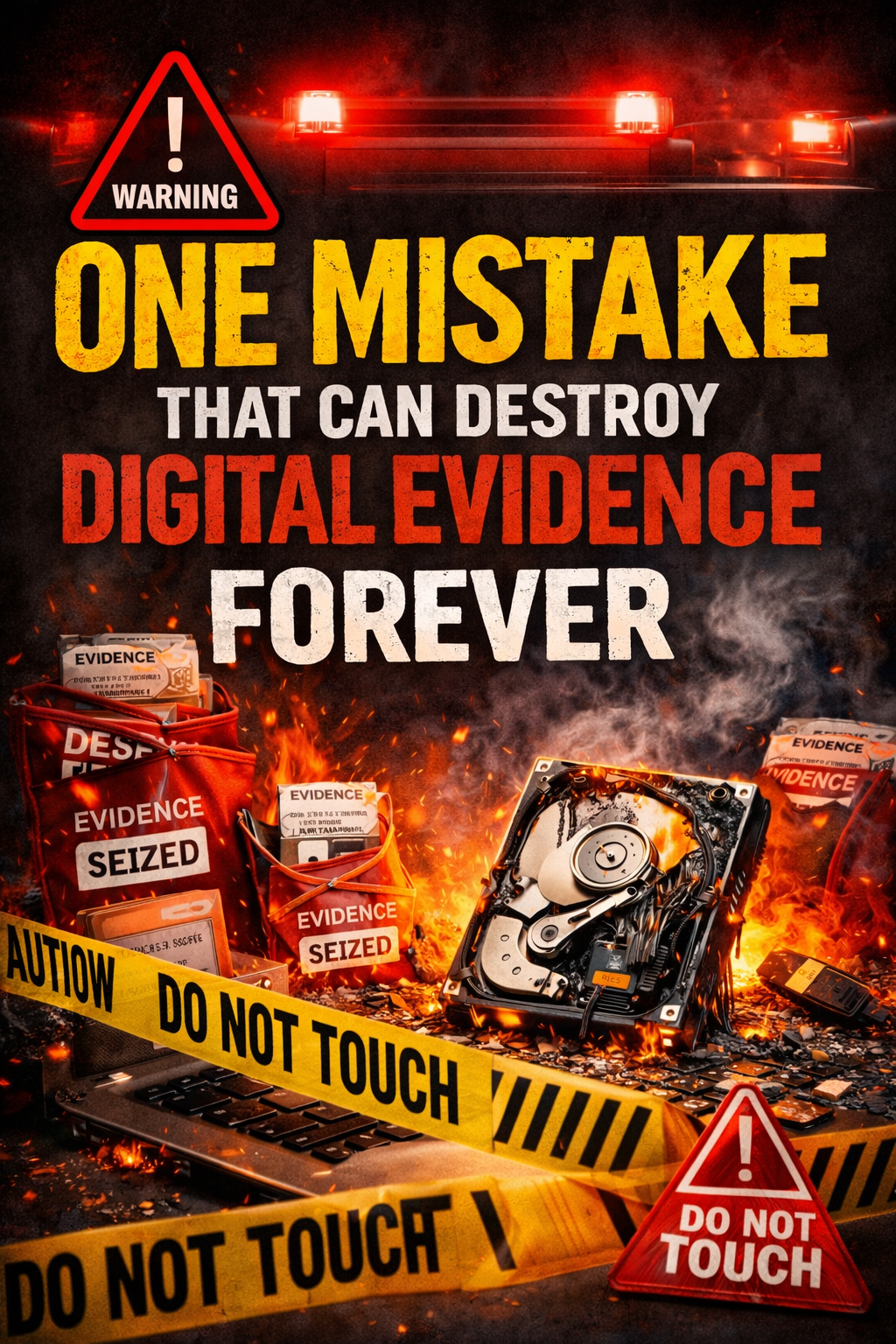
One Mistake That Can Destroy Digital Evidence Forever
Digital evidence plays a critical role in modern criminal and civil investigations. From mobile phones and laptops to USB drives and cloud data, investigators increasingly rely on digital artifacts to reconstruct events and establish facts. However, unlike physical evidence, digital evidence is extremely fragile. A single mistake—often made unintentionally—can permanently destroy its forensic value.
That one mistake is accessing a digital device without proper forensic precautions.
Why Digital Evidence Is So Fragile
Many people assume that digital data is stable and permanent. In reality, digital evidence changes constantly. Even routine actions such as powering on a device, connecting a storage drive, or opening a file can modify critical data.
Unlike physical evidence, digital evidence:
-
Updates automatically
-
Records system activity in the background
-
Alters metadata without visible signs
-
Can overwrite deleted data instantly
Therefore, any unauthorized or unplanned interaction with a digital device can irreversibly alter the evidence it contains.
The Critical Mistake: Improper Device Access
The most destructive mistake in digital forensics occurs when someone accesses a device directly instead of performing a forensic acquisition.
Examples include:
-
Turning on a seized computer to “check what’s inside”
-
Plugging a hard drive into a personal laptop
-
Browsing files without a write blocker
-
Taking screenshots instead of acquiring data properly
Although these actions may seem harmless, they immediately change the state of the device.
As a result, the evidence loses its original integrity.
What Exactly Gets Destroyed?
When a device is accessed improperly, several types of forensic evidence suffer damage:
1. Metadata
Opening files changes:
-
Access dates
-
Modified timestamps
-
File system records
Metadata often plays a crucial role in establishing timelines. Once altered, it becomes impossible to prove when a file was last accessed or modified originally.
2. System Artifacts
Modern operating systems constantly create logs, cache files, and temporary data. Simply turning a device on can overwrite:
These artifacts frequently contain key investigative information.
3. Deleted Data
Deleted files are not immediately erased; they remain recoverable until overwritten. Improper access can overwrite this space permanently, eliminating the chance of recovery.
Once overwritten, deleted data is gone forever.
Why Copy–Paste Is Not Forensic Acquisition
One of the most common mistakes made by non-experts is copying files using normal operating system functions. While copy–paste transfers visible files, it fails to preserve:
-
Hidden files
-
Deleted data
-
Slack space
-
File system structure
More importantly, copy–paste provides no hash verification, which means the integrity of the evidence cannot be proven in court.
In forensic terms, copied data without verification has no evidentiary value.
Legal Consequences of This Mistake
Courts demand that digital evidence maintain:
-
Integrity
-
Authenticity
-
Continuity
When improper access occurs, defense counsel can easily challenge:
-
Evidence handling
-
Chain of custody
-
Reliability of findings
Even if the data appears incriminating, courts may exclude it due to contamination concerns. In many cases, strong investigations collapse not because the evidence was weak—but because it was mishandled.
Thus, a single mistake can destroy an otherwise solid case.
How Professionals Prevent This Error
Digital forensic experts follow strict protocols to prevent evidence contamination.
1. Forensic Acquisition First
Experts create a bit-by-bit forensic image of the storage media. This process captures:
Investigators then analyze the image—not the original device.
2. Use of Write Blockers
Write blockers prevent any data from being written to the original storage device during acquisition. This ensures the evidence remains unchanged.
3. Hash Value Verification
Experts calculate hash values before and after acquisition. Matching hash values confirm that the data remains unaltered and authentic.
Without hashing, evidence cannot be scientifically defended.
Why This Mistake Is So Common
This error often occurs because:
-
Investigators lack forensic training
-
First responders act out of urgency
-
Organizations underestimate digital evidence sensitivity
-
People assume “looking won’t hurt”
Unfortunately, digital evidence does not forgive casual handling.
The Forensic Reality Check
Digital evidence does not fail on its own. People fail digital evidence.
Accessing a device without forensic safeguards instantly compromises its integrity. Once altered, the original state of the evidence can never be restored. No tool, expert, or technology can reverse that damage.
Conclusion
The single biggest mistake that destroys digital evidence forever is improper access before forensic acquisition.
In digital forensics, evidence must remain:
-
Untouched
-
Verifiable
-
Defensible in court
If evidence cannot be defended scientifically and legally, it becomes useless—regardless of what it appears to show.
In the digital world, how you handle evidence matters just as much as what the evidence contains.

Post comments (0)