How Long Does Digital Evidence Stay on a Device?
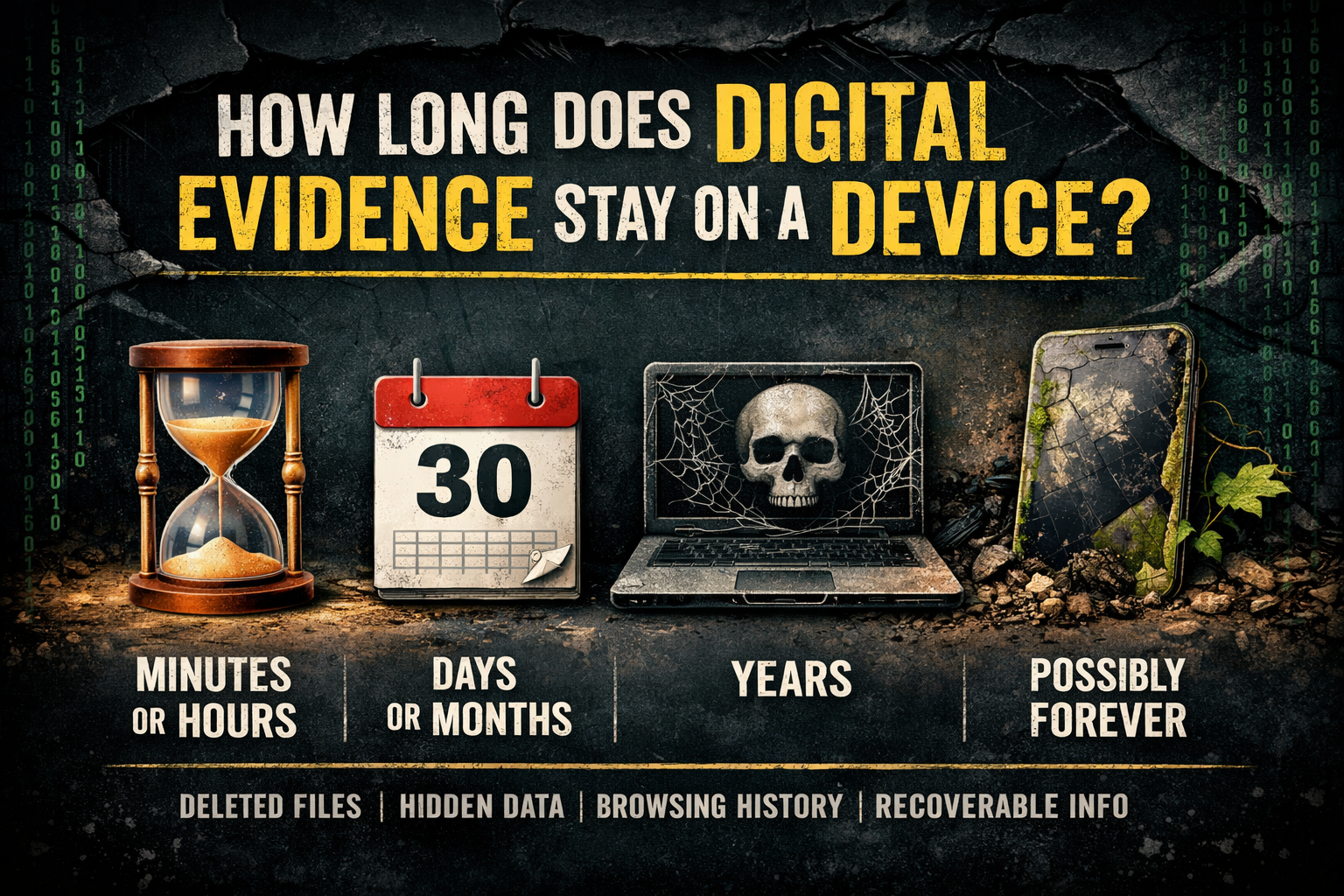
In today’s digital world, almost every activity leaves behind some form of electronic trace. From sending emails and browsing websites to using social media and mobile apps, digital devices constantly record and store information. This stored information is known as digital evidence, and it plays a crucial role in modern investigations, especially in cases related to cybercrime, fraud, and criminal activity. One common question people ask is: How long does digital evidence stay on a device? The answer depends on several factors, including the type of data, device storage, user actions, and the methods used to delete or recover information.
What Is Digital Evidence?
Digital evidence refers to any information stored or transmitted in digital form that can be used during an investigation. This evidence can be found on devices such as computers, smartphones, tablets, external drives, and even cloud storage systems.
Examples of digital evidence include emails, text messages, browsing history, call logs, documents, photos, videos, and application data. Even system logs and metadata—information about when and how files were created or modified—can be valuable during an investigation.
Digital evidence helps investigators understand what actions were performed on a device and when those actions occurred.
How Data Is Stored on Devices
When a user creates or saves a file on a device, the operating system stores it in a specific location on the device’s storage drive. This storage may be on a hard disk drive (HDD), solid-state drive (SSD), or internal smartphone storage.
Even when a file is deleted, it does not immediately disappear from the device. Instead, the system simply marks the storage space as available for new data. Until that space is overwritten by new files, the deleted data may still remain on the device and can potentially be recovered using specialized digital forensic tools.
Deleted Data and Recovery
Many people believe that deleting files permanently removes them from a device. In reality, deleted data can often remain on the device for a long time. When a file is deleted, the system removes the reference to the file but may leave the actual data intact in the storage area.
Digital forensic investigators use specialized software to recover deleted files. These tools scan the storage device to locate remnants of files that have not yet been overwritten. In some cases, investigators can recover files even months or years after deletion if the data has not been replaced with new information.
The Role of Device Usage
How long digital evidence stays on a device largely depends on how frequently the device is used. Devices that are used heavily—such as computers or smartphones with constant downloads and updates—may overwrite deleted data more quickly.
For example, if a user deletes a file but continues to download new files or install applications, the new data may overwrite the old storage area where the deleted file existed. Once overwritten, the original data becomes extremely difficult or impossible to recover.
In contrast, devices that are rarely used may retain deleted data for much longer periods because the storage areas are not frequently overwritten.
System Logs and Activity Records
Even when users delete files or clear browsing history, devices often keep other records of activity. Operating systems and applications generate system logs, which record various events such as login times, software installations, and system updates.
Similarly, web browsers store cookies, cache files, and browsing records that may reveal user activity. Messaging apps, email services, and social media platforms may also keep logs of communications.
These logs can sometimes remain on a device long after the original data has been removed, providing investigators with valuable clues during digital forensic examinations.
Cloud Storage and Backups
Modern devices frequently store data not only on local storage but also in cloud services. Platforms like cloud storage systems automatically back up files, photos, and application data.
Even if a user deletes information from their device, copies may still exist in cloud backups. Investigators can sometimes access this information through legal processes or cooperation with service providers.
Automatic backups mean that digital evidence may remain available even after attempts to remove it from the original device.
Advanced Deletion Methods
Some users attempt to remove digital evidence using specialized software designed to securely erase data. These tools overwrite storage areas multiple times to prevent recovery.
However, even these methods are not always completely foolproof. Digital forensic experts may still recover fragments of data depending on the storage technology and deletion technique used.
Additionally, some devices and applications maintain hidden caches or temporary files that may still contain traces of activity.
The Role of Digital Forensics
Digital forensics experts use advanced techniques to recover and analyze digital evidence. They create forensic copies of storage devices to examine them without altering the original data. This process ensures that evidence remains intact and admissible in court.
Investigators analyze file structures, metadata, logs, and recovered files to reconstruct a timeline of user activity. By examining these digital traces, they can determine what actions were performed on a device.
Limitations of Digital Evidence
Although digital evidence can remain on a device for long periods, it is not always guaranteed to be recoverable. Factors such as storage type, encryption, device damage, and frequent overwriting can limit the ability to recover data.
For example, modern solid-state drives often use features like automatic data management and encryption, which may make recovery more challenging compared to traditional hard drives.
Conclusion
Digital evidence can remain on a device for varying lengths of time, ranging from minutes to several years. The duration depends on factors such as device usage, storage technology, deletion methods, and whether the data has been overwritten.
Even when users attempt to delete information, traces of activity may still exist in logs, backups, and hidden system files. This is why digital forensics plays such an important role in modern investigations.
As technology continues to evolve, the ability to recover and analyze digital evidence is also improving. Understanding how long digital evidence can remain on a device highlights the importance of digital security, responsible device usage, and the growing significance of digital forensics in the modern world.



Post comments (0)