Introduction
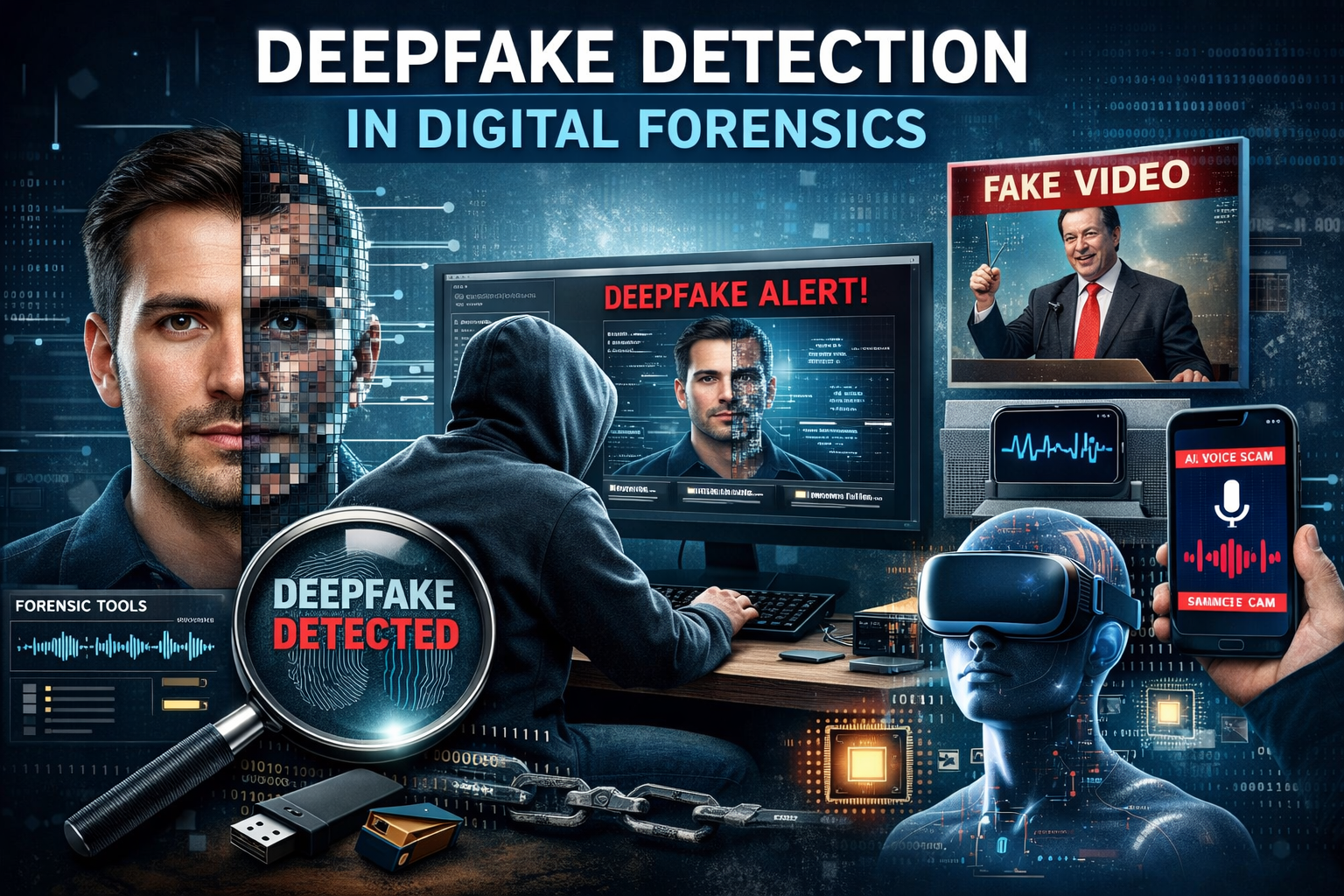
Deepfakes are no longer just internet curiosities—they have become a serious threat in cybercrime, misinformation, and legal investigations. With the rise of artificial intelligence, creating hyper-realistic fake videos, images, and audio has become easier than ever.
This is where deepfake detection in digital forensics plays a critical role. Digital forensic experts are now on the front lines, identifying manipulated content and ensuring that truth prevails in courts, businesses, and society.
What Are Deepfakes?
Deepfakes are AI-generated or AI-manipulated media where a person’s face, voice, or actions are altered to create fake but realistic content. These are often created using deep learning techniques like GANs (Generative Adversarial Networks).
Deepfakes are used in:
- Cyber fraud and scams
- Political misinformation
- Identity theft
- Fake evidence in legal cases
Because of their realism, detecting them manually is extremely difficult, making forensic tools essential.
Why Deepfake Detection Matters in Digital Forensics
In digital investigations, evidence must be authentic and reliable. A single deepfake video can:
- Mislead investigations
- Damage reputations
- Influence court decisions
- Cause financial losses
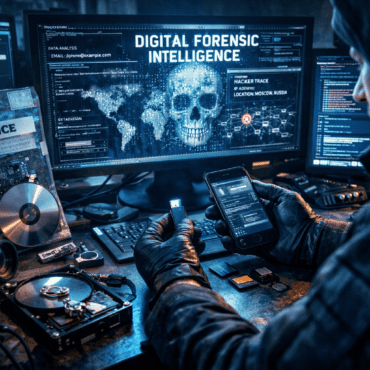
Digital forensics ensures that such manipulated content is identified, analyzed, and presented with proof of tampering.
Key Techniques Used in Deepfake Detection
1. Visual Artefact Analysis
Deepfake videos often contain subtle inconsistencies, such as the following:
- Blurred edges around the face
- Unnatural lighting or shadows
- Distorted facial features
Forensic experts analyze frame-by-frame details to detect these anomalies.
2. Facial Movement & Expression Analysis
AI-generated faces sometimes fail to replicate natural human behavior. Experts look for:
- Unnatural blinking patterns
- Lip-sync mismatches
- Lack of micro-expressions
These small inconsistencies can reveal manipulation.
3. Audio Forensic Analysis
Deepfake audio can be detected by examining:
- Frequency patterns
- Voice modulation inconsistencies
- Background noise mismatches
Audio analysis helps verify whether a voice is real or AI-generated.
4. Metadata Examination
Every digital file contains metadata, such as:
- Creation date
- Editing software
- File history
If metadata shows unusual editing traces, it can indicate manipulation.
5. AI-Based Detection Tools
Ironically, AI is also used to detect deepfakes. Machine learning models are trained to identify patterns that humans cannot easily see.
Popular Tools for Deepfake Detection
Here are some widely used tools in digital forensics:
- Deepware Scanner – Detects deepfake videos quickly
- Sensity AI – Advanced deepfake monitoring and analysis
- Microsoft Video Authenticator – Identifies manipulated media
- Amped Authenticate – Used by forensic experts for image verification
- Forensically (online tool) – Helps analyze image manipulation
These tools combine AI, image processing, and forensic science to detect fake content.
Real Cases of Deepfake Detection
Case 1: CEO Voice Scam
In a major cyber fraud case, scammers used an AI-generated voice to mimic a CEO and instructed an employee to transfer money. The company lost thousands of dollars.
Digital forensic experts later analyzed the audio and found inconsistencies in voice patterns, proving it was a deepfake.
Case 2: Political Deepfake Video
A viral video showed a political leader making controversial statements. It caused public outrage before the elections.
Forensic analysis revealed:
- Lip-sync mismatch
- Frame inconsistencies
- AI-generated artifacts
The video was declared fake, preventing further misinformation from spreading.
Case 3: Fake Evidence in a Legal Case
In a legal dispute, one party submitted a video as evidence. However, forensic experts discovered:
- Edited frames
- Altered timestamps
- AI manipulation
The court rejected the evidence, highlighting the importance of digital forensic verification.
Challenges in Deepfake Detection
Despite advancements, detecting deepfakes is still challenging:
- AI technology is evolving rapidly
- High-quality deepfakes are harder to detect
- Lack of awareness among general users
- Time-consuming forensic analysis
This makes continuous research and tool development essential.
Future of Deepfake Detection
The future of deepfake detection in digital forensics will involve:
- Advanced AI detection systems
- Blockchain-based media verification
- Real-time detection tools
- Stronger legal frameworks
As deepfakes become more sophisticated, forensic experts must stay one step ahead.
Conclusion
Deepfakes are reshaping the landscape of cybercrime and digital evidence. While they pose a serious threat, digital forensics provides the tools and techniques needed to uncover the truth.
From analyzing visual artifacts to using AI-powered tools, deepfake detection is becoming an essential part of modern investigations.
For businesses, legal professionals, and individuals, understanding the risks of deepfakes and relying on forensic expertise is no longer optional—it’s necessary.


Post comments (0)