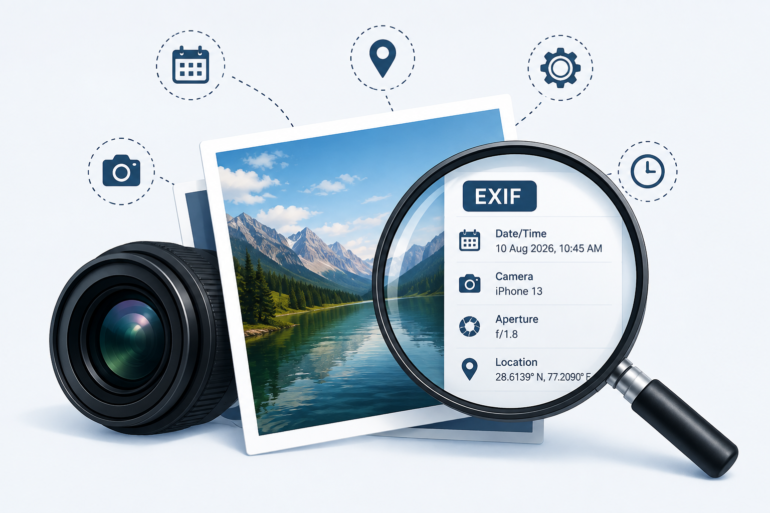
A photograph may look like nothing more than an image, but digitally it can contain much more information than what is visible to the human eye. Hidden within many image files is EXIF metadata, a form of technical information that can reveal details about how, when, and sometimes where a photograph was created.
For investigators, cybersecurity professionals, journalists, and digital forensic examiners, EXIF metadata in photos can provide valuable investigative leads. However, it is important to understand both its capabilities and its limitations before treating metadata as evidence.
What Is EXIF Metadata?
EXIF, or Exchangeable Image File Format, is metadata embedded in image files, particularly photographs captured using digital cameras and smartphones.
When a photograph is taken, the camera or smartphone may automatically record information such as:
- Date and time the photograph was captured
- Camera manufacturer and model
- Lens information
- Image dimensions
- Exposure settings
- ISO sensitivity
- Focal length
- Flash information
- Software used to process the image
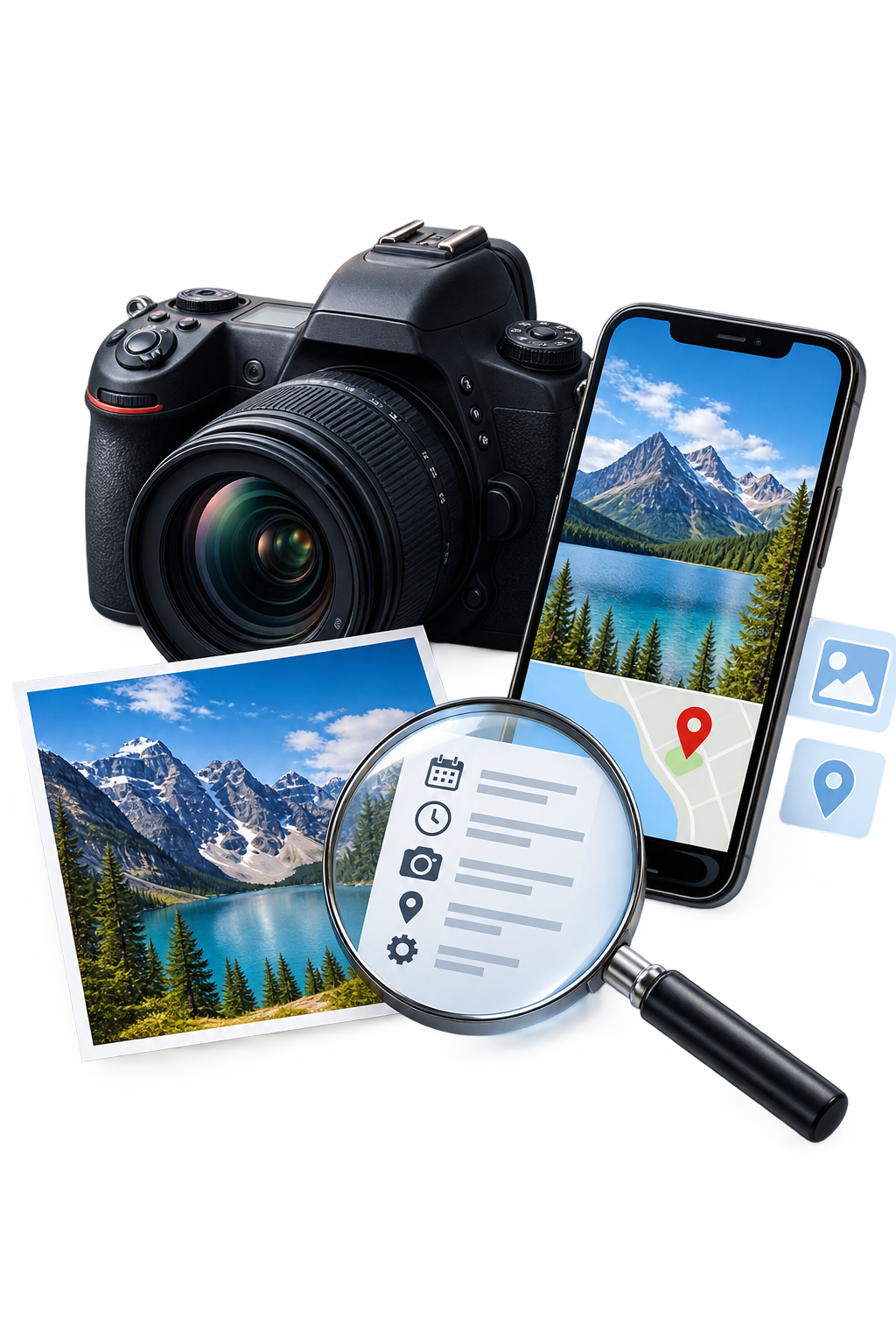
- GPS coordinates, when location services are enabled
Therefore, EXIF data in digital photos can provide information that is not immediately visible when viewing the image.
For example, a photograph may appear ordinary, but its metadata could indicate that it was captured using an iPhone, at a particular date and time, with specific camera settings.
Why Is EXIF Metadata Important in Digital Forensics?
In digital forensics, photographs can become important sources of evidence in investigations. EXIF metadata may help an examiner establish the technical history of an image.
For example, investigators examining a suspicious photograph might use EXIF information to determine:
- What device created the image?
- When was the photograph originally captured?
- Was GPS information recorded?
- What software subsequently processed the image?
- Are there inconsistencies between the claimed circumstances and the metadata?
This can be particularly useful when investigating digital evidence, cybercrime, fraud, harassment, image manipulation, or disputed photographs.
However, metadata should generally be treated as supporting evidence rather than conclusive proof. EXIF information can be modified, removed, or rewritten by software.
What Information Can EXIF Reveal?
The amount of information available depends on the device, application, file format, and subsequent processing.
1. Camera Information
EXIF may contain the manufacturer and model of the camera or smartphone.
For example:
Make: Apple
Model: iPhone
Lens: Wide Camera
This information can help establish the type of device associated with the image.
2. Date and Time
Some photographs contain timestamps showing when the image was captured.
This can potentially assist investigators in establishing a timeline of events.
However, timestamps must be interpreted carefully because device clocks can be incorrect or deliberately changed.
3. GPS Location
One of the most significant elements of EXIF metadata is GPS information.
If location tagging was enabled when the photograph was captured, the metadata may contain:
- Latitude
- Longitude
- Altitude
- Direction
- GPS timestamp
This means that photo metadata and location information can sometimes provide valuable geographical clues.
For privacy reasons, many platforms and applications remove or modify GPS metadata when images are uploaded.
4. Camera Settings
EXIF may also contain technical information such as:
- Shutter speed
- Aperture
- ISO
- Focal length
- Exposure mode
- White balance
- Flash status
These details can help a forensic examiner understand how the photograph was captured.
How Can Investigators Examine EXIF Data?
There are several tools capable of extracting metadata from photographs.
One widely used tool is ExifTool, developed by Phil Harvey. It supports a large number of file formats and can extract extensive metadata from digital images.
Another useful resource is the Exif standard documentation maintained by CIPA, which provides technical information about the EXIF specification.
CIPA – Exchangeable Image File Format (EXIF)
For forensic examination, an examiner should ideally work with the original image file rather than a screenshot or image downloaded from a social media platform. The original file preserves more potentially relevant information.
Can EXIF Metadata Be Faked or Changed?
Yes.
This is one of the most important limitations when using EXIF metadata for forensic investigation.
Metadata can be modified using ordinary software. Image-editing applications, operating systems, social media platforms, messaging applications, and file-conversion tools can also alter or remove metadata.
For example, someone could potentially change the date recorded in an image’s metadata. Therefore, finding a timestamp of “10 August 2026” does not automatically prove that the photograph was physically captured at that exact time.
A forensic examiner should therefore correlate EXIF information with other evidence, such as:
- Original device data
- File system timestamps
- Application databases
- Cloud records
- Messaging records
- GPS logs
- Hash values
- Other photographs
- CCTV footage
- Witness statements
The context and provenance of the image are critical.
EXIF Metadata and Privacy
EXIF metadata is not only relevant to investigators. It is also important from a personal privacy perspective.
A photograph shared online could potentially contain information about the device used to capture it and, depending on the circumstances, its location.
Before publicly sharing photographs, users should consider whether sensitive metadata is embedded in the file.
The National Institute of Standards and Technology (NIST) provides extensive resources on digital forensics, cybersecurity, and digital evidence that are useful for professionals working with electronically stored information.


Post comments (0)