Introduction
Dark Web Forensics is a specialized area of digital forensics that focuses on investigating criminal activities conducted through anonymous networks. By using Dark Web Forensics, investigators can identify leaked data, trace cybercriminal operations, and collect legally admissible digital evidence.
The Dark Web has gained attention because it provides users with anonymity, making it attractive not only for individuals seeking privacy but also for cybercriminals involved in illegal activities. As cybercrime continues to evolve, Dark Web Investigations have become an essential part of digital forensic and cybersecurity operations. These investigations help identify cybercriminal activities, collect digital evidence, and support law enforcement in dismantling criminal networks.
This article explores how digital forensic experts conduct Dark Web investigations, the challenges they face, and the importance of digital evidence in uncovering cybercrime.
What Is the Dark Web?
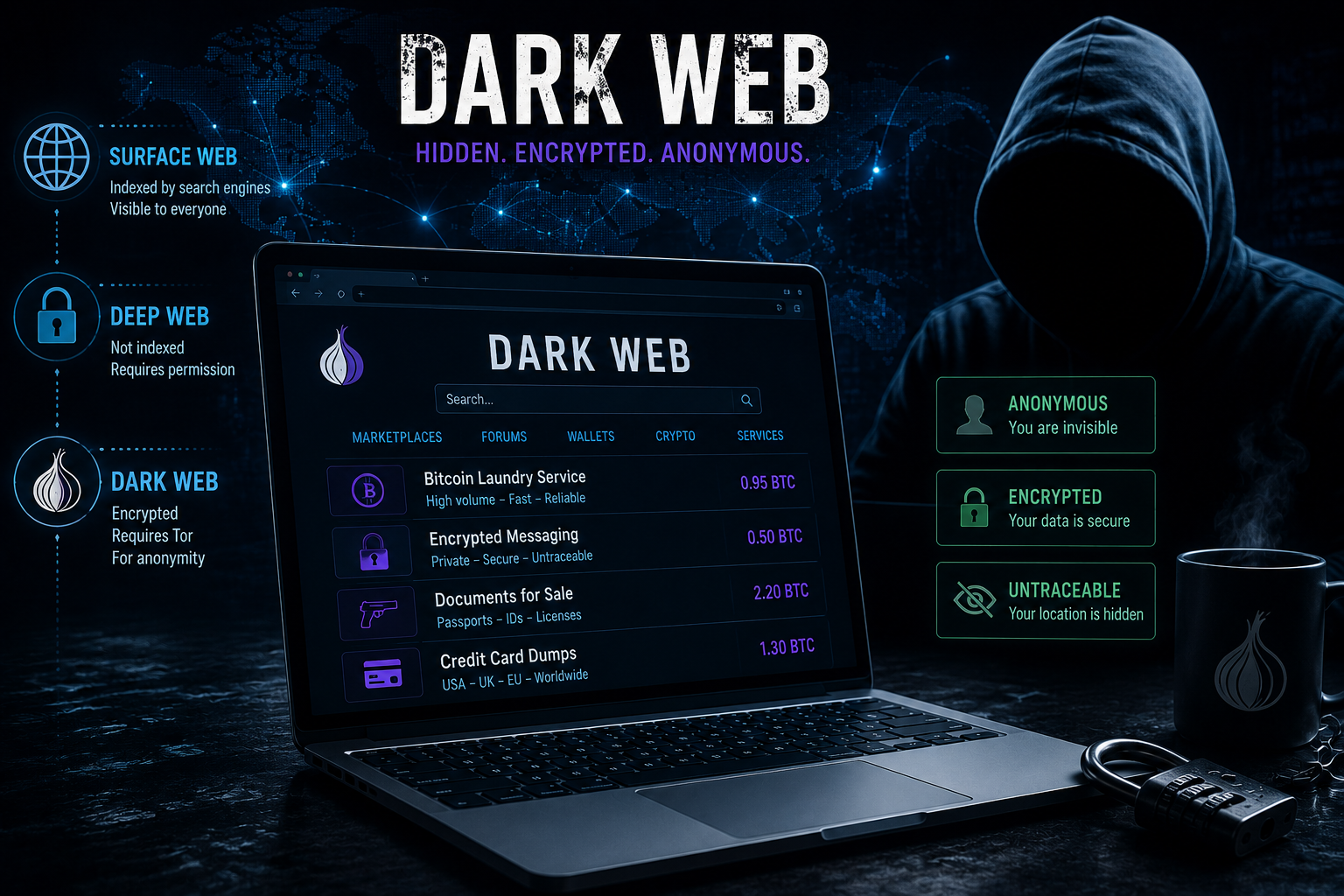
The internet can be divided into three layers:
Surface Web
The Surface Web includes websites that search engines like Google and Bing can index. Examples include news websites, company websites, and online stores.
Deep Web
The Deep Web consists of content that is not indexed by search engines, such as online banking portals, medical records, private databases, and corporate intranets.
Dark Web
The Dark Web is a small, encrypted section of the Deep Web that requires specialized software, such as the Tor Browser, to access. It uses anonymous communication networks to conceal users’ identities and locations.
While the Dark Web has legitimate uses, it is also associated with illegal marketplaces, cybercrime forums, stolen data trading, ransomware groups, and other criminal activities.
Why Are Dark Web Investigations Important?
Dark Web Investigations help organizations and law enforcement agencies detect and investigate cybercriminal activities before they cause significant harm.
These investigations can reveal:
- Stolen usernames and passwords
- Leaked corporate documents
- Financial fraud schemes
- Malware distribution networks
- Phishing kits
- Ransomware operations
- Identity theft activities
- Cryptocurrency transactions linked to cybercrime
Early detection enables organizations to respond quickly and reduce the impact of cyber threats.
Common Crimes Investigated on the Dark Web
Digital forensic experts frequently investigate various cybercrimes linked to the Dark Web.
Data Breaches
Cybercriminals often sell stolen databases containing customer information, login credentials, and financial records.
Ransomware Operations
Many ransomware groups use Dark Web platforms to publish stolen data and negotiate ransom payments.
Identity Theft
Personally identifiable information (PII), including passports, driver’s licenses, and financial details, may be traded illegally.
Phishing Services
Attackers sell phishing kits, fake websites, and stolen email credentials to facilitate cyberattacks.
Illegal Digital Marketplaces
Some Dark Web marketplaces offer illicit digital goods, malware, hacking tools, and compromised accounts.
Methods Used in Dark Web Investigations
Digital forensic experts follow a structured approach to investigate criminal activities on the Dark Web.
Open-Source Intelligence (OSINT)
Investigators collect publicly available information from websites, forums, and social media to identify potential threats and establish connections between online identities.
Dark Web Monitoring
Organizations use specialized monitoring tools to detect leaked credentials, confidential documents, and mentions of their company on Dark Web forums and marketplaces.
Digital Evidence Collection
Investigators collect digital evidence, including:
- Forum posts
- Marketplace listings
- Cryptocurrency wallet addresses
- Chat messages
- Images
- Metadata
- Screenshots
- Downloaded files
Maintaining evidence integrity is critical throughout the investigation.
Cryptocurrency Analysis
Many Dark Web transactions rely on cryptocurrencies. Blockchain analysis helps investigators trace suspicious transactions and identify financial links between criminal activities.
Malware Analysis
Investigators analyze malware samples distributed through Dark Web forums to understand their functionality and identify indicators of compromise (IOCs).
Digital Evidence in Dark Web Investigations
Digital evidence forms the foundation of every successful Dark Web investigation.
Common evidence includes:
- Browser artifacts
- Network logs
- Cryptocurrency transaction records
- Email communications
- Chat conversations
- Digital documents
- Malware samples
- IP address information
- Domain registration details
- Metadata
When properly preserved and analyzed, these artifacts help investigators reconstruct criminal activities.
Challenges in Dark Web Investigations
Investigating the Dark Web presents unique technical and legal challenges.
User Anonymity
Privacy-focused technologies make it difficult to identify individuals involved in criminal activities.
Encryption
Encrypted communications protect user privacy but also complicate evidence collection and analysis.
Cryptocurrency Payments
Although blockchain transactions are traceable, identifying the individuals behind wallet addresses often requires extensive investigation.
International Jurisdiction
Dark Web investigations frequently involve multiple countries, making legal cooperation and evidence sharing more complex.
Anti-Forensic Techniques
Cybercriminals may attempt to erase logs, encrypt data, or use anonymous communication platforms to conceal their activities.
The Role of Digital Forensics in Dark Web Investigations
Digital forensic experts play a vital role by:
- Preserving digital evidence
- Recovering deleted information
- Analyzing seized computers and mobile devices
- Tracing cryptocurrency transactions
- Examining malware samples
- Reconstructing attack timelines
- Supporting legal proceedings with forensic reports
Their work helps ensure that evidence remains reliable and legally admissible.
Best Practices for Organizations
Organizations can reduce the risks associated with Dark Web threats by implementing proactive security measures.
Recommended practices include:
- Monitor for leaked credentials regularly.
- Implement Multi-Factor Authentication (MFA).
- Conduct employee cybersecurity awareness training.
- Maintain strong password policies.
- Update software and operating systems.
- Perform regular vulnerability assessments.
- Develop an incident response plan.
- Engage digital forensic experts when suspicious activity is detected.
The Future of Dark Web Investigations
As cyber threats continue to evolve, investigators are adopting advanced technologies to improve detection and analysis.
Emerging trends include:
- Artificial Intelligence for threat detection
- Machine learning for Dark Web monitoring
- Automated cryptocurrency analysis
- Advanced malware intelligence
- Global cyber threat intelligence sharing
- Real-time Dark Web monitoring platforms
These technologies will strengthen the ability of investigators to identify and disrupt cybercriminal activities.
Conclusion
The Dark Web presents significant challenges for cybersecurity professionals, organizations, and law enforcement agencies. While it offers privacy benefits for legitimate users, it is also exploited by cybercriminals for activities such as data breaches, ransomware, identity theft, and illegal marketplaces.
Dark Web Investigations combine digital forensics, cybersecurity expertise, intelligence gathering, and evidence analysis to uncover criminal operations and protect organizations from emerging threats. By using structured forensic methodologies and preserving digital evidence, investigators can identify malicious actors, support legal proceedings, and strengthen cyber resilience.
As cybercrime continues to grow, organizations should adopt proactive monitoring strategies and work with experienced digital forensic professionals to detect threats before they escalate into major security incidents.




Post comments (0)