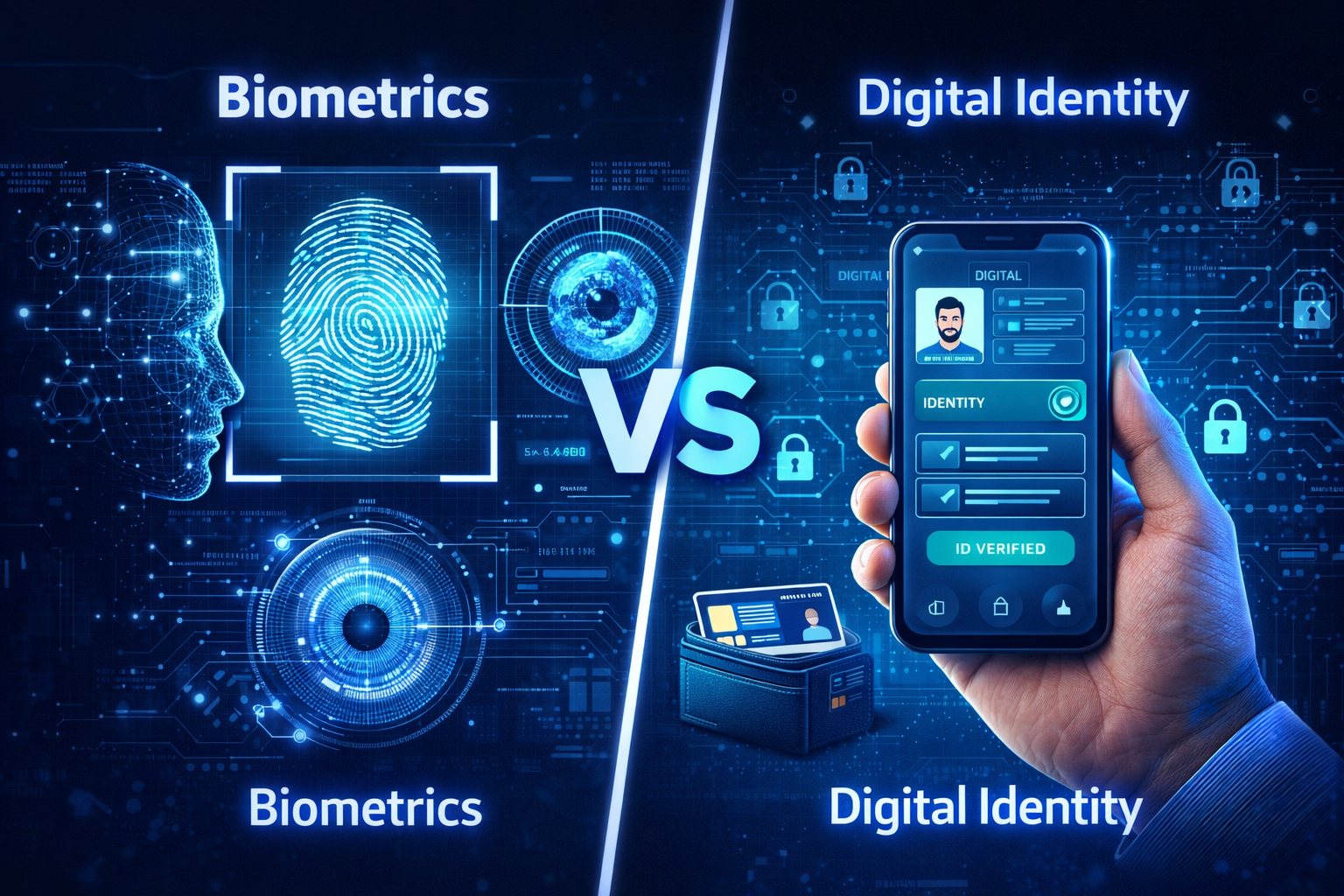
Biometrics vs Digital Identity: Understanding the Differences in Modern Security
In today’s digital world, identity verification plays a crucial role in protecting personal information and online services. Governments, financial institutions, and technology companies use advanced systems to confirm who a person is before granting access to sensitive data. Two commonly used approaches are biometrics and digital identity. Although people often use these terms interchangeably, they represent different concepts in modern security systems. Understanding the difference between biometrics and digital identity helps organizations build safer authentication systems and protect user data.
What is Biometrics?
Biometrics refers to the use of unique physical or behavioral characteristics to identify or verify a person. These characteristics are difficult to copy or steal because they are naturally linked to an individual. Biometric systems capture and analyze these traits using specialized sensors and software.
Common biometric identifiers include fingerprints, facial recognition, iris scans, voice recognition, and even typing patterns. For example, modern smartphones allow users to unlock devices using fingerprint sensors or facial recognition technology. Companies such as Apple and Samsung have integrated biometric authentication into many of their mobile devices.
Biometric authentication works by comparing a captured biometric sample with a stored template in a database. If the system finds a match, it confirms the user’s identity and grants access. Because biometric traits are unique to each individual, this method provides a convenient and secure way to verify identity.
What is Digital Identity?
Digital identity refers to the collection of digital information that represents a person, organization, or device in online systems. It includes usernames, passwords, email addresses, identification numbers, and other personal attributes stored in digital databases.
Unlike biometrics, digital identity does not rely on physical characteristics. Instead, it relies on data that identifies an individual in digital environments. For instance, when someone logs into an online banking platform or social media account, the system verifies their digital identity using login credentials and stored information.
Many organizations use digital identity systems to manage user access across platforms. Governments also implement digital identity programs to provide secure online services. For example, India uses Unique Identification Authority of India to manage the national identification system known as Aadhaar. This system allows citizens to verify their identity for government services, banking, and other digital platforms.
Key Differences Between Biometrics and Digital Identity
Although biometrics and digital identity both support authentication systems, they differ in several important ways.
First, biometrics focuses on physical or behavioral characteristics such as fingerprints or facial features. In contrast, digital identity relies on stored digital data, including usernames, identification numbers, and online credentials.
Second, biometric authentication requires specialized hardware such as fingerprint scanners or facial recognition cameras. Digital identity systems typically rely on software-based verification methods like passwords, security tokens, or authentication codes.
Third, biometric traits are usually permanent and cannot be easily changed. If someone’s fingerprint template is compromised, replacing it becomes extremely difficult. Digital identity data, however, can be updated or replaced if security issues arise.
Because of these differences, organizations often combine both approaches to improve security.
Role in Modern Security Systems
Biometrics and digital identity play an important role in modern cybersecurity strategies. Many organizations now use multi-factor authentication, which combines multiple verification methods to strengthen security.
For example, a banking application may require a password along with fingerprint authentication. In this case, the password represents the user’s digital identity credentials, while the fingerprint serves as biometric verification.
Combining both methods improves protection against cyber threats. Even if attackers steal login credentials, they cannot easily replicate biometric characteristics.
Advantages of Biometrics
Biometric authentication offers several advantages. First, it provides strong security because biometric traits are unique to each person. Second, it improves convenience because users do not need to remember complex passwords. Third, biometric systems reduce the risk of unauthorized access in many situations.
However, biometric systems also raise privacy concerns. If biometric data is stored improperly or leaked, individuals cannot easily replace their biological traits.
Advantages of Digital Identity Systems
Digital identity systems offer flexibility and scalability. Organizations can update or modify identity data whenever necessary. Digital identity platforms also allow integration with various online services and applications.
Additionally, digital identity systems enable secure access to government services, banking systems, and online platforms. Many countries continue to expand digital identity programs to improve service delivery and enhance cybersecurity.
Challenges and Security Concerns
Despite their advantages, both systems face security challenges. Biometric systems may experience errors such as false acceptance or false rejection. Environmental factors or poor sensor quality can also affect biometric accuracy.
Digital identity systems face risks such as password theft, phishing attacks, and data breaches. Attackers often target login credentials to gain unauthorized access to accounts.
Therefore, organizations must implement strong encryption, secure storage methods, and proper access controls when managing biometric or digital identity data.
Future of Identity Verification
As technology continues to evolve, the integration of biometrics and digital identity will become increasingly common. Artificial intelligence, blockchain technology, and advanced encryption methods will likely enhance identity verification systems.
Future identity systems may combine biometric recognition with decentralized digital identity platforms. This approach could allow individuals to control their personal data while maintaining strong security protections.
Conclusion
Biometrics and digital identity represent two essential components of modern authentication systems. Biometrics relies on unique physical or behavioral traits, while digital identity focuses on digital data used to represent individuals online. Each approach offers unique advantages and challenges.
When combined, these technologies create stronger and more reliable identity verification systems. As digital services continue to expand, the integration of biometric authentication and digital identity management will play a key role in protecting users and securing online platforms.




Post comments (0)